

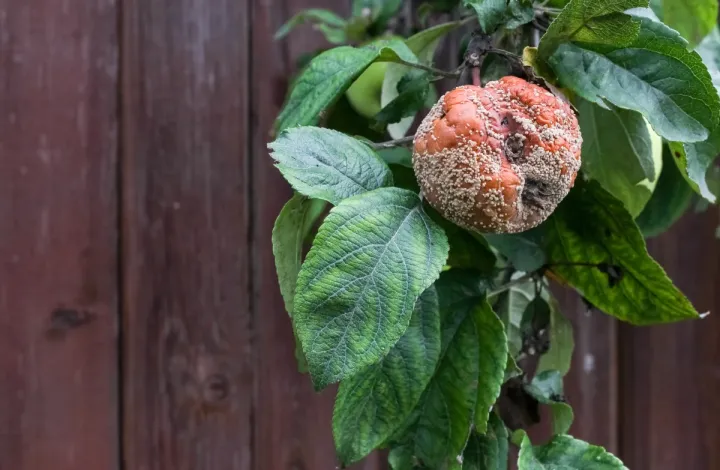
Description
Symptoms
The primary symptom is the sudden wilting and browning of blossoms, which remain attached to the twigs rather than falling off the tree.
The infection then spreads to young shoots and leaves, which appear scorched as if touched by fire, justifying the name blossom blight.
Cracks often develop on the bark of infected branches, accompanied by gummosis, which indicates severe stress on the plant's conductive system.
In high humidity conditions, a grayish powdery mass of fungal spores typically appears on the surface of the blighted floral parts.
As the disease progresses, infected branches may die back completely, eventually threatening the health of the entire canopy and causing premature leaf drop.
Pathogen
The disease is caused by the ascomycete fungus Monilinia cinerea, which belongs to the Leotiomycetes class of plant pathogens.
The fungus overwinters primarily as dormant mycelium in infected twigs and mummified fruits that remain on the branches.
During the spring, under favorable conditions, the pathogen produces conidial spores that are disseminated by wind, rain splashes, and insects.
Primary infection usually occurs through the floral tissues during the bloom period, or through wounds in the bark and bud scales.
Once established, the pathogen colonizes host tissues rapidly, secreting enzymes that cause necrosis and blockage of water-conducting vessels.
Conditions for development
Cool, wet weather during the spring bloom period provides the perfect environmental conditions for the development of blossom blight.
Extended periods of fog, heavy morning dew, and persistent rainfall significantly increase the likelihood of rapid spore germination and infection.
Temperatures ranging from 12 to 20 degrees Celsius are considered optimal for the mycelial growth and subsequent sporulation of the fungus.
Poor orchard sanitation and lack of proper pruning result in dense canopies with high internal humidity, which promotes the spread of the pathogen.
Mummified fruit from the previous season serves as a critical reservoir of inoculum, ready to initiate a new infection cycle in the spring.
Why it matters
Blossom blight is a destructive disease affecting many stone and pome fruits, posing a significant threat to apple trees (Malus domestica).
The economic impact is severe due to the loss of flowers and fruit buds, which directly translates into significant reductions in harvest yields.
In neglected trees, the fungus can progress into the woody parts, leading to branch cankers and the eventual death of the entire tree.
Plants weakened by this infection become highly susceptible to secondary attacks by wood-boring insects and other opportunistic plant pathogens.
The cost of intensive fungicide spray programs and the labor-intensive removal of infected wood represent substantial ongoing orchard expenses.
Protection
The most important control measure is strict sanitation: prune out all infected twigs and branches, cutting back into healthy tissue, and dispose of the material.
Apply copper-based fungicides at the green tip stage to reduce the primary inoculum levels before the blossoms open.
During the flowering window, protect the blossoms by applying systemic or protectant fungicides specifically registered for blossom blight control.
Maintain proper orchard hygiene by removing all mummified fruits and fallen debris, as these harbor the fungus through the winter months.
- Promote good airflow by practicing regular thinning and pruning.
- Monitor and control insects that may carry spores.
- Ensure proper tree nutrition to improve plant vigor.
- Use certified disease-resistant rootstocks when planting new orchards.
In brief
1
Affects crops
Biology
Pathogens and affected parts
Pathogens
Affected plant parts
leaf
Content graph
Affects crops · 1
Content graph
Connections · Blossom blight
Most often together:
Marketplace
Products · 1
Community
Discussion
No discussions yet — be the first.