
Description
Symptoms
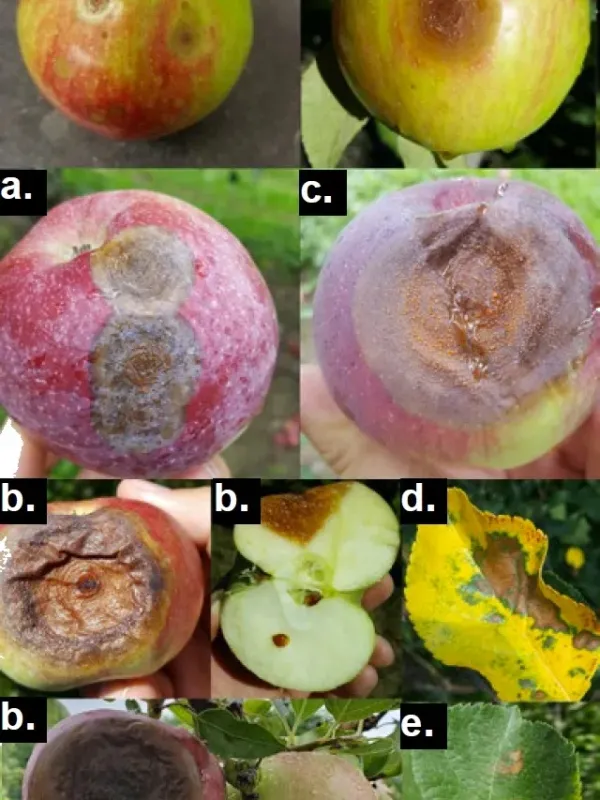
Symptoms typically begin as small, chlorotic spots on leaves, which eventually enlarge and turn reddish-brown or dark brown in color.
A distinctive feature of these spots is the presence of concentric rings, indicating the cyclical growth pattern of the fungal colony within the leaf tissue.
Under high humidity, tiny black fruiting bodies (acervuli) appear on the surface of the lesions, often releasing a visible spore mass.
On apple fruits, the disease manifests as soft, sunken, and circular brown spots, which can lead to complete rot of the fruit if left untreated.
Severe infections result in premature defoliation, which stresses the tree and limits its ability to store nutrients for the following season.
Pathogen
The causative agent of the disease is the fungus Glomerella spp. (notably Glomerella cingulata), an ascomycete known for its wide host range and significant pathogenic potential.
The pathogen completes its life cycle by producing both sexual (ascospores) and asexual (conidia) spores, which allows it to adapt to various environmental conditions.
Survival occurs in woody tissue, fallen leaves, and mummified fruits. The fungus remains dormant during winter and resumes activity when spring temperatures rise.
It acts as a facultative parasite, meaning it can survive on dead organic matter, making sanitation a critical challenge in orchard management.
The fungus invades the plant host through natural openings or wounding, subsequently releasing enzymes that degrade plant cells, leading to localized tissue death.
Conditions for development
High relative humidity and warm temperatures (ranging from 20°C to 28°C) are the primary drivers of Glomerella outbreaks in orchards.
Persistent rainfall and leaf wetness duration significantly increase the rate of spore germination and the success rate of infection.
Poor orchard ventilation due to dense canopy structure allows moisture to remain on leaves, creating an environment highly conducive to the pathogen.
Mechanical damage from pests or improper pruning tools can facilitate the entry of the fungus into the plant's vascular system.
Secondary infections often spread rapidly across the orchard during summer storms as rain splashes carry conidia from infected to healthy tissues.
Why it matters
The economic impact of this disease includes significant yield losses due to fruit rot and reduced fruit quality, making the crop unmarketable.
Early leaf drop reduces the overall photosynthetic capacity of the tree, which directly affects the growth and development of the following year's buds.
Chronic infection weakens the tree's immune system, making it more susceptible to winter injury and other secondary pathogens.
If not managed, the disease creates a permanent source of inoculum within the orchard, leading to increased costs for fungicides and intensive labor.
The cumulative damage often results in stunted growth and a general decline in the vitality of the entire apple orchard over several growing seasons.
Protection
Effective management begins with rigorous sanitation: removing and destroying all infected plant parts to minimize the overwintering inoculum.
Proper pruning techniques are essential to improve canopy airflow, which reduces humidity and helps keep foliage dry after rainfall.
Applying protective fungicides during the pre-bloom and post-bloom stages is critical to preventing the initial establishment of the pathogen.
- Regular monitoring of weather patterns to predict risk periods.
- Use of copper-based or systemic fungicides as recommended.
- Maintaining tree vigor through proper nutrient and water management.
Integrating biological and chemical control methods, while rotating classes of fungicides, remains the most effective strategy to prevent resistance and keep the disease under control.
Pathogens and affected parts
Affects crops · 1
Discussion
No discussions yet — be the first.