

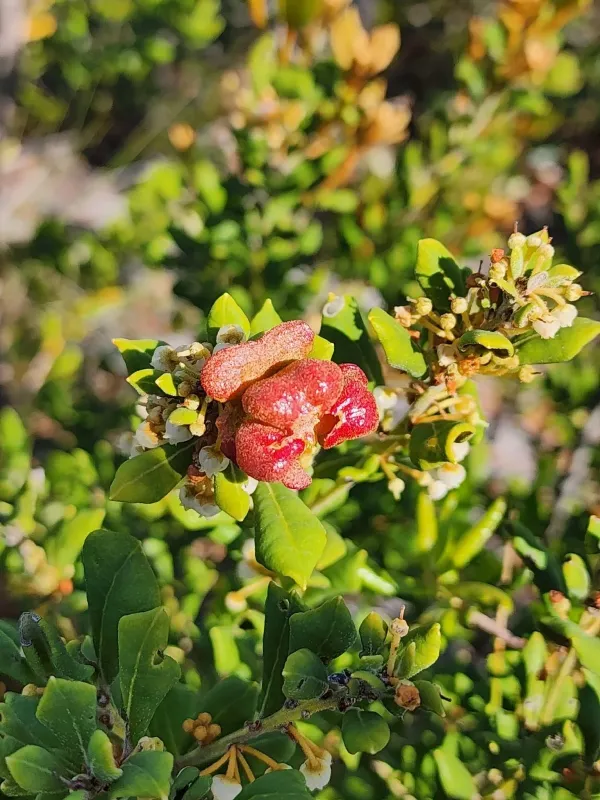
Description
Symptoms
The primary symptom of Exobasidium infection is the formation of hypertrophied, fleshy tissues. Infected leaves often become thickened, succulent, and significantly deformed compared to healthy foliage, sometimes curling into complex, gnarled structures.
A distinctive feature is the change in color of the affected leaves. They may develop pale yellow, bright red, or deep purple spots. These color shifts indicate systemic stress and the accumulation of pigments triggered by the fungal infection within the leaf cells.
A white to pinkish, velvety or powdery layer often develops on the underside of the leaves or on stems. This represents the sporulation stage of the fungus, consisting of a dense mass of basidia and basidiospores that are ready for further dispersal.
On cranberries, a classic symptom is the development of "witches' brooms." Shoots become stunted, and the internodes shorten significantly, causing leaves to cluster closely together. These dense bunches are often the most visible evidence of a systemic infection.
In advanced stages of the disease, the infected tissues eventually necrotize, dry out, and turn brown. If the infection reaches the flowers or berries, the development of the fruit is halted, leading to misshapen berries that often drop prematurely from the plant.
Pathogen
Exobasidium is a genus of fungi belonging to the order Exobasidiales, which contains several species causing significant diseases in various ornamental and agricultural crops. These fungi are obligate parasites that specifically target young tissues such as leaves, shoots, and developing fruits.
The pathogen is a basidiomycete that does not produce typical mushroom-like fruiting bodies. Instead, it colonizes the internal tissues of the host plant, often overwintering within the plant's buds or stems, which allows it to remain present in the field throughout the year.
The life cycle of the pathogen is closely tied to the host's growth stages. During the spring, as the plant initiates new growth, the fungus becomes active and produces spores on the surface of the infected tissues, which are then disseminated by wind and rain splashes.
The host range is predominantly limited to the Ericaceae family. In agriculture, the most economically significant host is the American cranberry (Vaccinium macrocarpon), though the disease is also commonly observed on blueberries, lingonberries, and azaleas.
Once the spores land on susceptible tissue, they germinate under appropriate humidity conditions and penetrate the plant's epidermis. The fungal hyphae then grow intercellularly, secreting chemicals that manipulate the plant's metabolism to sustain the infection.
Conditions for development
Exobasidium thrives in environments characterized by high humidity and cool to moderate temperatures. Extended periods of rainfall, heavy dew, or persistent fog are the most critical factors for the rapid spread of the disease during the growing season.
Water-saturated surfaces are essential for the germination of fungal spores. If the canopy of the plants remains wet for prolonged periods after irrigation or rain, the likelihood of successful fungal infection increases substantially.
Poor aeration and high planting density create a favorable microclimate for the pathogen. In such conditions, air circulation is restricted, preventing the foliage from drying out quickly, which allows the fungus to remain active and spread between plants.
Agricultural practices, such as the introduction of infected nursery stock, are a common way for the disease to enter new areas. Additionally, the use of contaminated pruning tools can facilitate the spread of spores from infected sections to healthy parts of the crop.
The optimal temperature for fungal activity typically ranges between 10°C and 18°C. This corresponds perfectly with the spring growth period, when the plant is most vulnerable to colonization because the newly emerged tissues are soft and easily penetrated.
Why it matters
The damage caused by Exobasidium is primarily manifested through a significant loss of productivity. Because the plant must divert resources to cope with the infection, its ability to produce flower buds and mature berries is severely impaired, reducing yields.
Infected plants suffer from disrupted photosynthesis, which leads to a general decline in vigor. This weakening makes the plants less resilient to environmental stressors, such as winter cold or drought, which can ultimately lead to the loss of entire sections of the crop.
The cosmetic damage caused by the fungus renders the produce, especially in decorative or fresh-market crops, unmarketable. Even on commercial processing berries, the misshapen fruit represents a direct financial loss for the producer.
If left unmanaged, the pathogen can establish a chronic presence in the planting. Over several seasons, the disease can spread throughout the entire plantation, necessitating costly remediation efforts or the complete removal and replacement of the crop.
Beyond the direct harvest loss, the presence of the disease requires continuous investment in management strategies. The need for systematic fungicide applications and labor-intensive sanitation increases the overall cost of production, lowering the profitability of the operation.
Protection
Preventative measures are the most effective strategy against Exobasidium. It is crucial to start with disease-free plant stock from certified suppliers and to choose planting sites with excellent drainage to avoid water stagnation.
Proper site management includes thinning the plants or spacing them to ensure optimal airflow within the canopy. Regular removal of weeds is also essential to improve ventilation and reduce the micro-environmental humidity that supports the fungal growth.
Sanitation is a vital component of control. Any symptomatic shoots or leaves should be pruned away immediately upon detection. These materials should be disposed of by burning or burying well away from the planting site to prevent the re-release of spores.
Chemical control focuses on the application of fungicides, particularly copper-based products. Preventive sprays applied in early spring, just before bud break, can create a protective barrier that inhibits the germination of overwintering spores.
Monitoring is key; growers should regularly inspect their crops, especially during cool, wet spring weather. In case of an outbreak, systemic fungicides may be required to protect the remaining healthy tissues and minimize the further spread of the pathogen.
In brief
1
Affects crops
Biology
Pathogens and affected parts
Pathogens
Affected plant parts
leaffruit
Content graph
Affects crops · 1
Content graph
Connections · Exobasidium
Most often together:
Marketplace
Products · 2

Community
Discussion
No discussions yet — be the first.