

Description
Symptoms
Symptoms appear as small, light-brown, circular spots on leaves, which gradually develop a velvety appearance as the fungus produces its spores.
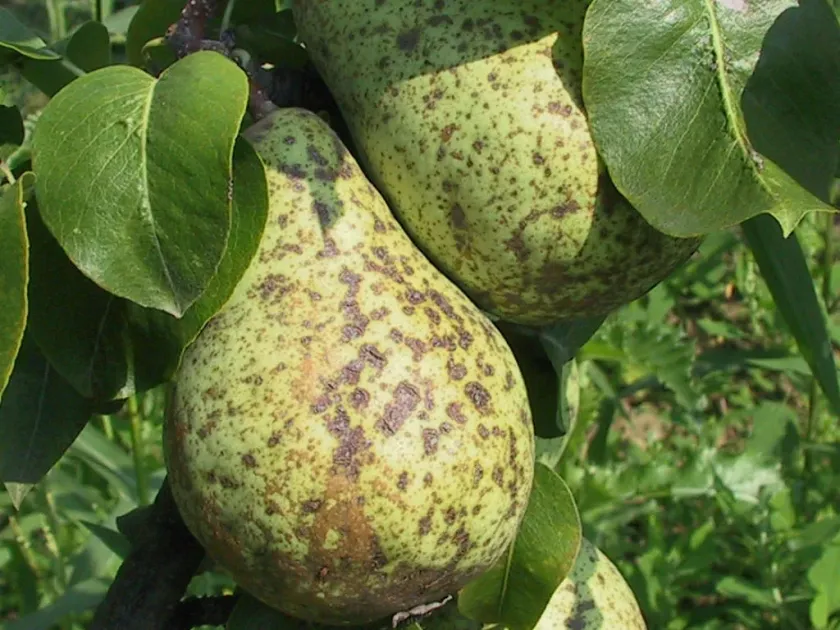
On fruits, scab manifests as dark, hardened lesions that often lead to skin cracking, fruit deformation, and stunted growth.
Infection on young shoots results in the formation of ulcers, which can cause cracking and dieback of the affected branches during the growing cycle.
Severe infestations lead to premature leaf drop, which significantly weakens the tree and reduces the capacity for successful photosynthesis.
- Circular necrotic spots on leaves
- Deformed and cracked fruits
- Ulcers and cracks on tree shoots
- Premature defoliation in late summer
Pathogen
The causal agent of the disease is the fungus Elsinoe piri, which causes lesions on various parts of the pear tree, interfering with its normal physiological development.
The pathogen overwinters as mycelium in infected twigs or as dormant structures in fallen leaves, providing a source of primary inoculum for the next spring season.
The biological cycle of the fungus is highly dependent on humidity and temperature, requiring wet conditions for the germination of its spores and infection.
Once established, the fungus spreads via conidia dispersed by rain splashes and wind, causing secondary infections throughout the growing season.
The fungus invades the host tissue by penetrating the cuticle, subsequently destroying epidermal cells and absorbing nutrients from the plant.
Conditions for development
Pear scab thrives in cool and wet spring weather, as high relative humidity and frequent rain are essential for spore germination and colonization.
Temperatures between +15°C and +22°C provide the optimal environment for the fungus to develop rapidly and infect new tissues during the critical early growing stages.
Densely planted orchards with poor canopy ventilation retain moisture for longer periods, which directly promotes the spread and intensity of the disease.
Excessive rainfall not only encourages fungal growth but also washes away protective fungicide layers, making it harder to manage the disease effectively.
Lack of proper sanitation, such as failing to remove infected plant debris, ensures that the infection cycle continues from year to year.
Why it matters
The primary economic impact of pear scab is the drastic reduction in fruit quality and yield, rendering the harvest unsuitable for commercial sale.
The loss of foliage early in the season causes the tree to struggle to accumulate the carbohydrates needed for winter dormancy and next year's blossom.
Malformed fruit caused by scab lesions often has a corky texture in the affected areas, which makes it undesirable for fresh consumption or processing.
Repeated annual infections weaken the tree's immune system, making it more susceptible to environmental stress, winter damage, and other opportunistic pathogens.
Left untreated, severe scab can lead to a long-term decline in tree vigor, resulting in stunted development and eventually the death of branches or the entire tree.
Protection
Cultural practices, such as the systematic removal and destruction of fallen leaves and infected twigs, are essential to reduce the primary inoculum load.
Pruning to ensure good airflow within the tree canopy is a vital preventative measure that helps foliage dry out faster after rain.
Applying fungicides according to a scheduled program, particularly during wet spells or critical growth stages like bloom, is necessary for commercial protection.
Selecting and planting resistant pear varieties significantly reduces the risk of scab infection and the reliance on intensive chemical spraying.
Maintaining balanced tree nutrition with appropriate fertilization builds stronger cell walls and improves the overall resilience of the pear tree to disease.
In brief
1
Affects crops
Biology
Pathogens and affected parts
Affected plant parts
leaffruit
Content graph
Affects crops · 1
Content graph
Connections · Pear scab
Most often together:
Marketplace
Products · 4
Community
Discussion
No discussions yet — be the first.