

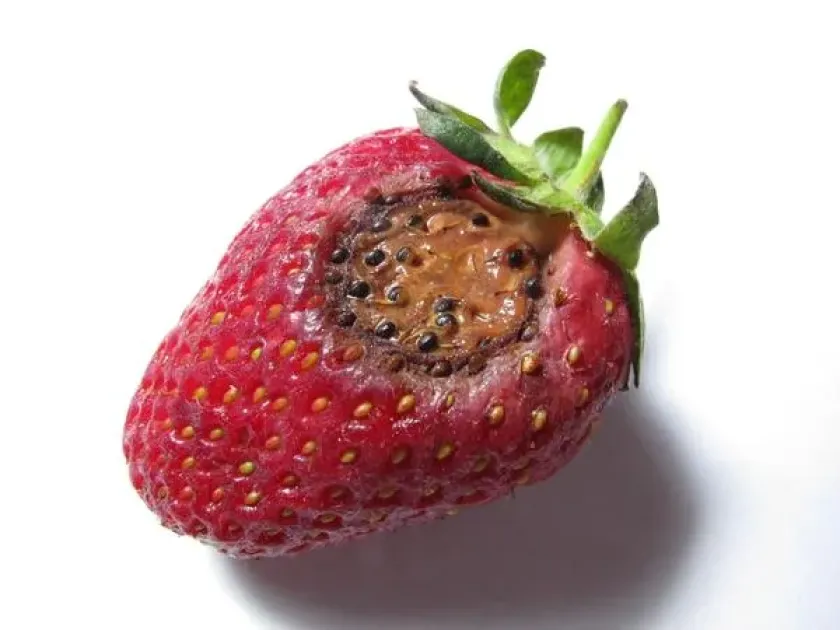
Description
Symptoms
The first signs on leaves typically appear as small, circular, reddish-brown spots with a darker margin. As the disease progresses, these spots expand, causing the leaves to wither and die.
Lesions on petioles and runners appear as sunken, dark-colored elongated streaks. Severe stem infections often result in the collapse of the foliage and the premature death of the strawberry crown.
The most devastating symptoms appear on the fruit. Infected berries develop circular, slightly sunken lesions that turn brown or black as they grow and coalesce, covering the entire fruit.
Under humid conditions, these lesions produce a characteristic mass of spores, often appearing as slimy, orange, or pinkish droplets in the center of the sunken spots.
As the infection advances, the affected berries dry out, becoming shriveled, dark, and hard. These mummified fruits serve as a major source of inoculum for further disease spread throughout the season.
Pathogen
Strawberry anthracnose is caused by the fungus Colletotrichum acutatum. It is a highly aggressive pathogen known for its ability to infect all parts of the strawberry plant, including crowns, petioles, and fruits.
The fungus overwinters in crop debris, infested soil, and within infected transplants. This makes the introduction of contaminated nursery stock the most common way for the disease to enter new fields.
During the growing season, the pathogen spreads primarily through conidia. These spores are dispersed by rain splashes, irrigation water, wind, insects, and human activity within the planting area.
Once the conidia land on a host plant, they require a film of water to germinate. The fungus then penetrates the plant's cuticle, establishing an infection that may remain latent until the fruit starts to ripen.
Colletotrichum acutatum has a broad host range, allowing it to survive on various weeds and other crops, which complicates sanitation efforts in commercial strawberry production.
Conditions for development
The development of strawberry anthracnose is heavily dependent on moisture. Frequent rainfall, high humidity, and prolonged leaf wetness are essential for the rapid spread of the fungus.
Temperature plays a crucial role in the infection process, with the optimal range for Colletotrichum acutatum being between 22°C and 28°C (approx. 72°F to 82°F).
Dense, overcrowded planting patterns restrict airflow, keeping the foliage and fruit damp for longer periods, which provides the fungus with the time it needs to infect the tissue.
Overhead irrigation significantly exacerbates the problem by simulating rainfall, which splashes spores from infected plants onto healthy fruits and foliage, triggering an epidemic.
Warm, humid nights followed by mornings with heavy dew create a persistent moist microclimate, facilitating the continuous production and dispersal of fungal conidia during the fruit-set phase.
Why it matters
Anthracnose is considered one of the most economically damaging strawberry diseases. In favorable conditions, it can destroy over 80% of a marketable crop within a very short period.
The disease drastically reduces fruit quality. Infected berries are unmarketable due to their unsightly appearance, soft texture, and short shelf life, making shipping and retail impossible.
Plants affected by crown rot experience a severe decline in vigor. This loss of vitality leads to reduced yield potential in subsequent years and often requires the removal of the entire planting.
The cost of managing the disease is significant. Growers must invest heavily in protective fungicides and intensive sanitation measures, which increases the overall production costs.
Because the fungus can remain in the soil and on crop debris, once an area is infested, the risk of disease recurrence in following seasons remains high for many years.
Protection
The most important control strategy is the use of disease-free, certified nursery stock. Inspecting transplants for symptoms before planting is a critical first line of defense.
Adopting drip irrigation is highly recommended to eliminate water splashes on the fruit and foliage, thereby reducing the risk of conidia transmission from the soil or infected parts.
Good agricultural practices such as maintaining proper plant spacing and controlling weeds improve air circulation, helping the field dry out faster after rain or dew.
Fungicide applications should be used preventatively during high-risk periods, such as flowering and fruit development, while strictly adhering to label safety and harvest interval requirements.
Rigorous sanitation involves the immediate removal and destruction of all infected plant tissue and mummified berries to reduce the total amount of inoculum present in the field.
Content graph
Connections · Strawberry anthracnose
Most often together:
Marketplace
Products · 1
Community
Discussion
No discussions yet — be the first.