
Hairy vetch
Vicia villosa Roth subsp. eriocarpa (Hausskn.) P. W. Ball
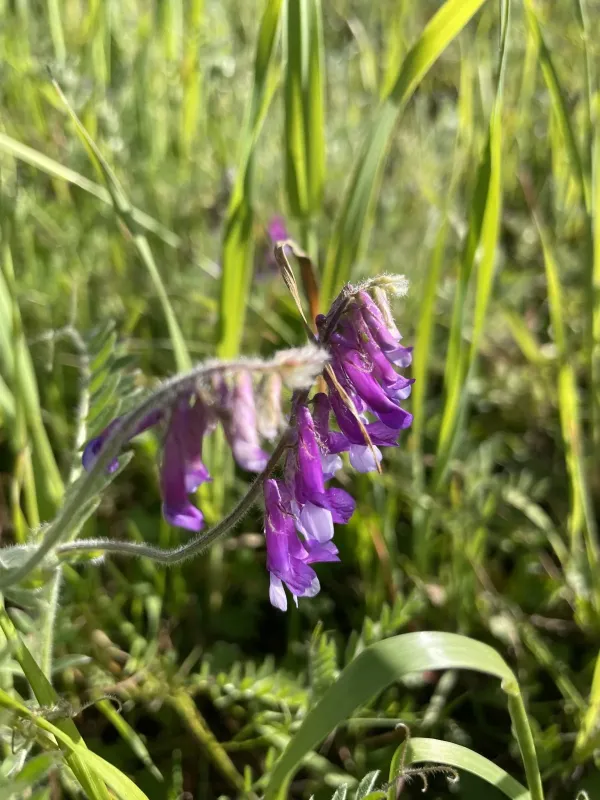
Description
Sowing dates
Hairy vetch is a cold-hardy leguminous plant that is widely used in sustainable agriculture as a cover crop and forage source. Unlike many other vetch varieties, it exhibits excellent winter hardiness, allowing it to survive through harsh winter temperatures.
Sowing typically takes place in late summer or early autumn. Establishing the crop before the onset of hard frost is essential, as the plants need to develop a sturdy rosette to ensure successful overwintering and vigorous spring regrowth.
The seeding rate varies between 80 and 120 kg per hectare. It is often sown in combination with winter cereals like rye or wheat, which serve as a trellis for the vetch’s climbing vines, significantly reducing the risk of lodging.
Seeds should be planted at a depth of 3–5 cm. A well-prepared seedbed followed by rolling ensures optimal soil-to-seed contact, which is vital for uniform germination and early root development.
Inoculation of seeds with appropriate rhizobia bacteria is highly recommended to ensure effective nitrogen fixation. This process maximizes the plant's ability to pull nitrogen from the atmosphere, turning it into a natural fertilizer for the soil.
Growing requirements
This crop thrives in a wide range of soil types, from sandy loams to heavier clays. It demonstrates good tolerance for slightly acidic soils, although moderate liming is beneficial for optimal plant growth and bacterial activity.
Hairy vetch is prized for its drought tolerance once established, though it requires adequate moisture during the spring green-up phase to reach its full biomass potential. Waterlogged soils should be avoided, as the plant does not tolerate standing water.
While preferring open, sunny locations, it is sufficiently shade-tolerant for use in cover crop mixtures. Providing adequate potassium and phosphorus in the autumn helps the plants harden off and increases their resistance to winter kill.
Environmental requirements are generally modest, but the species is sensitive to extreme fluctuations in temperature during the early seedling stage. Consistent snow cover provides an ideal insulating layer during the coldest months.
When used as a green manure, the crop can be integrated into various rotations. Its rapid spring growth makes it an excellent choice for fields intended for maize or other demanding spring-sown crops.
Yield
Hairy vetch provides a generous yield of high-protein biomass, often producing 25–40 tonnes of fresh matter per hectare. This makes it an invaluable resource for green manuring and livestock grazing.
Forage quality remains high when harvested at the onset of flowering. The nutritional value, particularly the protein content, decreases as the plant matures and begins to set seed.
Seed yields are typically between 800 and 1,500 kg per hectare under favorable conditions. However, growers must be mindful of the irregular maturation of pods, which can complicate mechanical harvesting.
As a nitrogen-fixing crop, it leaves a significant amount of nitrogen in the soil, which can reduce the need for synthetic fertilizers by 50–150 kg per hectare depending on the density of the biomass produced.
Total dry matter yield is heavily dependent on the duration of the spring growing season. Early warm springs allow for a longer period of vegetative development, resulting in significantly higher final harvest yields.
Main diseases and pests
The main pathological threats include fungal infections such as anthracnose, powdery mildew, and various rusts, especially in humid or poorly ventilated stands. Crop rotation remains the primary defense strategy.
Insect pests, including aphids and pea weevils, can cause substantial damage to young shoots and roots. Monitoring fields in the spring is essential to determine if intervention with biological or chemical controls is required.
Root rot diseases are more prevalent in compacted or poorly drained soils. Improving soil aeration and choosing clean, certified seed are effective preventive measures against soil-borne pathogens.
In some regions, vetch can become a weed if the seeds are allowed to mature and shatter before the cover crop is terminated. Timely termination is key to maintaining control over the field.
- Anthracnose and Ascochyta blight.
- Root rot complexes.
- Aphids and plant bugs.
- Sitona weevils.
Harvesting
For green manure or forage, the ideal harvest time is when 50-75% of the crop has begun to bloom. Harvesting at this stage ensures the best balance between biomass weight and nutritional quality.
If harvested for hay, the crop should be wilted in the swath to lower moisture content to safe levels (15-18%) before baling. This prevents mold growth and preserves the hay's color and vitamins.
Seed harvesting should be planned when pods turn dark brown. Because of the plant's tendency to shatter, it is common practice to use direct combining or a two-stage process where the crop is swathed and allowed to dry.
Proper post-harvest handling is critical. Seeds must be cleaned thoroughly to remove chaff and dried immediately to prevent heating, which can destroy the viability of the seed lot.
Successful mechanical harvesting requires sharp blades and precise combine settings to avoid clogging, given the dense, vining nature of the hairy vetch canopy.