
Bush vetch
Vicia sepium L.
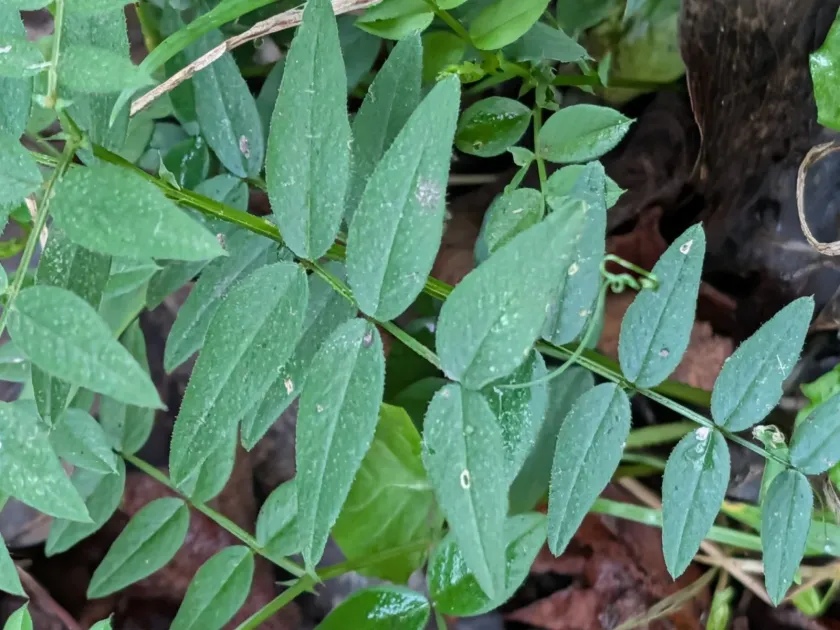
Description
Sowing dates
Bush vetch (Vicia sepium L.) is a perennial herbaceous plant belonging to the Fabaceae family. Known for its winter hardiness and rapid spring growth, it serves as an excellent component in permanent pasture and hay meadow mixtures, contributing to soil nitrogen fixation.
The optimal sowing time is typically in early spring, as soon as the soil is workable. In regions with milder climates, late autumn sowing can also be successful, allowing the seeds to undergo natural stratification, which promotes uniform germination as soon as soil temperatures rise.
The seeding rate varies depending on whether it is planted as a pure stand or integrated into a grass-legume mixture. Usually, it is sown with perennial grasses like orchard grass or fescue to create a balanced forage system that provides high-quality protein throughout the grazing season.
Seeds should be planted at a depth of 1–3 centimeters, depending on soil texture. Shallow planting is crucial in heavier soils to ensure that the seedlings do not expend all their energy before reaching the surface, while deeper planting is acceptable in light, sandy loams.
Post-seeding compaction is a vital agronomic step. Using a roller improves seed-to-soil contact, facilitating moisture uptake from the deeper soil layers, which is essential for establishment during dry spring spells common in many temperate regions.
Growing requirements
Bush vetch is well-adapted to cool, temperate climates and demonstrates remarkable versatility. While it thrives in open areas, it is distinctively tolerant of partial shade, often found naturally along woodland edges and hedgerows, making it ideal for agroforestry or complex pasture systems.
The species prefers fertile, well-drained loamy soils but can tolerate a variety of soil types, provided they are not waterlogged. Stagnant water is detrimental to the root system and significantly limits the plant's ability to fix nitrogen efficiently through nodule bacteria.
An optimal soil pH for Vicia sepium ranges between 6.0 and 7.0. Acidic soils inhibit the activity of beneficial bacteria, so liming may be necessary on acidic land to ensure healthy growth and maximize the legume's contribution to the pasture's total protein content.
The plant possesses a robust root system, allowing it to withstand short-term drought periods during the summer. However, consistent moisture availability during the stem elongation phase is required for the plant to reach its maximum biomass potential and produce high-quality forage.
Regarding fertilization, bush vetch responds well to phosphorus and potassium, which help improve cold tolerance and general plant vigor. Excessive nitrogen application is unnecessary and even discouraged, as it may cause the legume to lose its competitive advantage over aggressive grass species.
Yield
The biomass yield of bush vetch is highly dependent on management and the presence of companion grasses. Under ideal conditions, a managed stand can produce between 15 and 25 tons of fresh forage per hectare annually, spread across two primary harvests.
Productivity typically peaks during the second and third years of the stand. To maintain high yields over a longer term, it is important to prevent overgrazing, which depletes the plants' energy reserves and leads to a decline in vigor and density within the meadow.
The nutritional profile of bush vetch is characterized by a high crude protein content, often ranging from 15% to 18% in dry matter. This makes it an invaluable source of nutrition for livestock, supporting better weight gain and milk production compared to low-quality grasses.
Two cuts per season are the standard practice. The first cut is taken at the start of the flowering phase to capture peak nutritional quality, while the second cut occurs during the autumn regrowth, ensuring that the plant has sufficient time to recover before winter dormancy.
Grazing management must be strategic to ensure the longevity of the plant. A rotation system that allows for adequate rest periods helps the bush vetch to regenerate its root stores, ensuring that the stand remains productive and weed-free for many years.
Main diseases and pests
Common diseases affecting bush vetch include powdery mildew and various types of rust. These fungal issues are most prevalent in dense stands with poor airflow and high humidity. Proper harvest timing and maintaining stand vigor are key preventative strategies.
Insects like the pea leaf weevil (Sitona spp.) can cause significant damage to young seedlings by feeding on the leaves and growing points. Frequent monitoring during the emergence phase is essential to decide if intervention is necessary to prevent stand loss.
Root rots can become problematic in soils with poor drainage or during prolonged periods of waterlogging. Selecting well-drained sites and following appropriate crop rotation cycles helps reduce the risk of soil-borne pathogens accumulating in the field.
Aphids can also impact plant health by feeding on sap and potentially transmitting viral diseases. Integrated pest management, which encourages natural predators like ladybugs, is often sufficient to keep aphid populations below the economic threshold.
- Rust (Uromyces viciae-fabae)
- Powdery mildew (Erysiphe pisi)
- Pea leaf weevil (Sitona spp.)
- Pea aphid (Acyrthosiphon pisum)
- Ascochyta blight
Harvesting
The timing of the harvest is the most critical factor in determining the value of the forage. Cutting at the beginning of the bloom stage ensures an optimal balance between total biomass yield and the concentration of digestible nutrients in the stems and leaves.
When harvesting for hay, conditioning the crop (using a mower-conditioner) is highly recommended to speed up the drying process. Reducing moisture content efficiently prevents the loss of leaves, which are the most nutrient-dense part of the plant.
Final storage moisture levels should be kept at 16–17% or lower to ensure safe storage. Excessive moisture in baled or stacked hay can lead to heat buildup and the growth of harmful molds, which lower the quality and safety of the feed for livestock.
For silage or haylage production, the crop should be harvested during full bloom and compacted thoroughly in silos. The anaerobic environment created by proper compaction is necessary to preserve the nutritional value and palatability of the feed throughout the winter.
Post-harvest management involves ensuring that the plants are not cut too low to the ground. Leaving at least 10–12 cm of stubble allows for sufficient light interception and protects the growing points, helping the bush vetch recover and successfully enter the dormant winter phase.