
Bitter vetch
Vicia ervilia (L.) Willd.
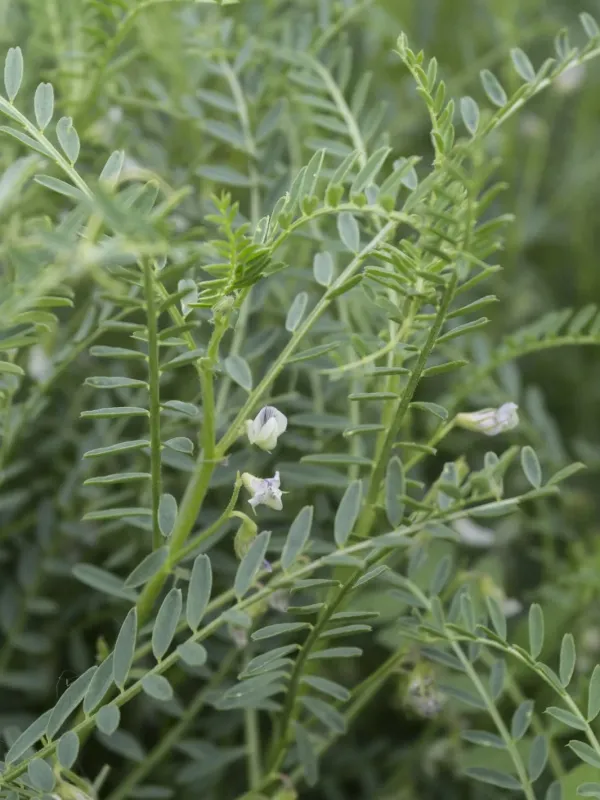
Description
Sowing dates
Bitter vetch is typically sown as an early spring crop, requiring farmers to plant as soon as the soil is dry enough to be worked without compaction.
Early planting is essential to ensure the crop takes advantage of residual winter moisture, which is vital for uniform seed germination and seedling emergence.
The seeding rate varies based on soil fertility and the intended use, generally ranging from 100 to 150 kilograms per hectare to achieve an optimal plant density.
Seeds should be planted at a depth of 3 to 5 centimeters, depending on the soil texture and the specific moisture conditions in the upper soil profile.
Utilizing high-precision grain drills is recommended to guarantee uniform depth and ensure good seed-to-soil contact, which promotes consistent crop development.
Growing requirements
As a member of the Fabaceae family, Vicia ervilia is highly adaptable, though it thrives best in well-drained, fertile soils with a neutral pH balance.
The crop is known for its moderate drought tolerance, making it a reliable option for agricultural regions experiencing irregular or limited rainfall patterns.
It possesses a strong, deep taproot system that can mobilize various nutrients from the subsoil, which contributes to overall soil structure and fertility.
The optimal temperature range for active growth is between 15 and 20 degrees Celsius, and the plants can survive mild spring frosts without significant harm.
Waterlogging is detrimental to bitter vetch, so site selection should prioritize fields with excellent drainage to prevent root rot and physiological stress.
Main diseases and pests
Common pests affecting bitter vetch include various types of weevils and bean seed beetles, which can reduce both yield and seed viability if left unchecked.
Fungal diseases like anthracnose and root rot are significant concerns, especially when crop rotation practices are neglected or environmental humidity is high.
Early-stage weed competition is a critical issue because bitter vetch initially grows slowly, making it vulnerable to invasive weeds during the establishment phase.
Maintaining a robust crop rotation strategy is the most effective way to break the life cycles of soil-borne pathogens and reduce the need for fungicides.
Integrated Pest Management (IPM) practices should be employed, focusing on field monitoring and natural predator support before opting for chemical interventions.
Harvesting
Harvesting for grain occurs when the pods on the lower and middle parts of the plants are fully mature and exhibit their characteristic color and texture.
Timely harvest is crucial to minimize field losses, as over-mature pods are prone to shattering and dropping seeds before they can be collected by machinery.
When grown for forage or green manure, the crop should be mowed at the onset of flowering to maximize the nutritional value and protein content of the biomass.
The harvest method can be either direct combining or a two-stage process involving swathing, depending on the uniformity of plant maturity across the field.
Post-harvest processing requires immediate cleaning and drying of the seeds to a moisture level of 12–14% to ensure safe, long-term storage in silos or bins.