
Purple vetch
Vicia benghalensis L.
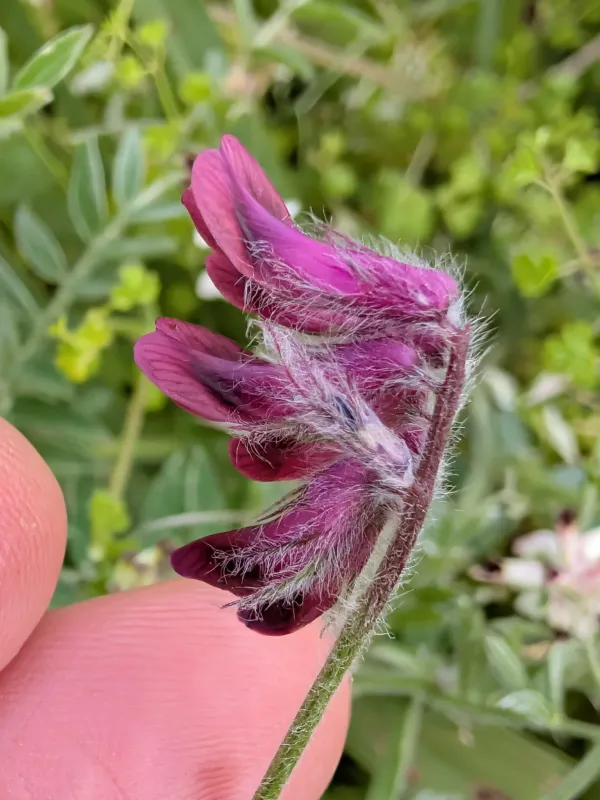
Description
Sowing dates
Purple vetch (Vicia benghalensis L.) is an annual herbaceous legume belonging to the Fabaceae family. Native to the Mediterranean region, it has become a widely recognized crop for its versatility in agricultural systems across various climates.
The sowing window for purple vetch is largely determined by the regional climate. In areas with mild winters, autumn sowing is preferred to allow the crop to establish a deep root system and maximize spring growth.
For spring planting, seeds should be sown as early as soil conditions allow. Cold, moist soil is generally well-tolerated, and early establishment is crucial for the plant to thrive before the arrival of hot summer conditions.
Seeding rates typically range from 80 to 120 kg/ha, depending on the desired plant density and the intended end use. A planting depth of 3–5 cm ensures good soil-to-seed contact, facilitating uniform and rapid emergence.
Effective crop management starts with high-quality, inoculated seed. Introducing specific nitrogen-fixing bacteria to the soil is a standard practice that promotes healthy growth and enhances the plant's ability to fix atmospheric nitrogen.
Growing requirements
Purple vetch prefers fertile, well-drained loamy soils but displays a strong degree of adaptability to different soil textures. It performs poorly in waterlogged soils, which can induce root rot and limit nitrogen fixation.
The crop exhibits a moderate tolerance to cold but is generally sensitive to extreme frost. A temperate climate with sufficient rainfall during the vegetative phase is ideal for achieving optimal biomass production.
Regarding soil pH, the plant thrives in neutral to slightly alkaline environments. Highly acidic soils may require lime applications to improve the activity of root nodules and overall plant health.
Proper management of weed competition is essential, especially during the first few weeks after emergence. Purple vetch grows relatively slowly at first, making it vulnerable to invasive weeds if the field is not managed correctly.
It is often grown in rotation with cereal crops. Its ability to leave behind a significant amount of nitrogen in the soil makes it an excellent choice for improving soil fertility for subsequent heavy-feeding crops like wheat or corn.
Yield
Yields of green biomass typically range between 20 and 40 tons per hectare depending on rainfall and soil fertility. It serves as a high-protein feed source for ruminants, either as fresh forage, silage, or high-quality hay.
Seed production is highly valued by growers for subsequent sowing. Under optimal conditions, seed yields can reach approximately 1 to 2 tons per hectare, though this is subject to seasonal weather fluctuations.
When used as green manure, the crop is typically incorporated into the soil at the flowering stage. This practice maximizes the return of organic matter and nitrogen, providing significant benefits to the soil's structure and microbiology.
Mixed cropping, such as sowing purple vetch with oats, provides a supportive structure for the vetch, preventing lodging and increasing the total yield. This mixture also produces a balanced feed profile.
The high nutritional quality of the forage makes it particularly useful for livestock farms aiming to reduce reliance on commercial protein supplements. It provides essential minerals and amino acids for animal health.
Main diseases and pests
Fungal diseases like rust and leaf spots are common issues, particularly when plants are grown in high-humidity conditions. Maintaining optimal plant density and avoiding over-irrigation are primary preventative measures.
Pests such as aphids and clover root curculio can cause damage to leaves and roots. In professional farming operations, integrated pest management (IPM) strategies are used to keep populations below economic injury levels.
Root rot, often caused by poor drainage, is a persistent threat. To mitigate this, fields should be carefully assessed for water retention capacity before sowing, and rotational breaks should be strictly followed.
Powdery mildew can occur during periods of erratic temperature shifts. Ensuring good air circulation within the field by managing sowing rates is the most effective biological control method.
Early-season scouting is recommended to identify potential pest outbreaks. Timely interventions using approved agricultural products can prevent severe damage if thresholds are exceeded.
Harvesting
For high-quality forage, the harvest should take place at the peak of the flowering phase. This is the stage when the plant reaches its ideal balance between protein content and dry matter digestibility.
When producing hay, careful handling is necessary because the leaves are delicate and prone to shattering. Using appropriate machinery that gently processes the forage helps preserve the nutrient-rich foliage.
Seed harvest is performed once the pods have turned a distinct brown color, typically indicating physiological maturity. Direct combining or swathing followed by picking up can be employed based on local climate conditions.
Post-harvest cleaning is vital to ensure that the seed is free from chaff and impurities, which improves storage longevity. Seeds should be dried to a moisture content of around 12–14% to prevent mold growth.
After harvesting, the remaining crop residues contribute to the soil's organic matter content. Incorporating these residues into the topsoil completes the nutrient cycle, preparing the field for the next crop in the rotation.