
One-flowered vetch
Vicia articulata Hornem.
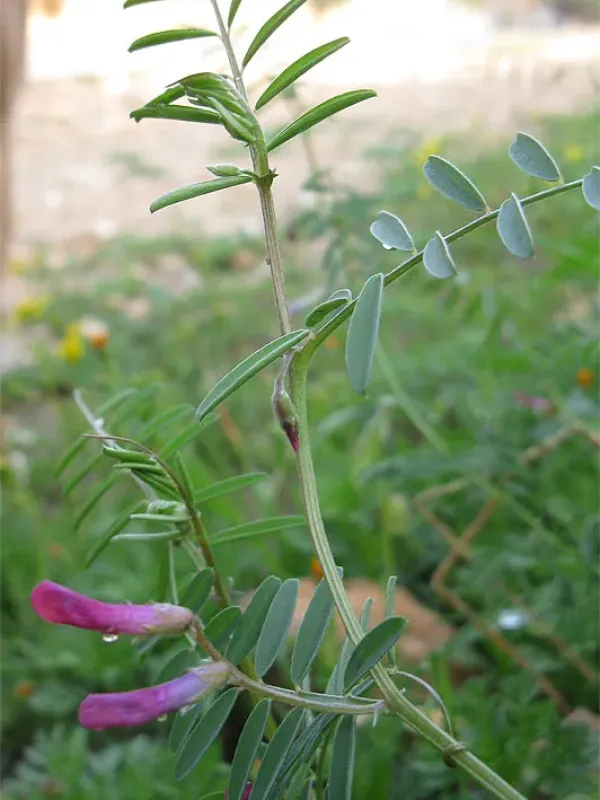
Description
Sowing dates
One-flowered vetch is an annual crop usually sown in early spring, depending on the climatic zone, to ensure the plants utilize the remaining soil moisture effectively.
The optimal soil temperature for germination is between 6 and 10 degrees Celsius, which provides the necessary heat for consistent emergence across the field.
Seeding rates are adjusted based on whether the crop is intended for forage or seed production, with forage crops often planted at higher densities to suppress weeds.
The planting depth is typically set between 3 and 5 centimeters, ensuring the seed is placed in contact with moist soil for rapid and uniform germination after sowing.
Proper rotation is essential for long-term soil health, as one-flowered vetch acts as a nitrogen-fixing legume, significantly benefiting the subsequent cereal crops.
Growing requirements
As a member of the Fabaceae family, this species requires moderate temperate conditions and performs best in regions with regular rainfall during the vegetation period.
It prefers fertile, well-drained loamy soils and has a low tolerance for acidic environments, making soil pH adjustment critical for successful crop development.
The crop is highly dependent on light and should be cultivated in open, non-shaded areas to maintain high photosynthetic activity throughout the entire growth cycle.
Sufficient moisture is particularly crucial during the budding and flowering stages, as water stress during these phases can significantly reduce the potential yield.
Integrated nutrient management, focusing on phosphorus and potassium application, is recommended to support robust root system development and efficient nodulation.
Yield
One-flowered vetch serves as a high-quality forage source, providing essential proteins to livestock, which contributes to improved growth rates and overall animal health.
Yields of fresh biomass can reach 15–25 tonnes per hectare, provided that crop management practices, including pest control and fertilization, are strictly followed.
Seed production is an important agricultural enterprise, with potential yields reaching 1.5–2.5 tonnes per hectare under optimal environmental conditions and proper care.
The nutritional profile of the grain makes it an excellent ingredient for concentrate feeds, ensuring high digestibility and energy intake for various farm animals.
Regular field monitoring and precise harvesting timing allow farmers to maximize the total yield while maintaining the high nutritional value of the harvested material.
Main diseases and pests
Root rot and anthracnose are among the primary fungal diseases that pose a threat to one-flowered vetch, particularly in regions with high humidity and cool temperatures.
Pests such as the pea leaf weevil can cause significant damage to young plants, potentially reducing stand density and overall biomass production in the early season.
The pea seed beetle (bruchus) is a major concern for grain storage, requiring stringent post-harvest treatment and management to prevent degradation of the seed quality.
Aphids can cause indirect damage by transmitting viral diseases, which can stunt plant growth and drastically lower the overall yield if not controlled in time.
Integrated pest management strategies, such as using resistant cultivars and maintaining distance from other legume fields, help to minimize the impact of these threats.
Harvesting
Harvesting for forage is recommended during the full flowering stage, which ensures the best balance of biomass quantity and high-quality nutritional density in the plants.
When harvesting for seeds, farmers must monitor the crop closely to avoid shattering, as the pods can burst if left in the field past the point of physiological maturity.
Direct combining is generally preferred, although specific adjustments to the machine's cylinder speed are necessary to minimize seed damage during the threshing process.
Post-harvest cleaning is vital to remove moisture-retaining impurities, which helps to preserve the grain and prevent spoilage or mold growth during long-term storage.
Proper storage conditions, including aeration and moisture control, are essential to maintain the germination viability of the seeds for future planting seasons.