
Narrow-leaved vetch
Vicia sativa L. subsp. nigra (L.) Ehrh.
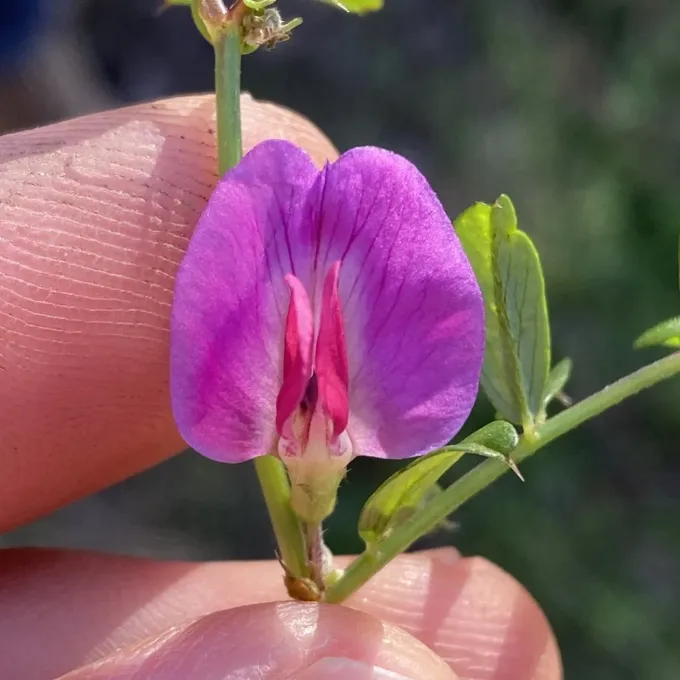
Description
Sowing dates
Narrow-leaved vetch is a cold-tolerant crop, with sowing typically taking place in early spring as soon as the soil is dry enough for field machinery. Early sowing allows the crop to utilize spring moisture effectively for vegetative growth.
In regions with milder winters, autumn sowing is possible, which can lead to earlier maturity in the following season. It is important to avoid deep sowing, as shallow planting (3–5 cm) promotes faster emergence.
The seeding rate varies between 100 and 140 kg per hectare, depending on soil fertility and the primary objective of the cultivation. When grown in mixtures with winter cereals, the seeding rate is adjusted to manage crop competition.
Packing the soil after sowing is a critical agronomic practice that improves seed-to-soil contact. This enhances water uptake and leads to more uniform germination, even under variable weather conditions.
Proper depth control is essential to prevent desiccation of seeds in lighter soils. Utilizing precise drilling equipment ensures that seeds are placed at the optimal depth for reliable seedling establishment.
Growing requirements
Narrow-leaved vetch thrives in well-drained loamy soils and is relatively adaptable to different soil types. It performs best in neutral to slightly acidic pH conditions, which support the activity of nitrogen-fixing bacteria.
The plant has a high degree of ecological plasticity but is sensitive to high soil acidity. Liming may be necessary on acidic fields to optimize the performance of the symbiotic root nodules.
Light intensity is important for development, though the crop is shade-tolerant enough to be successfully intercropped with cereals. Adequate sunlight is key to maximizing biomass accumulation and flowering.
Moisture availability is critical during the flowering and pod-filling stages. While the crop can withstand short periods of drought, sustained water stress significantly impacts total dry matter yield.
The crop does not require heavy nitrogen fertilization, as it fixes atmospheric nitrogen through root symbiosis. Phosphorous and potassium fertilizers applied during land preparation provide the necessary nutrients for high yields.
Yield
Green biomass yields typically range from 15 to 25 tons per hectare depending on rainfall and soil quality. Productivity can be enhanced significantly with supplemental irrigation in drier climates.
Seed yields are generally between 1.5 and 2.5 tons per hectare. Maintaining a clean field free of broadleaf and grass weeds is essential to achieving these yield benchmarks consistently.
As a legume, it serves as an excellent rotational crop, leaving significant nitrogen residues in the soil. Farmers often use it as a green manure to improve soil structure and organic matter content.
Harvesting at the correct phenological stage is crucial, as the protein content of the forage is highest at the early flowering stage. Delaying harvest leads to a reduction in quality and nutritional value.
Modern breeding programs have focused on developing varieties with improved lodging resistance. This feature is vital for machine harvesting and helps reduce pre-harvest losses in the field.
Main diseases and pests
The clover root weevil is a significant pest that can damage young seedlings. Early scouting and the use of approved insecticides are standard procedures for managing population outbreaks.
Aphids and vetch seed beetles are common threats that target the reproductive parts of the plant. Integrated pest management strategies are recommended to minimize damage while maintaining crop quality.
Fungal diseases like Ascochyta blight thrive in high-humidity environments. Crop rotation and the selection of resistant cultivars are the most effective preventive measures against these pathogens.
Root rot can occur in compacted or poorly drained soils, emphasizing the importance of good field preparation. Ensuring proper soil aeration is a foundational requirement for plant health.
Weed control is vital during the early establishment phase. Both mechanical and chemical methods are used to prevent competition, ensuring the vetch establishes a strong canopy that naturally suppresses weeds later.
Harvesting
For high-quality forage, harvesting should occur during the full bloom stage. This captures the best balance between biomass volume and the high protein content required for livestock feed.
When producing hay, mechanical conditioners are used to speed up the drying process. Preserving the leaves is critical, as they hold the majority of the crop's nutritional value during storage.
Seed harvest is performed once the pods turn a deep brown color. Timing is precise; premature harvest leads to high moisture content, while delayed harvest results in pod shattering and significant loss.
Swathing is often practiced if the crop exhibits uneven maturity. This allows the plants to dry uniformly in the field before combining, reducing the risk of seed damage during the threshing process.
Post-harvest conditioning includes cleaning and drying seeds to a moisture level below 14%. Proper storage in well-ventilated, pest-free environments is essential to maintain seed viability until the next season.