
Knotgrass
Paspalum distichum L.
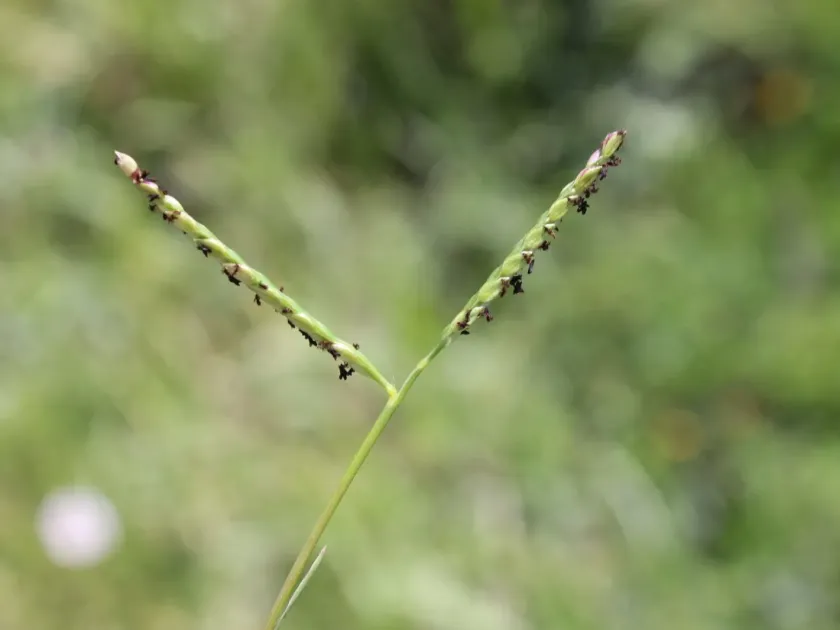
Description
Growing requirements
Knotgrass (Paspalum distichum L.) is a perennial grass species belonging to the Poaceae family. It is widely recognized for its creeping growth habit, utilizing stolons and rhizomes to establish thick, expansive mats.
Originally found in tropical and subtropical regions, this grass has naturalized in many parts of the world. It thrives in damp environments and is notably tolerant of periodic flooding, making it an ideal choice for wetland margins.
The plant requires high levels of solar radiation and warm temperatures for optimal growth. It is highly valued for its salt tolerance, which allows it to persist in coastal regions where other forage grasses might fail.
Regarding soil conditions, it prefers moist, fertile substrates but can adapt to various textures ranging from sandy loams to heavier clays. Its deep and expansive root system makes it exceptionally effective at soil stabilization.
Agricultural management involves ensuring adequate moisture levels. While the grass is resilient, its biomass production is significantly higher under consistent irrigation practices, especially during hot summer months.
Main diseases and pests
Common diseases affecting Knotgrass include rust (Puccinia spp.) and leaf spot fungi, which typically appear during high humidity levels, causing reduced photosynthetic capacity.
Pest pressure often comes from turf-damaging insects such as billbugs or mole crickets that feed on the rhizomes, potentially leading to patches of dying grass.
Integrated pest management is essential, focusing on maintaining soil health and preventing excessive moisture buildup around the base of the stems to limit fungal outbreaks.
Chemical control measures should be applied judiciously, ensuring that treatments target specific pests without compromising the overall vigor of the perennial stand.
Cultural practices, such as proper mowing height and aerating the soil, are highly effective in promoting rapid recovery and preventing the spread of secondary pathogens.