
Dallis grass
Paspalum dilatatum Poir.
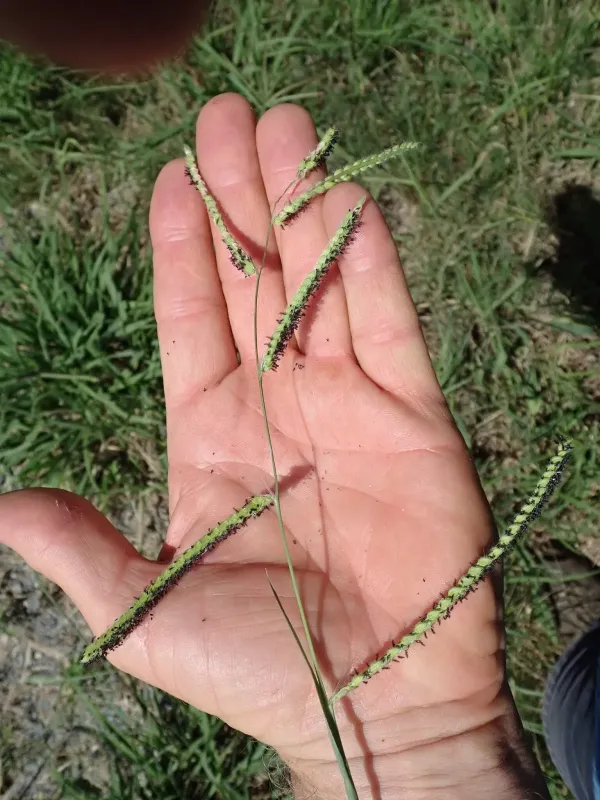
Description
Sowing dates
Dallis grass (Paspalum dilatatum) is a warm-season perennial grass that requires warm soil temperatures for successful germination and early development.
Sowing should be timed for late spring or early summer when the danger of frost has passed and soil temperatures consistently stay above 18 degrees Celsius.
The seeds are small and should be planted at a shallow depth of approximately 1 to 2 centimeters to ensure adequate emergence and establishment.
A firm, weed-free seedbed is essential, as Dallis grass seedlings are initially slow to grow and can be easily outcompeted by aggressive weeds.
Post-sowing rolling is highly recommended to improve soil-to-seed contact and maintain moisture levels required for consistent germination.
Growing requirements
This species belongs to the Poaceae family and is native to South America, thriving in temperate to subtropical regions with high humidity and warmth.
It prefers fertile, moist soils but is remarkably versatile, exhibiting strong performance on heavy clay soils where other forage crops might struggle.
While it is drought-tolerant once established due to its extensive root system, it yields best when provided with consistent moisture throughout the growing season.
Dallis grass is sensitive to prolonged hard freezes, which can kill or severely damage the plant crown, limiting its range in colder northern latitudes.
Regular nitrogen fertilization is necessary to maintain high levels of production and to facilitate rapid regrowth after grazing or mechanical harvesting.
Yield
Dallis grass is highly productive in pasture systems, providing a reliable source of high-quality forage during the peak of summer when other grasses go dormant.
It exhibits excellent recovery potential after grazing, making it a preferred choice for intensive rotational grazing systems in warm climates.
Nutritional value remains high throughout the vegetative phase, provided the sward is kept managed and prevented from reaching maturity.
Under optimal management, it provides sustained biomass production, effectively supporting high stocking rates in livestock farming operations.
Yields can be significantly enhanced by combining Dallis grass with complementary forage legumes, which provide nitrogen fixation and improve overall stand quality.
Main diseases and pests
The most significant pathological concern is the ergot fungus (Claviceps paspali), which infects the seed heads and produces toxic alkaloids.
Ingestion of ergot-infected Dallis grass seed heads can cause severe nervous system disorders in cattle, referred to as "Dallis grass staggers."
Pests like mole crickets or various soil-dwelling grubs can cause substantial damage to young stands by feeding on the root systems.
Leaf diseases, such as fungal spot, can occur during prolonged wet weather, potentially reducing the forage quality and overall photosynthesis capacity.
- Strict grazing management to prevent seed head formation.
- Mowing pastures to remove mature stems and seed heads.
- Regular monitoring for signs of ergot infection in the field.
- Providing alternative feed if toxicity levels become concerning.
Harvesting
In a pasture setting, Dallis grass should be grazed when it reaches a height of 15–20 centimeters to maximize both intake and regrowth potential.
If utilized for hay production, it should be cut before the seed heads emerge to ensure the highest protein content and digestibility for livestock.
Seed harvesting is challenging due to the indeterminate ripening of seeds and their tendency to shatter, requiring specialized harvesting equipment.
Leaving a residual height of 5–8 centimeters before winter helps protect the growing points and facilitates a stronger start the following spring.
Management through mechanical topping is effective in keeping the sward in a vegetative state, thereby improving the overall utility of the forage stand.