
Paspalum notatum
Paspalum notatum Flüggé
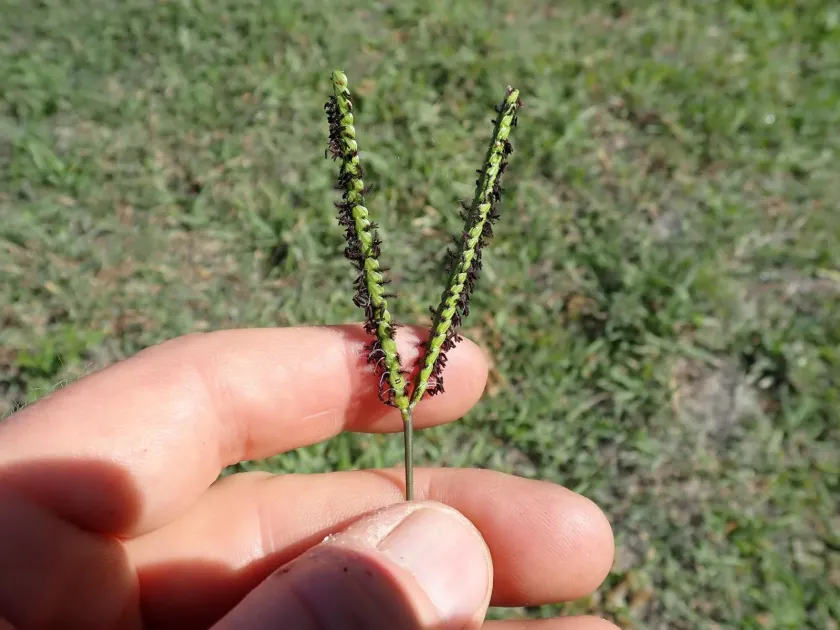
Description
Sowing dates
Sowing Paspalum notatum is best performed in the spring season when soil temperatures have consistently reached 18-20 degrees Celsius. Successful germination depends heavily on ensuring the seeds are placed at an optimal depth of 1 to 2 centimeters.
Since the seeds are known for their dormancy and slow initial growth, maintaining consistent soil moisture during the establishment phase is essential. It is recommended to prepare a firm and level seedbed to promote uniform germination across the field.
In regions with long growing seasons, early spring planting allows the plants to establish a robust root system before the onset of extreme summer heat. Using high-quality, scarified seeds can significantly improve the speed and uniformity of field emergence.
Weed management during the first year is critical, as the seedlings are slow to develop and can easily be outcompeted by faster-growing weeds. Pre-planting site preparation, including herbicide application or tillage, is standard practice for professional growers.
The seeding rate typically ranges from 10 to 20 kilograms per hectare, depending on the intended density and management style. Higher rates are often preferred when establishing permanent pastures to ensure rapid ground cover and suppress invasive species.
Growing requirements
Paspalum notatum, commonly known as bahiagrass, belongs to the Poaceae family. It is a perennial rhizomatous grass native to South America, widely cultivated across tropical and subtropical regions for its resilience and adaptability.
One of the most notable features of this crop is its ability to thrive in infertile, acidic, and sandy soils where other forage grasses often fail. Its deep, vigorous root system enables it to access nutrients and moisture in challenging soil conditions.
The species prefers full sun and warm temperatures, making it highly productive during the peak summer months. While it shows remarkable drought tolerance, it performs best when supplied with adequate moisture throughout the growing season.
Paspalum notatum is generally sensitive to freezing temperatures, which restricts its cultivation range to warmer climates. It remains dormant during cold periods but regrows vigorously once the temperatures rise sufficiently in the spring.
The plant is highly valued for its ability to withstand heavy grazing pressure and occasional flooding. This durability makes it a staple for sustainable livestock production systems in humid, hot environments worldwide.
Yield
The forage yield of Paspalum notatum is significantly influenced by nitrogen fertilization and soil fertility management. With appropriate inputs, it can support high stocking rates and produce multiple harvests throughout the long growing season.
While the nutritional quality of bahiagrass is considered moderate, its consistent performance during hot weather makes it a reliable feed source when other grasses decline. Proper grazing management, such as rotational grazing, helps maintain a balance between quantity and quality.
The biomass remains relatively palatable, but the fiber content increases as the plant matures. Timely mowing or frequent grazing is recommended to keep the forage in a vegetative state, thereby maximizing the protein content and overall digestibility.
In well-managed pastures, this grass forms a thick, persistent sod that minimizes soil erosion and maximizes land-use efficiency. It is often used in combination with legumes to improve the nitrogen status and overall feeding value of the forage.
Annual yields are highest in areas with ample rainfall or irrigation, where the grass can maintain continuous growth. Monitoring growth cycles and adjusting fertilizer applications accordingly are key strategies for sustaining high yield levels over several years.
Main diseases and pests
A significant biological threat to this crop is ergot, a fungus that attacks the inflorescences and can cause toxicity issues in livestock. Management practices, such as mowing the pastures before heavy seed head development, help mitigate this risk.
Soil-borne insects, including white grubs, can cause localized damage to the root system, potentially leading to weakened turf and bare patches. Implementing integrated pest management strategies is essential for identifying and controlling infestations early.
Excessive moisture combined with poor drainage can lead to root diseases and stand thinning. Ensuring proper water management is critical for preventing the development of anaerobic conditions that favor pathogenic fungi in the root zone.
Leaf spot diseases can sometimes emerge under conditions of high humidity and poor air circulation. While usually not fatal to established stands, these diseases can reduce the photosynthetic capacity and overall vigor of the crop.
Maintaining a healthy, vigorous stand through balanced fertilization and appropriate stocking density is the best defense against pests and diseases. Regular scouting of the fields ensures that any emerging issues are addressed before they impact production.