

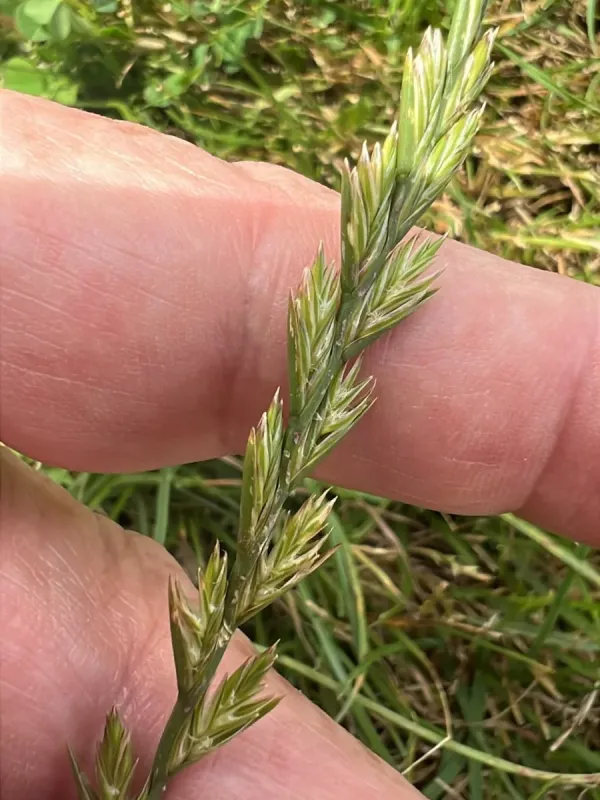
Description
Sowing dates
The optimal sowing time for perennial ryegrass is spring when soil temperatures reach 8–10°C. This allows for rapid germination and establishment before the heat of summer.
Late autumn sowing is also a viable practice in many regions. Seeds sown before the ground freezes often germinate early in the following spring, leading to vigorous initial growth.
For pasture establishment, sowing during rainy periods is recommended to ensure sufficient moisture for seedlings. Adequate moisture is crucial for the survival of young ryegrass plants.
When sown for forage, seeding rates range from 15 to 20 kg per hectare. This density provides sufficient biomass while allowing enough space for individual plants to develop strong roots.
Turf applications require much higher seeding rates, often between 30 and 40 kg per hectare. This density ensures a dense turf cover that is resistant to heavy wear and tear.
Growing requirements
Perennial ryegrass, a member of the Poaceae family, is highly valued for its fast establishment and excellent nutritional profile. It is best adapted to cool, moist temperate climates.
The crop thrives on fertile loam and clay soils that hold moisture well. It does not perform optimally on drought-prone sandy soils unless irrigation is provided.
Soil pH should ideally be kept between 6.0 and 7.0 for maximum nutrient availability. Acidic soils may require liming to prevent stunted growth and yield reductions.
Nitrogen fertilization is essential for sustained productivity. Regular applications promote tillering, which is vital for maintaining a thick and productive sward over several years.
While ryegrass can withstand some wet conditions, proper field drainage is necessary. Waterlogged soils can cause significant damage to the root system and encourage diseases.
Yield
Perennial ryegrass is highly productive, capable of yielding up to 30–40 tons of green matter per hectare annually under intensive management and fertilization.
When harvested for hay, dry matter yields typically range from 6 to 10 tons per hectare. It is widely considered a high-quality forage rich in protein and soluble carbohydrates.
Its ability to recover quickly after grazing makes it a staple for dairy and livestock pastures. It is capable of enduring heavy grazing pressure, which is a key trait for farmers.
The peak productivity phase is generally between the second and third years after planting. Following this, the stand may gradually thin out unless properly managed or reseeded.
Seed production yields are generally between 500 and 1,000 kg per hectare. Precision in harvest timing is critical to prevent significant losses due to seed shattering.
Main diseases and pests
Common fungal diseases affecting this crop include rust and powdery mildew, which thrive in high humidity. These infections can drastically reduce the feed quality and visual appeal of the grass.
Root rot diseases are more prevalent in poorly drained soils. Farmers should prioritize field drainage and avoid overwatering to minimize the impact of these soil-borne pathogens.
Insect pests like the Frit fly and Hessian fly can damage the growing points of young ryegrass. Monitoring these pests during the early development phase is vital for stand survival.
Aphids and leafhoppers act as vectors for various viral diseases that can permanently stunt the growth of affected plants. Using resistant cultivars is the primary defense strategy.
- Maintain appropriate field drainage.
- Rotate crops to break pest life cycles.
- Use certified seed for purity and disease resistance.
Harvesting
For high-quality forage, harvesting should take place before the boot stage. This ensures the highest protein content and digestibility for livestock consumption.
Hay harvesting is optimally performed during the early flowering stage. This timing strikes the right balance between overall biomass volume and nutrient density in the harvested crop.
Mechanical conditioners are highly recommended during mowing to speed up the drying process. This preserves the color and quality of the hay by minimizing exposure to weather.
When harvesting for seeds, farmers often use a swathing method to allow for uniform ripening and drying before combining. This helps in capturing the maximum possible yield.
After harvesting, seeds must be cleaned to remove debris and moisture levels reduced to 12–14% for safe storage, preventing mold and loss of germination potential.
Content graph
Connections · Perennial ryegrass
Most often together:
Marketplace
Products · 2

Selenit
«Нанджин Ессенс Файн-Кемікал Ко. Лтд» (Китай)
Herbicides
0
0
·
1.4K
5 offers
12.07 €per 1 l
Buy