
Hawaiian cotton
Gossypium tomentosum Nutt. ex Seem.
Description
Growing requirements
Hawaiian cotton (Gossypium tomentosum) is a perennial shrub species belonging to the Malvaceae family. It is endemic to the Hawaiian Islands, where it has evolved unique physiological traits to survive in harsh coastal environments.
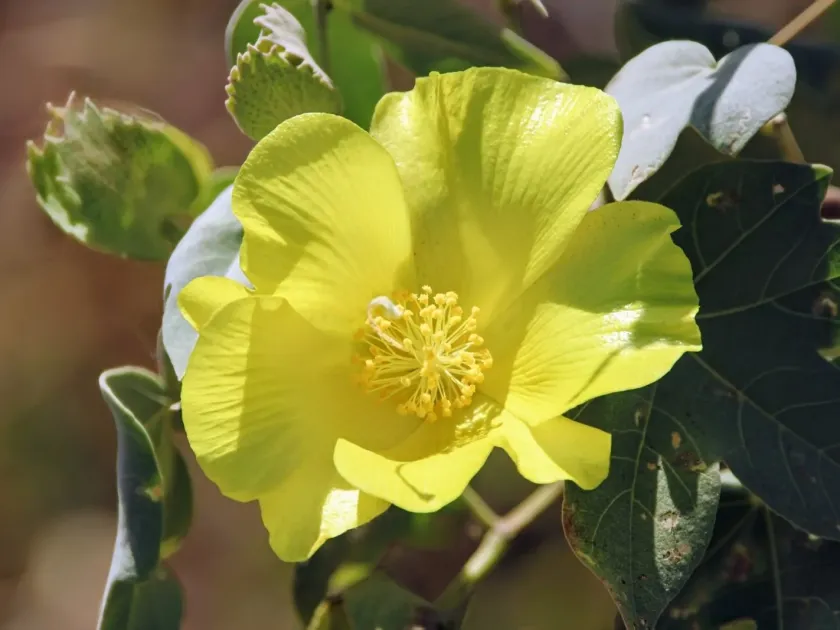
The plant is easily recognized by its dense, velvety trichomes (hairs) covering the leaves and stems, which provide protection against salt spray and extreme solar radiation. It typically grows as a sprawling shrub with vibrant yellow flowers.
In terms of environmental requirements, this species thrives in full sun and is well-adapted to sandy, rocky, or volcanic substrates. It is exceptionally tolerant of soil salinity, making it a subject of interest for salt-tolerance research in agricultural biotechnology.
The cultivation of this plant requires excellent drainage, as the roots are sensitive to waterlogging. It is highly drought-tolerant, naturally adapted to areas with limited rainfall and prolonged dry seasons.
While not a primary source of commercial fiber, the plant serves as a vital genetic reservoir. Scientists use it to study genes related to drought resistance and salt tolerance, aiming to introduce these traits into commercial Gossypium hirsutum cultivars.
Main diseases and pests
The primary threat to the wild populations of Gossypium tomentosum is the loss of native habitat due to land development and urbanization. Coastal regions where the plant once flourished are increasingly under pressure.
Invasive plant species pose a significant threat to its survival. Fast-growing exotic grasses and shrubs outcompete the native cotton for space, nutrients, and sunlight, often leading to population decline.
Hybridization with introduced domesticated cotton varieties is a major genetic concern. The cross-pollination between wild Gossypium tomentosum and commercial strains threatens the genetic integrity of this unique species.
Pests such as aphids and spider mites can infest the foliage, particularly in managed or greenhouse environments, requiring integrated pest management strategies to maintain plant health.
Fungal diseases, often exacerbated by poor air circulation or high humidity, can affect the leaves and stems. Maintaining optimal conditions in cultivation is essential to prevent these infections from spreading.