
Three-lobed cotton
Gossypium trilobum (DC.) Skovst.
Description
Growing requirements
Gossypium trilobum, commonly known as three-lobed cotton, is a perennial shrub belonging to the Malvaceae family. It is native to the dry tropical regions of western Mexico, where it has evolved as a xerophytic plant.
This species is not typically cultivated for commercial fiber production. Instead, it serves as a critical genetic reservoir for cotton breeders, providing drought-tolerance genes that can be transferred to commercial Gossypium hirsutum cultivars.
The plant requires well-drained, sandy, or rocky soil to thrive. It is extremely sensitive to waterlogging, as its roots are adapted to the rapid drainage patterns of mountain slopes and arid plains.
In terms of climate, it demands high temperatures and abundant sunlight throughout the growing period. Frost exposure must be strictly avoided, as the plant is not winter-hardy and will perish under freezing conditions.
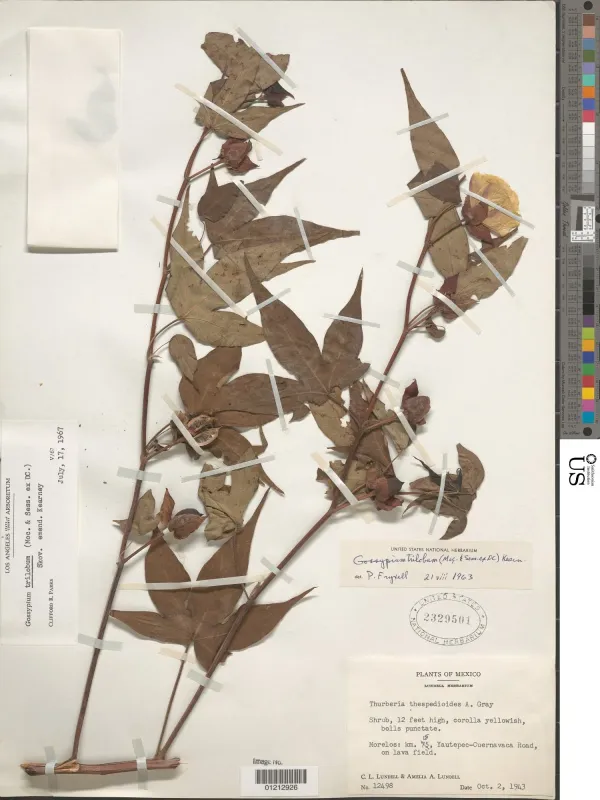
The vegetative growth of this species is relatively slow compared to industrial varieties. It maintains a distinct architectural form with small leaves divided into three lobes and yellow flowers, characteristic of many wild Malvaceae species.
Main diseases and pests
As a wild species, Gossypium trilobum is primarily threatened by the destruction of its native habitat in Mexico. Urbanization and land use changes pose a significant risk to the survival of wild populations.
The plant is susceptible to common cotton pests, including whiteflies and aphids, which can severely weaken the plant by feeding on its sap. These pests can also serve as vectors for various plant pathogens.
Fungal diseases, particularly those affecting the root system, are common when the plant is grown outside of its natural, arid climate. High humidity levels without proper ventilation are a major threat in greenhouse environments.
Invasive plant species often compete with G. trilobum for resources, leading to the fragmentation of its natural stands. Conservation efforts are necessary to protect the genetic integrity of these wild populations.
Breeding and research facilities must implement strict biosecurity protocols to prevent the accidental introduction of pathogens or pests that could devastate both the wild species and nearby commercial cotton fields.