
Upland cotton
Gossypium hirsutum L.
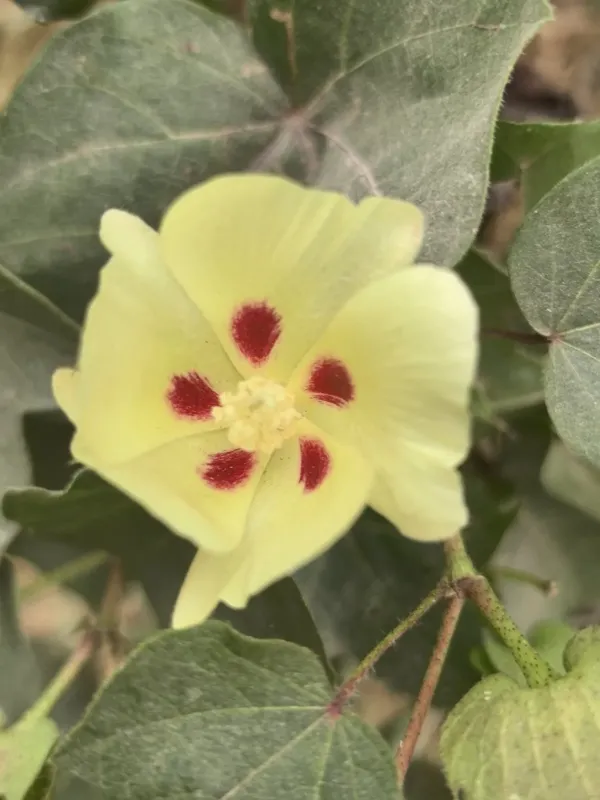
Description
Sowing dates
Sowing of Upland cotton is typically carried out in spring when the soil temperature at a depth of 10 centimeters reaches 12–14 degrees Celsius.
The optimal planting window for most cultivation regions falls between late March and mid-April.
Delays in sowing lead to a shortened vegetative period, which negatively impacts boll maturation and final fiber quality.
The planting technology usually involves a row-crop method with spacing of 60–90 centimeters to ensure adequate light penetration.
Seeding rates depend on specific variety characteristics and soil fertility, generally ranging from 80,000 to 120,000 viable seeds per hectare.
Growing requirements
This crop belongs to the Malvaceae family and requires significant thermal accumulation, needing over 3000 cumulative growing degree days.
Cotton prefers deep, fertile soils such as serozems or chernozems, characterized by good aeration and a pH level between 6.0 and 8.0.
The plant has a high requirement for direct sunlight and reacts negatively to shading, which is critical for forming a healthy crop.
Regular irrigation is essential for normal development, especially during the budding and flowering stages, when moisture stress causes fruit shedding.
Since the root system penetrates to significant depths, the soil must be free of impermeable layers to allow for proper root expansion.
Yield
Commercial yields of seed cotton vary from 2.5 to 4.5 tonnes per hectare, depending heavily on the implementation of irrigation strategies.
Global agricultural practices confirm that utilizing high-performance hybrids combined with intensive mineral fertilization leads to record yields.
Factors limiting productivity include high atmospheric humidity during maturation, which triggers the onset of various fungal diseases.
Harvest efficiency relies directly on the uniformity of boll opening and the effectiveness of chemical defoliation prior to picking.
The final lint turnout typically accounts for 30–40% of the total seed cotton mass, with the remainder consisting of seeds and linters.
Main diseases and pests
Among the most significant pests is the cotton bollworm, which is capable of causing substantial damage to the reproductive organs of the plant.
Aphids and spider mites also pose major threats by feeding on leaf sap, leading to premature wilting and chlorosis.
Verticillium and Fusarium wilt represent the most destructive diseases, effectively crippling the vascular system of the cotton plant.
Bacterial blight of cotton manifests as dark lesions on leaves and bolls, eventually leading to the rotting of fibers inside the fruit.
Integrated pest management includes the use of resistant cultivars, strict crop rotation, and timely applications of insecticides and fungicides.
Harvesting
The harvesting process begins once the majority of bolls have opened and the fiber moisture content has dropped to 12–14 percent.
In modern agricultural systems, harvesting is primarily mechanized using various types of specialized cotton picking machines.
Defoliation is a mandatory preparatory step, involving the chemical removal of leaves to accelerate boll opening and improve harvest quality.
Once harvested, the seed cotton must be cleaned of debris and dried promptly to prevent seed deterioration and maintain fiber grade.
In regions where mechanization is limited, hand-picking remains common, allowing for high-quality fiber collection free from leaf contamination.