
Sheep fescue
Festuca ovina ssp supina
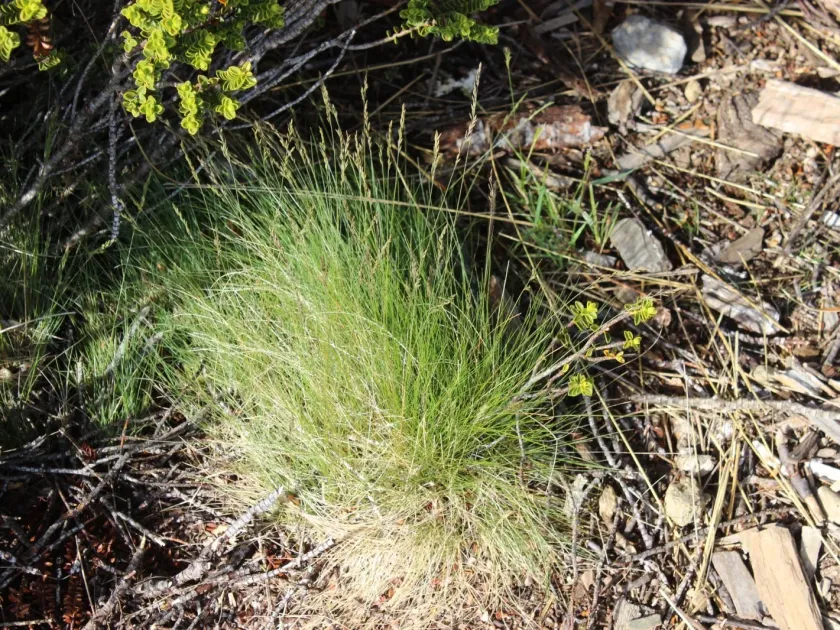
Description
Sowing dates
Sheep fescue (Festuca ovina) is a perennial bunchgrass widely used in agriculture for grazing and in landscaping for low-maintenance turf.
Seeding is typically performed in early spring or autumn, providing the soil has sufficient moisture to facilitate germination and establishment.
The recommended seeding rate varies from 10 to 20 kg/ha depending on the target density and the use of the sward as pasture or meadow.
Seeds should be covered with a thin layer of soil, as shallow planting (approx. 1 cm) is crucial for the successful emergence of this fine-seeded species.
Light rolling after sowing is recommended to improve soil-to-seed contact and ensure consistent germination across the entire field.
Growing requirements
This species is highly adaptable and thrives in diverse environments, showing excellent tolerance to poor, dry, and acidic soil conditions.
Sheep fescue prefers well-drained soils and is particularly known for its exceptional drought resistance, making it suitable for areas with low rainfall.
While it thrives in sunny locations, it possesses a notable degree of shade tolerance, allowing it to grow under the canopy of open-woodland ecosystems.
The plant is extremely hardy and capable of surviving harsh winters, maintaining its vegetative vigor in temperate and boreal climates.
It has low fertilizer requirements compared to other forage grasses, as it is evolved to survive in nutrient-deficient environments.
Yield
Although it is not the highest yielding grass in terms of biomass, sheep fescue offers high nutritional quality and palatability for livestock.
Yields of green biomass are typically in the range of 70–110 quintals per hectare, which provides reliable feed for sheep and horses.
Its ability to recover quickly after grazing makes it a staple component of permanent pastures in mountainous and marginal agricultural zones.
Seed production yields range from 3 to 5 quintals per hectare when managed in dedicated seed production fields.
The nutritional profile of the foliage remains stable throughout the season, supporting animal health even when other forage grasses start to lignify.
Main diseases and pests
Sheep fescue is generally resistant to many common diseases, although it may be susceptible to rust and powdery mildew under high humidity.
Pests such as cereal flies and various root-feeding insects can cause damage if the crop is managed incorrectly or under continuous monoculture.
Proper pasture management, including rotational grazing and avoiding overgrazing, is essential to maintain the health and vigor of the sward.
In humid areas, the risk of fungal infections is minimized by ensuring proper air circulation and timely harvesting of the grass stand.
Integrated pest management strategies are advised to prevent the buildup of soil-borne pests that could impact root development and plant survival.
Harvesting
Harvesting of seed crops should occur when the panicles have turned brown and the seeds are firm to the touch to prevent pre-harvest shedding.
For forage purposes, cutting the grass before full anthesis ensures the best balance between biomass quantity and protein digestibility.
Mechanical harvesting requires precise equipment settings to ensure that the cutting height does not damage the crown of the plants.
Hay should be turned frequently to ensure uniform drying and to prevent mold growth in the dense, fine-leaved material.
Proper storage of the harvested crop in well-ventilated areas is critical to maintain quality and prevent nutritional loss due to moisture.