
Chewing's fescue (or shade fescue)
Festuca heterophylla Lam.
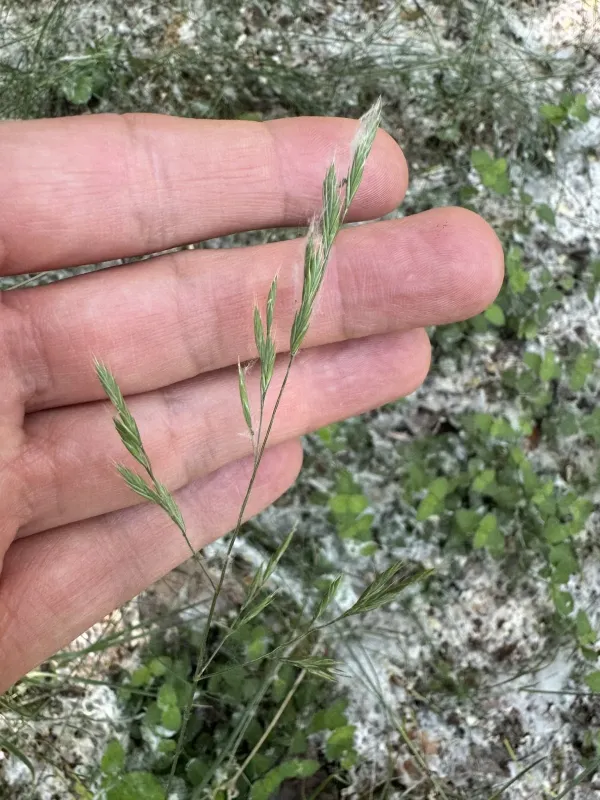
Description
Sowing dates
Festuca heterophylla is typically sown in early spring or late summer when soil moisture is sufficient to support germination. Early spring planting is preferred as soon as soil temperatures reach 5-8 degrees Celsius.
For high-quality forage or turf establishment, seeds should be sown at a depth of 1.5-2 centimeters. Compacting the soil lightly after sowing helps ensure proper seed-to-soil contact in dry conditions.
Seeding rates vary depending on the intended use. Seed production plots usually require 8-10 kg/ha, while pasture applications may utilize higher densities to ensure dense cover.
The seedlings of this species develop slowly. During the first year, the plant focuses on establishing its root system and vegetative shoots, making it sensitive to weed competition.
Proper soil preparation is crucial; the seedbed should be clean and free of rhizomatous weeds to provide the young grass with the space needed to establish successfully.
Growing requirements
Festuca heterophylla, a member of the Poaceae family, is a true mesophyte. It thrives in moderately moist, fertile forest soils and loams that have good drainage characteristics.
This grass is notable for its exceptional shade tolerance, making it a preferred choice for under-canopy planting in forests and orchards. It outperforms many other fescue species in low-light environments.
It has moderate climatic requirements and is quite winter-hardy, capable of surviving harsh winters typical of the forest zones of Europe and Northern regions.
The plant performs poorly in conditions of extreme waterlogging or severe drought. On nutrient-poor sandy soils, growth slows significantly, so fertilization is recommended for optimal biomass production.
The ideal soil pH range for healthy growth is between slightly acidic and neutral (5.5–7.0). High acidity can inhibit root development and reduce the overall vigor of the stand.
Yield
The primary use of Festuca heterophylla is in high-quality hayfields and pastures in forest zones. It is valued for its soft, palatable leaves, which are highly preferred by livestock.
In a meadow setting, the species exhibits long-term productivity, often lasting for 7–10 years. It provides nutritious green forage rich in protein, serving as an excellent component for grass mixtures.
Hay yields under favorable conditions can reach 30–45 decitonnes per hectare. Seed production yields typically range from 3-5 decitonnes per hectare when strict agronomic practices are followed.
As a component of lawn mixtures, it is prized for creating a dense, fine-textured, and aesthetically pleasing turf in shaded areas where other grasses might fail.
A distinct biological feature is its dimorphic foliage, consisting of narrow basal leaves and broader stem leaves, which provides a unique and dense ground cover.
Main diseases and pests
Festuca heterophylla is generally resistant to common grass diseases, although poor management or high humidity can lead to outbreaks of powdery mildew.
In overly dense stands or high-moisture environments, rust diseases may occur, potentially reducing the nutritional quality of the forage.
Among insect pests, the larvae of the ground beetle and the Hessian fly can pose risks to young seedlings, causing delayed development during the spring growth phase.
Disease prevention relies on crop rotation and soil moisture management. Fungicides are generally reserved for seed production fields experiencing severe infection pressures.
Grass aphids can occasionally impact plant vigor in dry years, so monitoring is advised to maintain the health and resilience of the meadow.
Harvesting
Hay harvesting should occur during the booting to early flowering stage to ensure maximum protein content and nutritional value before the plant turns coarse.
For seed production, harvesting is timed for the full wax ripeness stage, when the panicles have turned a straw-yellow color. Avoiding harvest delays is essential to prevent seed shattering.
A two-stage harvesting method is commonly used: cutting and windrowing, followed by pickup and threshing once the moisture content has decreased to safe levels.
When used in turf applications, mowing frequency depends on growth rates, with an ideal cutting height of 4–6 centimeters to maintain aesthetic appeal and plant health.
Post-harvest processing includes cleaning the seed of chaff and debris, followed by drying to a moisture content of 12-14% to ensure long-term viability and storage stability.