
Red fescue
Festuca rubra L. subsp. rubra
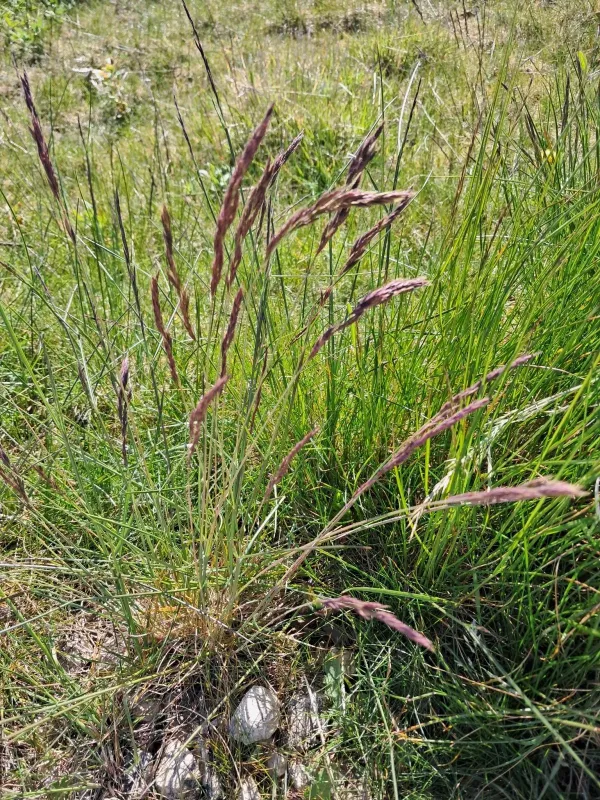
Description
Sowing dates
The optimal sowing time for red fescue is in early spring or late summer to early autumn, when soil moisture is sufficient. For spring sowing, it is crucial to finish before the dry season starts, as young seedlings are sensitive to water stress.
Seeding rates depend on the intended use: for dense lawn coverage, the rate is about 25–35 kg per hectare, while for seed production, it is reduced to 10–15 kg. It is important to maintain a sowing depth of no more than 1–2 centimeters.
The crop is characterized by slow development in the year of planting, making early weed control essential. Seedlings typically emerge within 14–21 days, depending on soil temperature and humidity.
To improve germination uniformity, rolling the soil after sowing is recommended. This ensures better seed-to-soil contact and prevents the seeds from being blown away by the wind.
In regions with harsh winters, late autumn sowing is discouraged, as plants may not have enough time to establish a root system before the onset of freezing temperatures.
Growing requirements
Red fescue is a perennial bunch-type grass belonging to the Poaceae family. It is widely distributed across temperate regions due to its high ecological plasticity.
The crop prefers moderately fertile, well-drained loamy and sandy soils. Red fescue is highly tolerant of acidic soil conditions, making it an excellent choice for nutrient-poor areas.
The plant exhibits high frost resistance and can withstand long periods of ice cover. It thrives in regions with severe winters and variable moisture conditions.
A key trait is its drought tolerance, supported by a deep root system, which allows the plant to maintain its aesthetic value even during hot summer months.
While red fescue prefers moderate to full sunlight, it is among the most shade-tolerant grass species, capable of growing well under tree canopies.
Yield
The green mass yield of red fescue varies from 1.5 to 3.0 tons per hectare, depending on soil fertility levels and the application of mineral fertilizers.
Seed production is an important agricultural sector, with intensive management yielding up to 500–800 kg per hectare. Spring nitrogen fertilization is essential for maximizing output.
Red fescue maintains productivity in a pasture or meadow for 7–10 years, provided regular mowing or grazing is practiced to stimulate tillering and root renewal.
Yield significantly declines if the field is heavily infested with weeds, so strict agronomic practices are required to maintain a thick and healthy turf density.
Tillering intensity is a direct indicator of stand density, which is the primary factor determining both the nutritional value for forage and the visual quality of a lawn.
Main diseases and pests
The crop is susceptible to fungal diseases such as powdery mildew, rust, and leaf spots, particularly during periods of prolonged rainfall or high humidity.
Under conditions of high density and poor air circulation, red thread (Laetisaria fuciformis) may develop, necessitating the use of targeted fungicides.
Common pests include white grubs (larvae of the May beetle) and wireworms, which damage the root system and can lead to plant loss in patches.
To prevent pest outbreaks, crop rotation and the treatment of seeds with insecticidal dressings prior to planting are highly recommended.
Proper irrigation and the timely removal of grass clippings help reduce the risk of disease spread and keep the stand healthy throughout the season.
Harvesting
Seed harvesting is usually performed using a two-stage method once the seeds reach the wax maturity stage to minimize losses due to shattering.
Mowing for forage purposes should be done before the heading phase, as the plant reaches its peak protein and nutrient content at this stage.
For turf management, the mowing height should be maintained at 3–5 cm to allow the plants to recover their vegetative mass quickly after cutting.
It is vital to keep mower blades sharp to prevent leaf shredding, which creates entry points for various fungal pathogens and weakens the grass.
After the harvest, seeds must be cleaned and dried immediately to prevent heating and spoilage, which is critical for maintaining high germination rates.