
False sheep's fescue
Festuca pseudovina Hack. ex Wiesb.
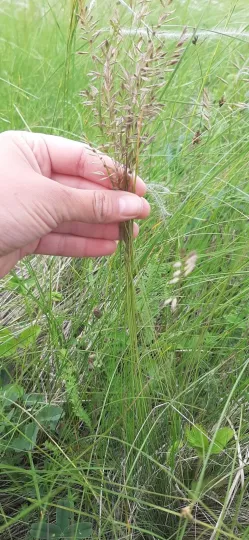
Description
Growing requirements
False sheep's fescue (Festuca pseudovina Hack. ex Wiesb.) is a member of the Poaceae family. This perennial grass is highly valued in agriculture for its ability to thrive in harsh environments where other common forage species fail to establish.
The origin of this species is linked to the steppe regions, where it has evolved to become a dominant component of xerophytic grasslands. Its natural range covers significant areas of Eastern Europe and Western Asia, making it a key species for restoration ecology.
Botanically, the plant is characterized by a dense tuft growth habit with narrow, folded leaves that are physiologically adapted to prevent excessive transpiration. The root system is deep and fibrous, allowing the grass to stabilize loose soils and access nutrients in nutrient-poor substrates.
Climate and soil requirements focus on drought tolerance and adaptation to poor, often alkaline or slightly saline soils. The species thrives in full sun exposure and requires excellent soil drainage to prevent root decay during wet seasons.
Agricultural use is primary directed towards long-term pasture development and soil conservation. As a forage crop, it provides nutritious grazing for livestock, particularly in regions prone to summer droughts where pasture productivity typically declines.
Main diseases and pests
False sheep's fescue is naturally resilient to many common fungal diseases affecting monoculture grasses. However, in dense stands during prolonged rainy periods, leaf spot diseases can occasionally manifest, reducing overall biomass quality.
Insect pests such as grass thrips and aphids are the primary concern for seed production fields. These pests reduce the vigor of the plant during the reproductive phase, potentially impacting the final yield of high-quality seeds.
Soil-borne pests like wireworms may affect the root system in younger stands, particularly if the field has been recently converted from fallow land. Integrated pest management involving crop rotation and controlled grazing is recommended.
Rust fungi may occur in specific microclimates with poor air circulation, but the impact is generally localized. Maintaining an appropriate grazing schedule helps in managing plant density and mitigating the risk of pathogen buildup.
Overall, the plant demonstrates excellent survival rates and recovery from biotic stress, which contributes to its status as a highly reliable species for low-input grassland management systems.