
Idaho fescue
Festuca idahoensis Elmer
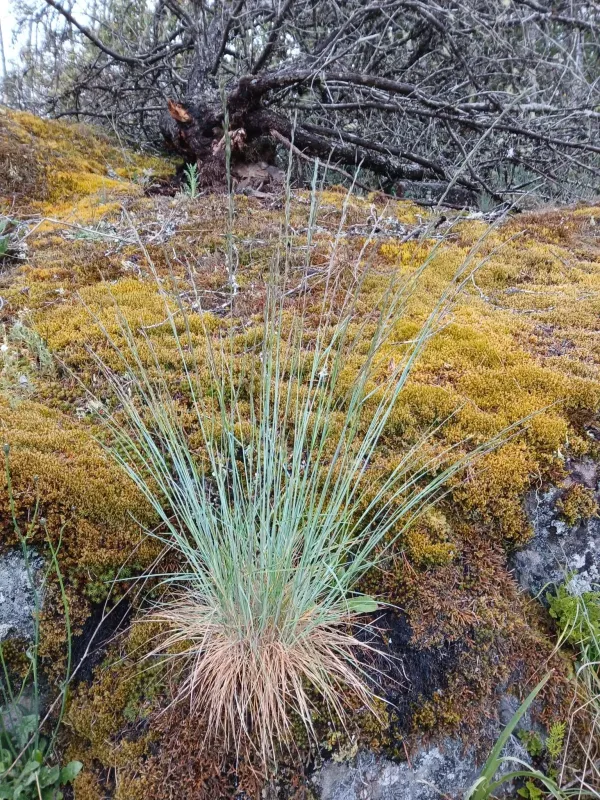
Description
Sowing dates
Idaho fescue is a perennial bunchgrass belonging to the Poaceae family. It is typically propagated by seeds, which are best sown in the autumn. This timing allows the seeds to benefit from natural winter chilling, which improves germination rates in the spring.
When sowing, seeds should be placed at a shallow depth of approximately 0.5 to 1.5 cm. Ensuring firm contact with the soil is essential, so light rolling of the soil surface after seeding is a standard recommended practice for better establishment.
Drilling in rows with 15–20 cm spacing is ideal for uniform stands. For rangeland restoration or hillside stabilization, broadcast seeding followed by light soil disturbance or covering with straw mulch can also be highly effective.
The soil temperature for germination should be moderate, typically between 10°C and 18°C. While seeds are hardy, they require consistent soil moisture during the first few weeks to successfully develop their primary root system.
In spring-sown fields, irrigation might be necessary if natural rainfall is insufficient. Once established, the seedlings exhibit remarkable resilience to fluctuating environmental conditions.
Growing requirements
Idaho fescue thrives in well-drained soils, ranging from sandy loams to heavier clay soils, provided they do not hold standing water. It prefers sites with neutral to slightly acidic soil pH.
One of the species' most defining characteristics is its exceptional drought tolerance. It is well-adapted to semi-arid climates, where it survives by utilizing a deep, fibrous root system to extract water from deeper soil horizons.
Full sun is required for optimal performance and biomass production. While it can tolerate light shade, its density and health are significantly reduced in shaded environments, making open fields the preferred choice for cultivation.
Nutrient requirements are relatively low compared to intensive agricultural crops. A moderate application of nitrogen-based fertilizer in early spring can help stimulate growth, but excessive fertilization may lead to competition from invasive weeds.
The grass is highly valued for its ability to withstand low-moisture environments, making it a critical component for ecological restoration projects aimed at rehabilitating degraded dryland pastures.
Yield
The primary economic use of Idaho fescue is as a high-quality forage grass. It remains palatable to livestock, particularly cattle and sheep, for an extended grazing season, providing essential nutrition throughout the year.
Yields vary depending on local precipitation and soil quality. In managed rangelands, it provides a reliable source of green forage that recovers well from grazing, provided that the grazing pressure is not excessive.
As a bunchgrass, it is highly persistent and can survive for many years, contributing to a stable forage supply. Its ability to regrow after grazing makes it a preferred species for sustainable pasture management.
In addition to livestock grazing, the species is frequently included in native seed mixes for ecological restoration. Its dense root structure makes it an excellent plant for erosion control on slopes.
The yield of green biomass is generally consistent, though it does not reach the high volumes of irrigated meadow grasses; however, its quality and resilience provide better stability for ranching in arid conditions.
Main diseases and pests
Idaho fescue is generally considered resistant to many common grass diseases. However, in overly moist conditions or in stagnant air, it may become susceptible to powdery mildew, which can affect the foliage.
Rust diseases are occasionally observed during prolonged wet and humid periods. These can be managed by maintaining proper plant spacing and avoiding practices that promote unnecessary humidity within the canopy.
Pests such as aphids or soil-dwelling larvae (like wireworms) may occasionally target the plants. Integrated pest management, including monitoring and biological control, is usually sufficient to handle these challenges.
The main threats to the health of an Idaho fescue stand are usually related to poor management practices, such as overgrazing or poor drainage, which weaken the plant and make it more vulnerable to secondary infections.
Maintaining a healthy, vibrant stand through rotational grazing and avoiding soil compaction is the most effective strategy to mitigate the risk of disease and pest outbreaks.
Harvesting
Harvesting for hay should occur during the boot to early flowering stage to ensure the highest nutritional quality. Delaying the harvest results in higher fiber content and lower protein levels, reducing the feed value.
It is crucial to mow at a height of no less than 7–10 cm. Cutting too low removes the critical growth points, which significantly delays or prevents the regrowth of the grass for subsequent seasons.
When harvesting for seed, the crop should be gathered when the seeds reach physiological maturity (waxy stage). Due to the high moisture content at harvest, immediate post-harvest drying is required to prevent mold.
Field curing is the standard practice for hay, where the cut grass is left in windrows until moisture levels are safe for storage. Proper aeration during this phase is necessary to prevent spoilage.
Stored hay must be kept in dry, well-ventilated conditions to maintain nutritional integrity. Proper storage ensures that the forage remains safe for livestock consumption throughout the winter months.