
Giant fescue
Festuca gigantea (L.) Vill.
Description
Sowing dates
Giant fescue (Festuca gigantea) is a perennial grass species belonging to the Poaceae family. It is naturally found in temperate forest regions, thriving in shaded and moist environments across Europe and Asia.
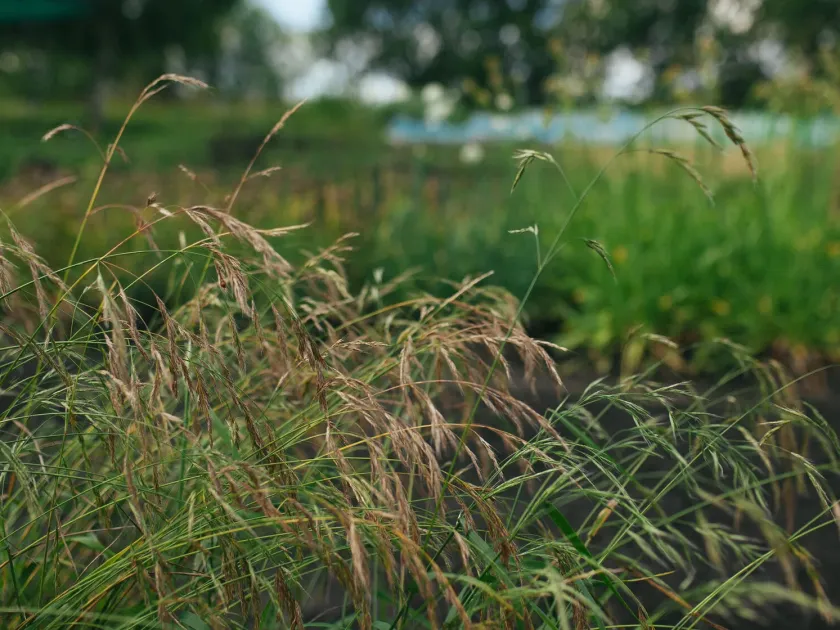
The plant is characterized by its significant height, often reaching up to 1.5 meters. It features broad, vibrant green leaves and a robust root system that contributes to its resilience in favorable soil conditions.
The optimal time for sowing is during the early spring or late summer months, ensuring that the soil maintains sufficient moisture levels for rapid germination. Seeds should be sown at a shallow depth of 1–2 centimeters.
When establishing a stand, it is essential to prepare a fine and firm seedbed. A proper seeding rate is crucial for developing a dense canopy, which helps suppress weed growth and increases overall biomass yield.
This species is highly compatible with other grasses and legumes, making it an excellent candidate for inclusion in diverse pasture mixtures. Such combinations can significantly improve the quality of the resulting forage.
Growing requirements
Giant fescue demands high soil moisture and performs best in fertile, humus-rich environments. It is sensitive to prolonged drought, which can severely limit its growth and productivity.
The ideal soil types include loams and sandy loams with a neutral or slightly acidic pH. While the plant can tolerate short periods of waterlogging, it generally prefers well-drained but moist soils.
One of the standout features of this species is its high shade tolerance. This makes it a valuable grass for silvopasture systems or for planting in orchards where light penetration is limited.
Regular fertilization, particularly with nitrogen, is required to maintain a high level of green matter production. Potassium and phosphorus are also essential for root development and overall plant vigor.
The species demonstrates good cold tolerance, making it suitable for temperate climates with cool winters. Ensuring adequate snow cover provides extra protection against extreme frost during dormant periods.
Yield
The yield of giant fescue is impressive, provided that moisture and nutritional requirements are met. It is capable of producing multiple cuts during a single growing season under intensive management.
Typically, well-maintained stands can produce between 25 and 35 tonnes of green matter per hectare annually. This high biomass makes it a reliable source of forage for livestock.
To maximize the feeding value, harvesting must occur before the plants reach the full heading stage. Delaying the harvest leads to lignification of the stems, which decreases palatability and digestibility.
The aftermath, or regrowth, is highly nutritious if cut during the active vegetative growth phase. Proper grazing management is essential to prevent overgrazing, which can degrade the stand over time.
In high-input systems, supplemental irrigation can drastically boost yields during dry spells, ensuring a consistent forage supply for grazing animals throughout the year.
Main diseases and pests
Fungal diseases such as rust and powdery mildew are common threats, especially during periods of high humidity and poor air circulation within the stand. These diseases can negatively impact leaf quality.
Pests, including aphids and cereal flies, can damage young seedlings and affect plant vigor. Integrated pest management practices are recommended to mitigate these risks effectively.
Sclerotinia and other root rots can be problematic in soils that remain consistently waterlogged. Maintaining proper soil drainage is the most effective preventative measure against these soil-borne pathogens.
Poor harvest timing and overgrazing create open patches, making the stand susceptible to invasive weeds. Regular monitoring and spot treatments help keep the grass stand healthy and competitive.
Strategic mowing can disrupt the life cycles of many pests. By maintaining a clean and healthy crop canopy, farmers can significantly reduce the need for chemical interventions.
Harvesting
The first harvest should be timed at the beginning of the elongation phase. Harvesting at this stage ensures the best balance between biomass quantity and protein content.
When used for hay, the forage should be dried quickly under favorable weather conditions to preserve color and nutrient density. Using modern hay conditioners can speed up the drying process.
Seed harvesting requires careful adjustment of equipment to prevent excessive shattering. The best time to harvest is when the panicles show signs of maturity but before significant seed drop occurs.
Post-harvest, seeds must be cleaned and dried to a moisture content of approximately 12–14 percent to ensure long-term viability. Proper storage in cool, dry conditions is essential for maintaining seed quality.
Regular renovation of stands, typically every 4–6 years, helps to maintain high productivity. Proper harvesting and management practices are the foundation for a sustainable giant fescue operation.