
Fine-leaved sheep's fescue
Festuca filiformis Pourr.
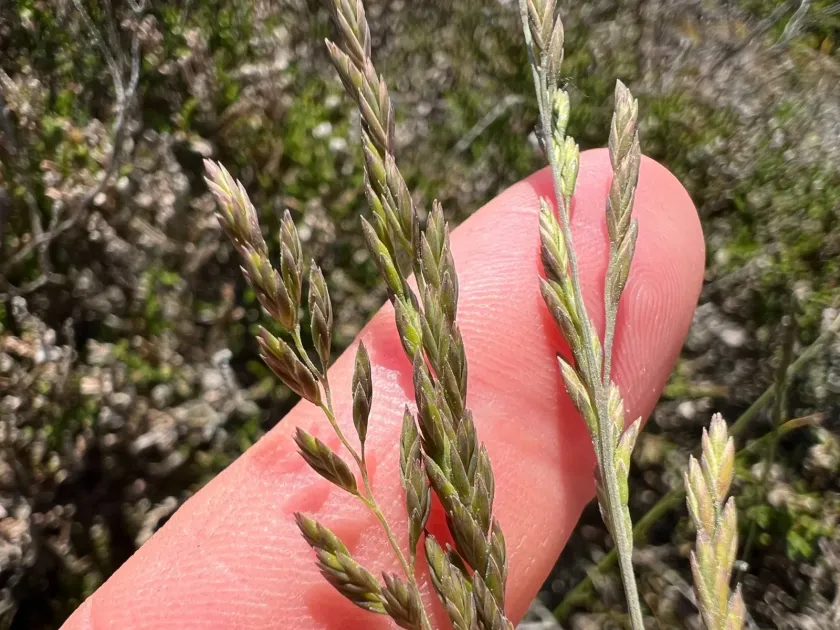
Description
Sowing dates
Fine-leaved sheep's fescue (Festuca filiformis) is typically sown in early spring or late autumn when soil temperatures favor seed germination. The seeds are very small, requiring a firm, finely prepared seedbed to ensure successful establishment.
Sowing depth is critical; seeds should be placed no deeper than 1–2 cm beneath the surface. Using a light roller after broadcasting the seed helps improve soil-to-seed contact, which significantly boosts germination rates.
The grass is known for its slow initial establishment phase. During the first few weeks after sowing, maintaining consistent soil moisture is vital to prevent the fragile seedlings from drying out before they develop a root system.
The seeding rate varies depending on the intended use, but generally, 15–20 kg per hectare is sufficient for establishing a dense stand. It is often included in seed mixtures for low-maintenance areas or erosion control.
After germination, the plants will begin to tiller, eventually forming a dense, tufted habit. Controlling competing weed species during the first growing season is essential for the long-term success of the fescue.
Growing requirements
Belonging to the Poaceae family, this grass is uniquely adapted to thrive in nutrient-poor, sandy, and acidic soils where many other species would struggle. It is highly valued for its ability to grow in locations with low fertility.
The species is exceptionally drought-tolerant and cold-hardy, making it a reliable choice for climates with varying seasonal conditions. Its narrow, needle-like leaves are an evolutionary adaptation to conserve moisture.
The plant performs best in well-drained soils and is highly sensitive to waterlogging or anaerobic conditions. If planted in heavy clay, incorporating sand or improving drainage is necessary for survival.
Fine-leaved sheep's fescue can tolerate partial shade, though it prefers open, sunlit positions. It requires very little supplemental fertilizer and is often harmed by excessive nitrogen applications, which can encourage fungal diseases.
This grass is well-suited for acidic environments (low pH) such as heathlands or sandy pastures. Its ability to thrive without constant human intervention makes it an ideal candidate for ecological restoration projects.
Yield
The primary use of fine-leaved sheep's fescue is in landscaping for ornamental lawns that require minimal maintenance. It provides a fine, delicate texture that is aesthetically pleasing in naturalistic garden designs.
In agricultural settings, its forage value is considered modest but acceptable for livestock grazing on nutrient-poor lands. It is a hardy plant that can withstand moderate grazing pressure once established.
Seed production of this species requires specific timing, as the mature inflorescences are prone to shattering. Careful monitoring and harvesting at the peak of seed maturity are required to maximize yields.
Beyond aesthetics and fodder, the grass is highly effective for soil stabilization and erosion control. Its fibrous, extensive root system binds loose soils on slopes, road verges, and embankments effectively.
Using this fescue reduces the overall need for irrigation, pesticides, and frequent mowing. It offers an environmentally sustainable alternative to high-maintenance grass species in urban and suburban developments.
Main diseases and pests
The most common disease associated with this species is Red Thread (Laetisaria fuciformis), which often appears when the grass is stressed due to nitrogen deficiency. Improving soil fertility slightly can help prevent outbreaks.
Rust fungi can occur during periods of high humidity and poor air circulation. Management strategies include regular aeration and dethatching to ensure the canopy dries out quickly after dew or rainfall.
Pests are rarely a major issue, but localized damage from soil-dwelling larvae can occur. Maintaining a healthy, vigorous stand of grass is the best natural defense against most minor pest infestations.
- Red Thread (Laetisaria fuciformis)
- Rust fungi (Puccinia spp.)
- Damping-off in overly wet nursery conditions
- Soil-borne grubs in young stands
The best defense against threats is a proper maintenance schedule that includes infrequent mowing at a height of 3–5 cm. Avoiding scalping the turf ensures the plants retain enough energy to defend against pathogens.