
Danthon's Fescue
Festuca danthonii Asch. & Graebn.
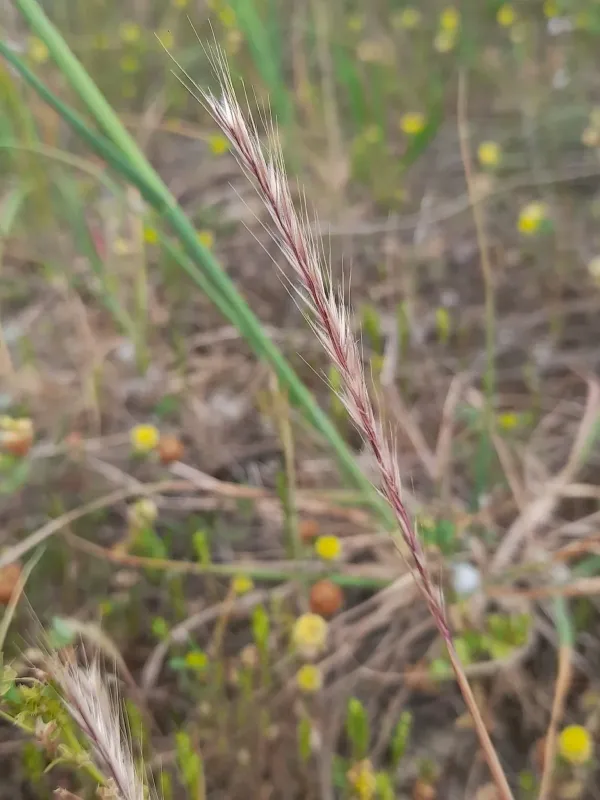
Description
Growing requirements
Danthon's Fescue (Festuca danthonii Asch. & Graebn.) belongs to the Poaceae family. This perennial grass is recognized for its significant role in ecological restoration and its capacity to thrive in nutrient-poor environments where other species struggle to survive.
Originating from the Mediterranean basin, the species is naturally adapted to regions with hot, dry summers and mild winters. Its distribution area reflects its biological preference for sun-drenched, well-drained habitats and open landscapes.
The plant demonstrates high tolerance for rocky, sandy, and calcareous soils. It is highly valued for its ability to form a dense, persistent turf that prevents soil erosion, making it an excellent choice for stabilizing steep banks and degraded land areas.
Botanically, it features narrow, hardy leaves and a fibrous, deep-reaching root system. This morphology allows the plant to efficiently extract moisture from deeper soil layers, providing an advantage during prolonged drought events common in its native range.
To achieve optimal biomass production, Danthon's Fescue requires full solar exposure and well-drained ground conditions. It does not tolerate prolonged waterlogging, so site selection should focus on areas with natural or improved subsurface drainage.
Main diseases and pests
Rust fungi represent the primary pathological threat to Danthon's Fescue, especially during periods of high humidity. Proper management of the canopy density through timely grazing or mowing helps improve air circulation and reduces the risk of fungal outbreaks.
Insect pests such as cereal flies and stem-boring beetles can cause localized damage. Integrated pest management strategies, focusing on early detection and preserving natural predator populations, are essential for maintaining crop health.
Root rot pathogens may manifest in poorly drained or overly compacted soils. Preventing soil compaction through controlled grazing and avoiding unnecessary mechanical stress on the root zone are critical agronomic practices for longevity.
Secondary infections often stem from physical damage caused by harvesting machinery or trampling. Ensuring equipment is clean and sharp reduces the entry points for pathogens and supports faster recovery after clipping the foliage.
Sustainable production relies on maintaining soil fertility through balanced nutrient application. Weakened plants are significantly more susceptible to pest infestations, emphasizing the need for regular soil monitoring to ensure the plants remain vigorous and resilient.