
Red fescue
Festuca rubra L.
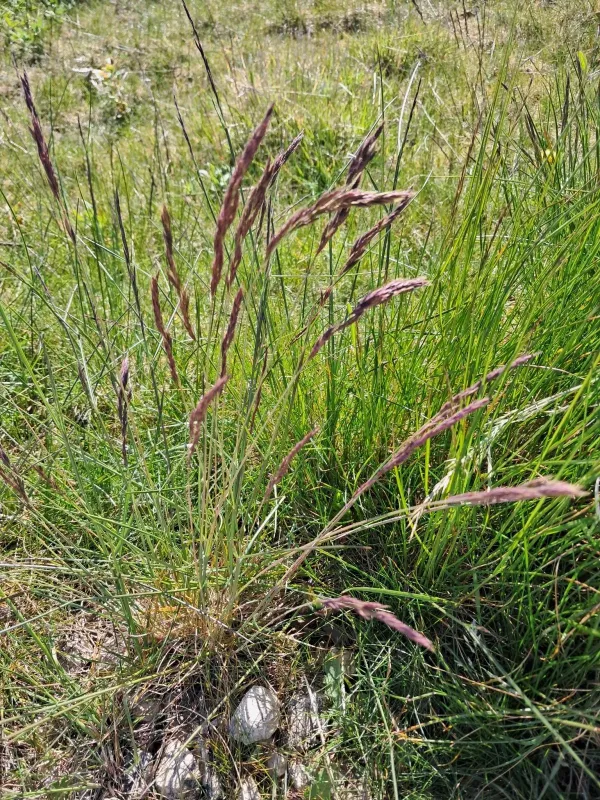
Description
Sowing dates
Red fescue is typically sown in early spring or late summer to ensure optimal establishment before the onset of harsh weather conditions. It requires a well-prepared, fine seedbed to achieve high germination rates.
The seeding rate for turf applications generally ranges from 25 to 35 grams per square meter. Proper moisture management is essential during the first three weeks of growth, as the seeds have a slower establishment phase than ryegrass.
Light rolling after sowing helps improve seed-to-soil contact, which is vital for moisture retention. This step significantly increases the success rate in sandy or dry soil conditions.
As a member of the Poaceae family, this species relies on its rhizomatous growth habit to establish a dense root system. Careful handling during the initial weeks prevents crusting and ensures uniform coverage.
Early maintenance involves keeping the soil consistently damp until the seedlings are approximately five centimeters high. Once established, the grass develops a deep root system that increases its drought tolerance.
Growing requirements
Red fescue is highly valued for its adaptability to various soil types, including sandy, acidic, and nutritionally poor soils. It is often the preferred choice for sites where other grass species struggle to survive.
One of its primary features is excellent shade tolerance, making it ideal for planting under trees or in areas with limited direct sunlight. It maintains its color and density even in semi-shaded environments.
The species demonstrates superior cold hardiness and is capable of surviving freezing temperatures in northern climates. It also shows a moderate to high level of drought resistance once established.
Fertilization requirements are relatively low compared to high-input grasses. A balanced application of nitrogen, phosphorus, and potassium during the active growing season is sufficient to maintain health.
The plant grows as a perennial herb with fine, needle-like leaves. Its ability to spread via rhizomes allows it to naturally repair minor damage to the turf, ensuring a consistent and aesthetic appearance.
Main diseases and pests
Red thread, caused by the fungus Laetisaria fuciformis, is a common disease affecting red fescue, especially in nutrient-deficient turf. It appears as pinkish, thread-like structures on the foliage.
Powdery mildew can become an issue in areas with poor air circulation or high humidity. It manifests as a white, dusty layer on the leaves, which can inhibit photosynthesis if left untreated.
Snow mold is a potential threat during winters with heavy snow cover. Proper autumn maintenance, including avoiding late-season heavy nitrogen application, helps to reduce the risk of this fungal infection.
Pests such as grubs or soil-dwelling insects can damage the root system, causing yellowing or thinning of the grass. Integrated pest management strategies are recommended to monitor and control such populations.
- Red thread fungus
- Powdery mildew
- Snow mold
- Soil-dwelling larvae
Harvesting
For seed production, harvesting takes place when the panicles turn light brown and the seed moisture content is within the optimal range. This usually occurs mid-summer, depending on the local climate.
Direct combining is the standard method for harvesting, requiring careful adjustment of the cylinder speed to prevent mechanical damage to the seeds. Minimizing loss due to shattering is the main goal.
Post-harvest cleaning involves removing stems, chaff, and other debris. The seeds must be dried to a moisture content of roughly 12 percent for long-term storage and viability preservation.
Storage in cool, dry conditions is essential to maintain the germination energy of the seeds over several seasons. Regular testing of germination rates is advised for quality control in commercial operations.
Seed yields can vary significantly based on environmental conditions and management practices during the flowering phase. Effective weed control in the fields prior to harvest is crucial for ensuring seed purity.