
Chewings fescue
Festuca rubra L. subsp. commutata Markgr.-Dann.
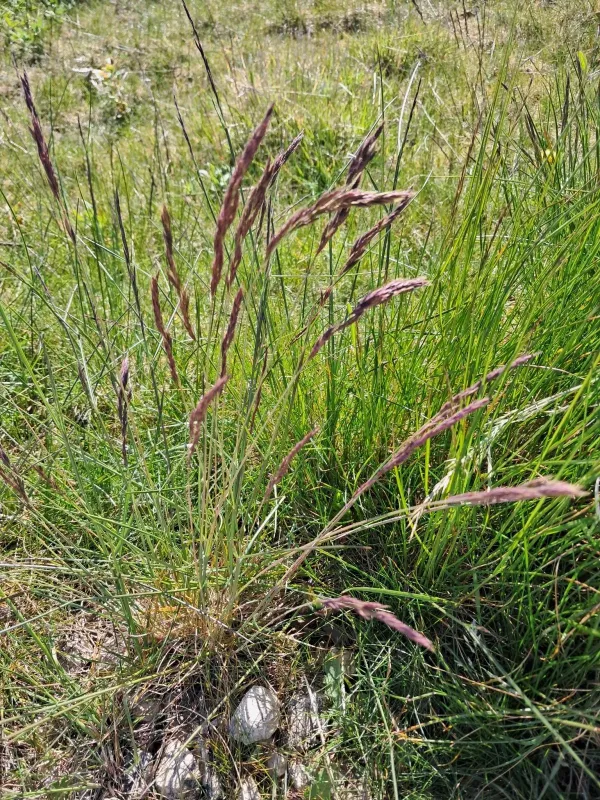
Description
Sowing dates
Chewings fescue is typically sown in the spring or early autumn. The optimal window is late April to May or late August to early September, when soil moisture is consistent and temperatures favor germination and seedling establishment.
Proper seed placement is critical, with a sowing depth of no more than 1–1.5 cm. Surface seeding requires immediate rolling to ensure the seeds make firm contact with the soil, which is essential for uniform germination under field conditions.
The recommended seeding rate for creating a dense turf stand is between 20 to 30 grams per square meter. When used in grass seed mixtures, the proportion of Chewings fescue varies depending on the specific lawn use, but it frequently occupies up to 40% of the mix to provide high density.
Successful sowing requires thorough preparation of the seedbed, including weed removal and soil leveling. The use of non-selective herbicides prior to planting is highly recommended to reduce competition from weeds during the early developmental stages of the crop.
Following sowing, consistent moisture in the top layer of soil must be maintained for the first 14–21 days. During dry periods, light mist irrigation is necessary to prevent seeds from drying out or being washed away by heavy water flow.
Growing requirements
Chewings fescue (Festuca rubra subsp. commutata) is a perennial, low-growing plant belonging to the Poaceae family. Unlike typical creeping red fescue, it lacks significant rhizomes, forming dense, compact tufts that are ideal for creating a uniform and fine-textured lawn surface.
This species thrives in moderately moist, fertile loamy and sandy soils. It demonstrates a high tolerance to soil acidity, successfully growing in substrates with a pH ranging from 5.0 to 7.0, which makes it adaptable to a wide range of geographical environments.
The plant exhibits excellent cold tolerance and is capable of surviving harsh winters in temperate climates. Due to its deep and well-developed root system, it also shows moderate drought resistance, allowing it to maintain its aesthetic quality throughout the summer months.
In contrast to other subspecies, Chewings fescue tolerates low mowing heights, sometimes down to 1–2 cm. This trait makes it an indispensable component in grass mixtures for golf course fairways, tennis courts, and high-end ornamental lawns where a dense, carpet-like appearance is required.
The crop responds well to regular nitrogen applications, though excessive fertilization can lead to overly vigorous vegetative growth at the expense of turf quality. A balanced application of potassium and phosphorus fertilizers is recommended to enhance plant immunity and overall stand health.
Main diseases and pests
The most common disease affecting this crop is red thread (Laetisaria fuciformis), particularly under conditions of nitrogen deficiency and high humidity. Infected patches exhibit a characteristic reddish-pink discoloration on the leaf blades.
During prolonged wet weather, plants may be susceptible to powdery mildew and various rust diseases. To prevent these infections, it is essential to ensure proper soil drainage and avoid late-evening irrigation to minimize the duration of leaf wetness throughout the night.
Among pests, larvae of scarab beetles, such as white grubs, pose the greatest threat by feeding on the root system. A major infestation often results in patches of turf turning yellow and lifting easily from the soil, necessitating the use of targeted insecticides.
Nematodes can also pose a threat by weakening the root system, thereby reducing the turf's overall resilience to environmental stressors. Regular monitoring of the turf condition in spring and autumn helps to identify infection spots early and implement necessary protective measures.
- Follow proper mowing height protocols to avoid stressing the plants.
- Perform aeration to improve air exchange in the root zone.
- Monitor moisture levels closely to prevent fungal outbreaks.
- Apply balanced fertilizers in accordance with the growth cycle.