
Chinese cinnamon
Cinnamomum aromaticum Nees.
Description
Sowing dates
Chinese cinnamon, also known as cassia, is an evergreen tree belonging to the Lauraceae family. Because seeds often demonstrate low germination rates, commercial plantations predominantly rely on vegetative propagation, such as cuttings or layering, which ensures the consistency of desirable aromatic traits.
Seedlings are nurtured in specialized nurseries where environmental conditions are carefully monitored. Once the saplings reach the age of one to two years, they are transplanted to their permanent location in rich, well-draining soil. The best time for planting is the beginning of the rainy season, as high humidity supports rapid root establishment.
Planting density depends on the chosen pruning technique, but growers typically maintain a spacing of 2 to 3 meters between trees. This distance ensures adequate sunlight exposure for each individual tree and simplifies maintenance, allowing for systematic pruning that promotes lateral growth.
Managing soil moisture during the first few years is crucial. The roots are highly sensitive to waterlogging, which can lead to rapid decay, making the installation of efficient drainage systems a prerequisite for any successful cinnamon plantation.
The cultivation process requires patience, as the trees only become ready for commercial harvesting 6 to 8 years after planting. At this maturity level, the bark thickness and the concentration of essential oils are optimal for high-quality production.
Growing requirements
Chinese cinnamon is a tropical crop with specific climate requirements. It thrives in temperature ranges between 22 and 30 degrees Celsius. The species is highly sensitive to extreme fluctuations and cannot withstand frosts, which can cause irreparable damage to the canopy.
High atmospheric humidity is essential for the tree's physiological well-being. In regions with insufficient moisture, growth is stunted, and the quality of the bark significantly diminishes due to environmental stress, which is why tropical or subtropical regions are ideal for production.
The ideal soil for cinnamon is a loamy or sandy substrate rich in organic matter. A slightly acidic soil, with a pH between 5.0 and 6.5, facilitates the efficient uptake of nutrients and prevents micronutrient deficiencies that could affect overall plant health and oil yield.
The crop is photophilous and requires significant sunlight. While young seedlings may benefit from light partial shade, mature trees need maximum sun exposure to catalyze the synthesis of cinnamaldehyde and other secondary metabolites within the bark.
Regular maintenance includes mulching around the base to retain moisture and suppressing weed growth. Applying organic fertilizers helps maintain soil fertility and structure, ensuring the trees have sufficient nutrients to sustain steady, healthy growth year-round.
Yield
Yield in cinnamon farming is measured by the quantity and quality of the bark harvested. Compared to its cousin, Ceylon cinnamon, Chinese cinnamon provides a thicker, more robust bark, which allows for higher volumes of commercial product per hectare.
With proper agronomic management and systematic pruning, a well-tended plantation can yield between 500 and 1000 kilograms of dried bark per hectare. Regular pruning stimulates the growth of new shoots, allowing for recurring harvests without endangering the long-term health of the trees.
Essential oil extracted from leaves and twigs serves as a secondary, highly valuable income stream. The oil yield ranges from 1% to 2% of the raw weight, making leaf harvesting a profitable addition to the primary bark production cycle.
Quality is assessed based on the aromatic profile and the content of specific essential oils. Proper drying techniques in shaded, well-ventilated areas are vital to prevent the oxidation of these compounds, which would otherwise degrade the quality of the end product.
Plantation productivity remains sustainable for decades if the harvest schedule is strictly followed. By balancing the removal of bark and foliage with the tree's natural growth cycle, farmers can ensure a consistent annual output.
Main diseases and pests
Chinese cinnamon is susceptible to various pathogens common in humid tropical ecosystems. Fungal diseases like anthracnose and powdery mildew are the most prevalent, often causing leaf lesions and reducing the overall photosynthetic capacity of the trees.
Root rot, primarily caused by Phytophthora species, is a lethal threat in poorly drained soils. Prevention is key, involving strict moisture control and maintaining adequate space between trees to ensure proper air circulation throughout the plantation.
Pests such as aphids and scale insects target tender young shoots. Beyond damaging the leaves directly, they secrete honeydew, which attracts sooty mold, further impairing the tree’s health and reducing the market value of the harvest.
Leaf-eating larvae can cause significant defoliation during outbreaks. Integrated pest management strategies, such as biological control agents and targeted systemic insecticides, are used to keep populations below the economic threshold.
To protect the plantation, farmers must:
- remove infected branches promptly to prevent disease spread;
- monitor planting density to avoid excessive humidity;
- source only disease-free planting material resistant to local pathogen strains.
Harvesting
Harvesting cinnamon is a labor-intensive craft. The optimal period is during the rainy season when the cambium layer remains active, allowing the bark to be peeled away from the wood in long, seamless strips with minimal damage.
Specialized curved knives are used to ensure precise cuts. Once harvested, the outer layer is scraped off, and the bark is left to ferment for a short period, which is essential for developing the characteristic deep color and intense aroma of cassia.
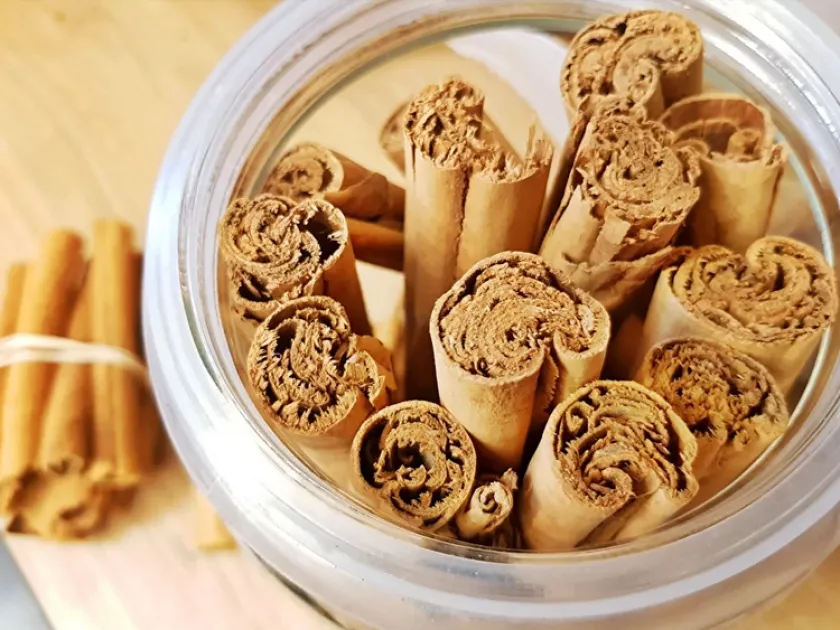
The drying phase is where the bark curls into its familiar tubular form. Drying must occur in cool, shaded, and airy environments; exposure to direct heat or intense sunlight can cause the loss of volatile essential oils, significantly lowering the quality of the spice.
Foliage harvesting for oil production is often synchronized with canopy trimming. This dual-purpose management keeps the trees compact and healthy while ensuring that no part of the biomass goes to waste, maximizing the total farm output.
Once dried, the product requires airtight storage. Because cinnamon is highly sensitive to moisture and aromatic contamination, keeping the product in dark, dry, and cool conditions is necessary to maintain its potency for transport and sale.