
Bromus coloratus
Bromus coloratus Steud.
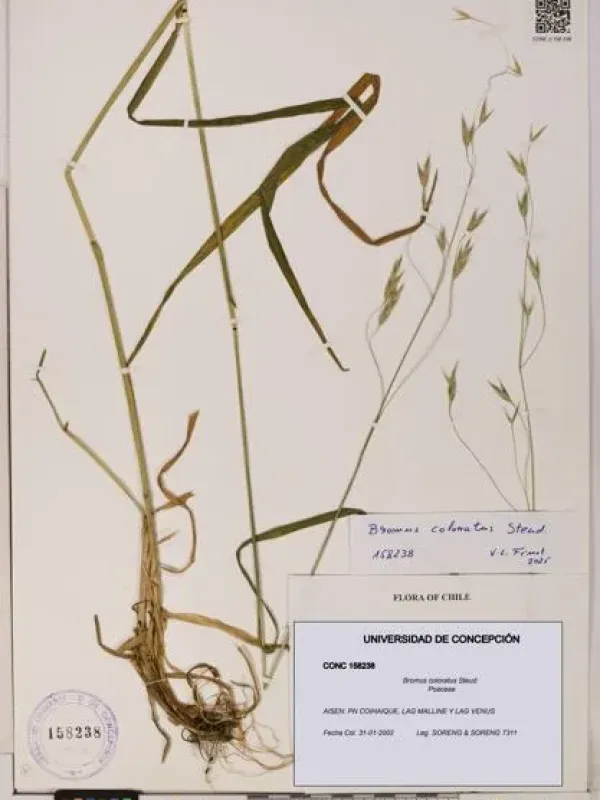
Description
Sowing dates
Bromus coloratus is a resilient perennial grass that thrives in temperate environments. In agricultural practice, the ideal time for sowing is during early spring when soil temperatures are sufficient to trigger rapid seed germination.
Autumn seeding can also be successful in regions with mild winters, allowing the seeds to undergo natural stratification, which leads to more vigorous growth in the following season. Proper moisture management during the initial sowing phase is critical for establishing a healthy stand.
Seeds should be sown at a shallow depth of 1–2 cm to ensure optimal emergence without exhausting the energy reserves of the seedling. A firm and well-leveled seedbed is essential to prevent excessive burial of the seeds during the sowing operation.
Seeding rates depend on the intended use of the crop, whether for hay production or permanent pasture establishment. Row seeding is the standard practice, as it simplifies subsequent field maintenance and provides enough space for uniform plant development.
Post-sowing rolling of the soil is highly recommended to improve the capillary connection between the soil and seeds. This practice significantly increases field emergence rates and provides a stable foundation for the development of the primary root system.
Growing requirements
Belonging to the Poaceae family, Bromus coloratus is known for its moderate soil requirements and high environmental adaptability. It performs best on well-drained loamy soils with a neutral to slightly acidic pH level.
The plant exhibits excellent winter hardiness, allowing it to survive significant frost in its native habitats. It also possesses a robust root system, which grants it substantial tolerance to periodic drought conditions, making it suitable for less intensive grazing systems.
Growth is maximized in full sunlight, though the species can tolerate moderate shading within mixed grass stands. Adequate nitrogen fertilization is recommended to promote vegetative growth and density, especially during the active tillering phase.
While the crop is adaptable, it prefers soils with good aeration to avoid root rot issues associated with waterlogging. Maintaining a proper drainage system in the field is vital for the long-term productivity and health of the grass stand.
Regular maintenance, including shallow inter-row cultivation during the establishment year, helps in suppressing weeds. Once established, the grass forms a thick, dense sod that naturally prevents the invasion of competitive weeds.
Yield
Bromus coloratus is valued in agriculture for its consistent green biomass yields in temperate climates. Productivity typically peaks during the second and third years after establishment, as the plants become fully acclimatized to the site.
Depending on local weather patterns and nutrient availability, producers can often achieve two full harvests (cuts) per growing season. This reliable yield makes it a valuable asset for livestock feed security.
The quality of hay derived from this grass is highly regarded for its nutritional content, being palatable to various livestock species. It is equally suitable for use as green forage or preserved in the form of high-quality haylage.
To sustain high yields over several years, it is advisable to provide periodic fertilization and potential overseeding in thinner areas. This management strategy keeps the grass stand productive and uniform for a longer duration.
While total biomass collection varies by season, Bromus coloratus is recognized for its stability. It rarely suffers total crop failure due to climatic factors, which provides a level of insurance for forage-dependent operations.
Main diseases and pests
Typical plant health challenges for Bromus species include rust fungi and powdery mildew, which are most prevalent in high-humidity conditions with poor air circulation. Proper stand density management is the primary preventative measure.
Pests such as grass aphids can occasionally damage developing leaves and inflorescences. Monitoring the fields during the stem elongation phase allows for timely detection and management before significant damage occurs to the crop.
Root rot diseases are primarily linked to poor soil management, specifically persistent water saturation. Ensuring proper land leveling and drainage remains the most effective prophylactic measure against these soil-borne pathogens.
Selective herbicides labeled for grass pastures can be utilized if weed pressure becomes excessive. Careful application adhering to specified rates is essential to maintain the health and vigor of the Bromus coloratus stand.
Overall, the species possesses strong natural defenses. Adhering to good crop rotation practices and proper field hygiene is usually sufficient to maintain a healthy and productive stand without heavy reliance on chemicals.
Harvesting
For hay production, harvesting should be performed during the heading stage before the stems become overly fibrous and lignified. This stage captures the optimal balance between high biomass volume and nutritional quality.
When harvesting for seed, the operation should be conducted via direct combining once the seeds reach the soft dough stage. Delaying the harvest increases the risk of seed shattering, so timing is critical to minimize loss.
After cutting, the biomass should be left in windrows to wilt. Rapid drying under favorable weather conditions ensures the preservation of essential sugars and vitamins, resulting in a superior quality final feed product.
If the target is haylage or silage, the grass should be harvested, chopped, and ensiled quickly to maintain its energy value and prevent spoilage. Proper compaction is essential for achieving a successful anaerobic fermentation process.
Post-harvest field management, such as light harrowing, helps incorporate any remaining residue and stimulates the regrowth of the crowns. This preparation ensures the plants enter the dormant period with sufficient energy reserves for spring growth.