
Bromus auleticus
Bromus auleticus Trin.
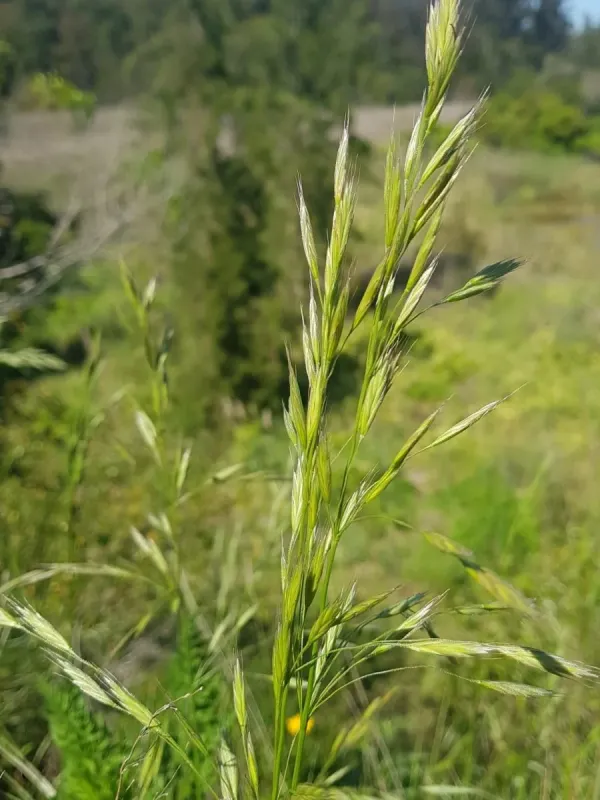
Description
Sowing dates
Sowing of Bromus auleticus is best performed in early spring when the soil retains sufficient moisture from melting snow. This is critical for achieving uniform germination, as the grass seeds require consistent hydration to establish roots effectively.
Winter sowing is also feasible in regions with temperate climates, allowing the seeds to undergo natural stratification. The optimal sowing time should be determined by the soil temperature in the upper layer, which should ideally reach 5–8 degrees Celsius.
The seeding rate should be calculated based on the purity and germination capacity of the seeds, typically ranging from 12 to 16 kilograms per hectare for conventional row seeding. It is essential to ensure that seeds are buried at a depth no greater than 2–3 centimeters.
Rolling the field after sowing is a mandatory practice to ensure good seed-to-soil contact. This action promotes capillary movement of moisture to the seed zone, significantly accelerating the germination process in field environments.
When incorporating Bromus auleticus into grass mixtures, the seeding rate should be adjusted according to the number of components. Ideal companion crops include legumes like alfalfa or clover, which enhance the nutritional value of the final forage yield.
Growing requirements
Bromus auleticus belongs to the Poaceae family and is a typical perennial grass species adapted to temperate, semi-arid, and forest-steppe zones. The plant demonstrates high environmental adaptability across various regions.
The crop prefers fertile chernozem soils with a neutral to slightly acidic pH. It reacts negatively to waterlogged conditions, making well-drained terrain essential for successful establishment and long-term productivity.
The plant is noted for its drought tolerance, allowing it to be cultivated successfully in areas with unpredictable rainfall. Its deep root system provides necessary sustenance even during periods of surface moisture deficit.
Light exposure is vital for Bromus auleticus, as it is a light-demanding species that struggles under competition from other crops or dense weed infestations. Consequently, maintaining clean fields during the first year is a primary agronomic priority.
Mineral requirements are moderate, yet early spring nitrogen fertilization significantly boosts vegetative biomass. Potassium and phosphorus applications are recommended to support robust root development and improve the overwintering capacity of the sward.
Yield
The biomass yield of Bromus auleticus depends heavily on the management level and weather conditions during the growing season. With intensive cultivation techniques, farmers can achieve up to two full cuts per season.
On highly fertile soils with adequate moisture, dry matter yields can reach 5–7 tons per hectare. Forage quality remains high if harvesting is conducted during the heading phase, before the onset of flowering.
Following the first cut, the crop exhibits rapid regrowth, making it a valuable component for grazing pastures. With proper maintenance, the economic lifespan of a productive Bromus auleticus sward can extend from 5 to 8 years.
Seed production for this species generally ranges between 300 and 500 kilograms per hectare. To maximize seed yields, it is recommended to use spaced sowing methods with row widths of up to 45 centimeters.
The economic efficiency of the crop stems from low maintenance costs combined with high nutritional content, which is highly valued in the livestock industry as a reliable source of fiber and protein.
Main diseases and pests
The primary threats to Bromus auleticus include fungal diseases such as rust and powdery mildew, which can affect crops under conditions of high humidity and poor stand density. Proper aeration of the field is the best preventive measure.
Among pests, cereal flies and aphids pose the most significant risk by damaging young shoots during the initial growth phases. Severe infestations can lead to thinning of the stand and reduced productivity over several seasons.
Disease prevention involves using high-quality treated seed and maintaining optimal plant density. It is essential to avoid over-crowding the field, as this helps maintain air circulation and reduces the micro-climatic humidity favorable for pathogens.
Weed control during the early development stages is achieved through mechanical cultivation or selective herbicides. Eradicating invasive perennial weeds prior to sowing is an absolute prerequisite for successful crop establishment.
In cases of significant pest outbreaks or signs of epiphytotics, approved insecticides and fungicides should be applied in strict accordance with regulations for forage crop management to ensure safety and yield quality.
Harvesting
Hay harvesting should take place during the heading stage when the nutrient content in leaves and stems reaches its peak. Delaying harvest leads to stem lignification and a sharp decrease in the digestibility of the forage.
To produce high-quality hay, the mown biomass should be left in the windrows for wilting, followed by tedding and baling. Ensuring uniform drying is essential to prevent the development of mold within the finished hay bales.
For haylage production, the crop should be harvested at a moisture content of 50–55 percent. This method preserves a higher concentration of carotene and vitamins, which is vital for the diet of high-yielding dairy cattle.
Pasture usage requires a strict rotation schedule for paddocks. Overgrazing must be avoided, as it weakens the root system and can lead to the displacement of the grass by less desirable weed species.
Seed harvesting is performed using either direct or two-phase methods during the wax-ripe stage. It is crucial to minimize losses during threshing, as the seeds of this species are prone to shattering if left in the field too long during windy weather.