
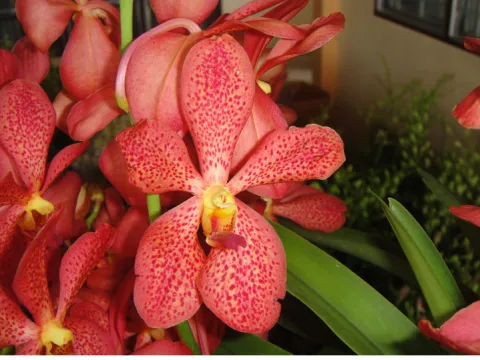
Mokara
Mokara
Mokara is a complex intergeneric orchid hybrid belonging to the Orchidaceae family, originating from a cross between Arachnis, Ascocentrum, and Vanda. This crop is highly valued in commercial floriculture for its vibrant blooms.
What the section contains
Mokara
To thrive, Mokara requires high humidity levels, ideally maintained between 70% and 80%. Temperature control is paramount, with an optimal range between 22°C and 30°C to ensure year-round vegetative growth.
The plant demands high light intensity to flower, but protection from direct midday sun is necessary to prevent leaf scorching. In commercial production, shade cloth is frequently used to manage light exposure.
Unlike traditional soil-grown crops, Mokara is cultivated in porous substrates, such as pine bark, charcoal, and expanded clay. This ensures rapid drainage and prevents the root rot common in compacted media.
Fertilization must be consistent throughout the growing season. A balanced orchid fertilizer, applied at low concentrations during every second or third watering, promotes robust stem development and flower quality.
The most common biological threats to Mokara include fungal infections such as leaf spot and various types of root rot triggered by stagnant air and excess moisture.
Pests can significantly degrade aesthetic quality, with spider mites, aphids, and scale insects being the primary concerns for greenhouse managers.
Integrated Pest Management (IPM) is essential; it involves consistent monitoring, maintaining proper airflow, and utilizing biocontrol agents or targeted miticides when necessary.
Bacterial soft rot is a severe risk in high-temperature, high-humidity environments, necessitating strict sanitation protocols for tools and greenhouse surfaces.
Effective management relies on early detection, as damaged leaf tissue on orchids is difficult to restore and significantly lowers the market value of the crop.
Mokara is cultivated primarily for the cut flower market, where its long-lasting, star-shaped inflorescences are highly sought after by florists worldwide.
Harvesting is performed by cutting the inflorescence when the majority of flowers are fully open, ensuring the stems are handled with care to prevent bruising.
Once harvested, stems are typically hydrated in a solution containing floral preservatives to maintain turgor pressure during the supply chain process.
Post-harvest classification involves sorting stems by length and the number of open blooms, ensuring standardized quality for international or local auctions.
Properly handled Mokara cut flowers can remain fresh for up to three weeks, provided they are kept in a temperature-controlled environment with adequate humidity.