
Microstylis
Microstylis
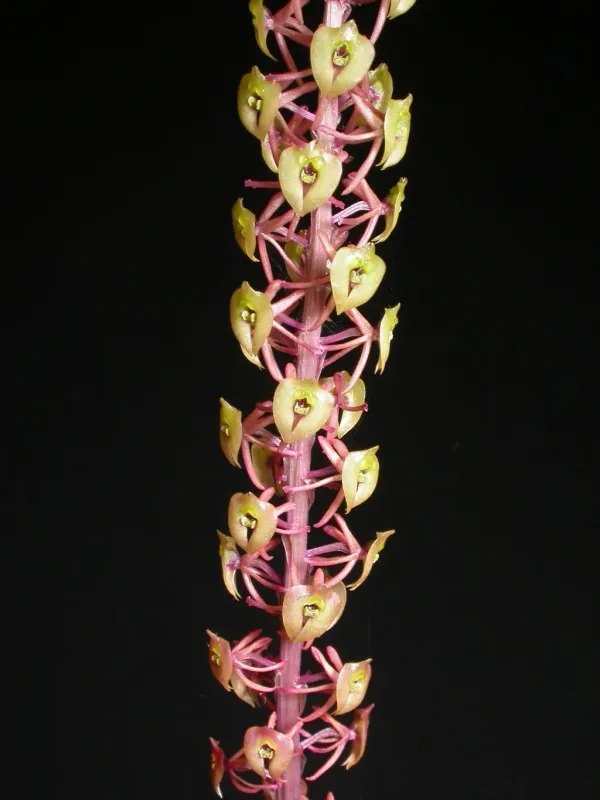
Description
Sowing dates
Microstylis is a genus of terrestrial orchids that are now frequently classified within the Malaxis genus. These plants are valued for their botanical interest and are often grown in specialized orchid collections rather than large-scale agricultural operations.
Propagation is typically achieved through division of the pseudobulbs. This process is best performed during the early spring season, just as the plant begins its new cycle of vegetative growth after the dormant phase.
When preparing for planting, it is essential to select pots with adequate drainage holes. The root system of Microstylis is delicate and requires a medium that provides both moisture retention and excellent aeration.
The planting depth should be shallow; the base of the pseudobulb should be level with the surface of the substrate. Deep planting often leads to stem rot and systemic collapse of the plant structure.
Successful cultivation requires patience, as these orchids are slow-growing and often require a significant period to re-establish their root system after division or repotting.
Growing requirements
Microstylis plants thrive in shaded environments, mimicking the light conditions of the forest floor. They should never be placed in direct sunlight, as the delicate foliage is highly prone to rapid burning and dehydration.
The ideal humidity range is between 60% and 80%. If the humidity drops below these levels, the plant may experience leaf tip necrosis and stunted growth. A misting system or room humidifier is recommended for indoor cultivation.
The substrate must be light, airy, and acidic. A blend of sphagnum moss, perlite, and fine pine bark is standard for maintaining the necessary pH level of 5.5 to 6.5 for healthy nutrient absorption.
Temperature management involves keeping the plants within 18–24 degrees Celsius during the day. During the winter dormancy, cooler night temperatures help to signal the plant to conserve energy for the upcoming season.
Fertilization must be applied with extreme caution. Use a balanced, water-soluble orchid fertilizer at one-quarter of the recommended strength, applying it only during the peak of the growth season.
Main diseases and pests
Fungal rot is the most significant threat to Microstylis, often resulting from poor ventilation and waterlogged substrate. Once the rot reaches the core of the pseudobulb, it is usually irreversible.
Spider mites are common pests that thrive in dry environments. They feed on the underside of the leaves, causing small white spots and eventually leading to yellowing and premature leaf fall.
Effective control of pests involves consistent hygiene practices. Removing fallen leaves and maintaining a clean growing area significantly reduces the likelihood of an infestation.
Environmental stress, such as sudden fluctuations in temperature or drafts, can weaken the plant's natural immune system, making it more susceptible to opportunistic pathogens.
Regular inspection of the root zone is advisable. If the roots appear brown or mushy instead of firm and healthy, the growing medium should be replaced immediately with fresh, sterile material.