
Zygophyllum ammophilum
Zygophyllum ammophilum
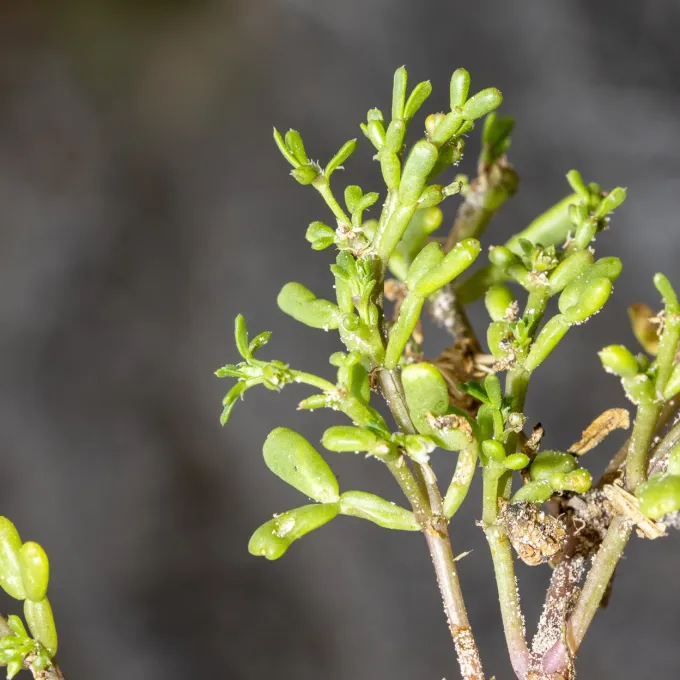
Description
Growing requirements
Zygophyllum ammophilum is a perennial subshrub belonging to the Zygophyllaceae family. This species is native to arid and desert regions, demonstrating remarkable evolutionary adaptations to extreme drought and high soil salinity.
The plant is characterized by a deep, extensive root system designed for efficient moisture extraction from sandy substrates. It serves as a vital component in desert ecosystems, playing a key role in stabilizing dunes and preventing soil erosion in harsh environments.
Cultivation requires environments with high solar radiation and low atmospheric humidity. The species is highly sensitive to waterlogging, necessitating well-drained sandy or loamy soils to prevent root decay, which is the primary cause of plant loss in managed plots.
The climatic adaptability of this culture is exceptional, as it withstands wide temperature fluctuations. It remains physiologically active during intense summer heat, while its hardy structure ensures survival during cold desert winters with minimal precipitation.
Economically, this plant is primarily utilized for livestock grazing, providing essential biomass for camels and sheep. Its role in land reclamation projects in degraded arid zones makes it an important asset for sustainable agriculture in desertification-prone areas.
Main diseases and pests
The primary threats to Zygophyllum ammophilum populations include outbreaks of locusts and other herbivorous insects common in desert landscapes. These pests can rapidly defoliate large stands, significantly impacting the available forage biomass.
Fungal pathogens represent a minor risk compared to climate-related stresses. However, during periods of unseasonable rainfall or improper irrigation, root rot can develop, leading to systemic weakness and potential plant mortality.
Viral infections are sporadically reported but remain largely unstudied in this species. Monitoring for unusual leaf discoloration is recommended to prevent the spread of potential pathogens within managed agricultural sectors.
Weed competition is only significant during the initial establishment phase of the crop. Once mature, the plant's aggressive growth habit and deep root system allow it to effectively outcompete surrounding vegetation for resources.
Overgrazing remains the most significant threat to the long-term viability of these stands. Implementing rotational grazing patterns is crucial for maintaining the plant's health and ensuring natural regeneration of the population over successive seasons.