
Phyllospadix japonicus
Phyllospadix japonicus
Description
Growing requirements
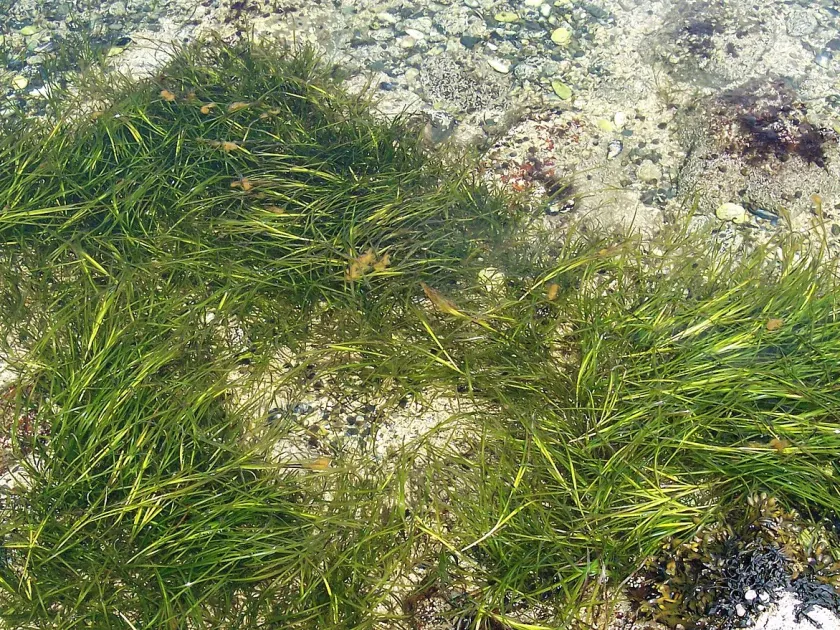
Phyllospadix japonicus is a perennial marine angiosperm belonging to the Zosteraceae family. This species is uniquely adapted to life in high-energy coastal zones, typically anchoring itself to rocky substrates in the intertidal regions of the Pacific Ocean.
The plant requires high water quality, constant aeration, and specific salinity levels to thrive. Its morphology, characterized by long, ribbon-like leaves, is designed to withstand strong currents and wave action, which are essential for its nutrient uptake and gas exchange.
Biologically, the plant develops extensive rhizome systems that penetrate crevices in rocks. This structural adaptation allows it to survive in environments where most other aquatic plants would be displaced by tides and storm surges.
Environmental conditions for Phyllospadix japonicus must be relatively cold and stable. It acts as a bio-indicator for pristine marine environments, as it is highly susceptible to pollution and excessive sedimentation in its natural habitat.
Agrotechnical efforts in mariculture focus on substrate stabilization and habitat restoration. By providing suitable rocky surfaces, researchers aim to promote the natural expansion of these beds, which is vital for maintaining coastal ecological stability.
Harvesting
The economic utility of Phyllospadix japonicus includes its application as an organic fertilizer and soil conditioner. Due to its high mineral content, processed seagrass is used in agriculture to improve soil structure, increase moisture retention, and boost plant growth.
Harvesting is traditionally conducted by hand during low tides to avoid damage to the root system and the surrounding marine ecosystem. This selective approach ensures that the seagrass beds can regenerate and continue providing essential ecological services.
Post-harvest processing involves thorough washing to remove marine salts, followed by controlled air drying. This preservation method keeps the nutritional composition of the plant intact, making it suitable for subsequent use in commercial organic farming.
In addition to its role as a fertilizer, research is exploring the use of Phyllospadix as a sustainable feed additive in animal husbandry. Its high concentration of trace elements provides nutritional benefits, provided that the raw material is properly fermented and prepared.
Future development in the harvesting of this culture relies on strict regulatory frameworks to ensure sustainability. Ongoing studies emphasize the balance between economic extraction of biomass and the conservation of these critical, carbon-sequestering marine habitats.