
Phyllospadix scouleri
Phyllospadix scouleri
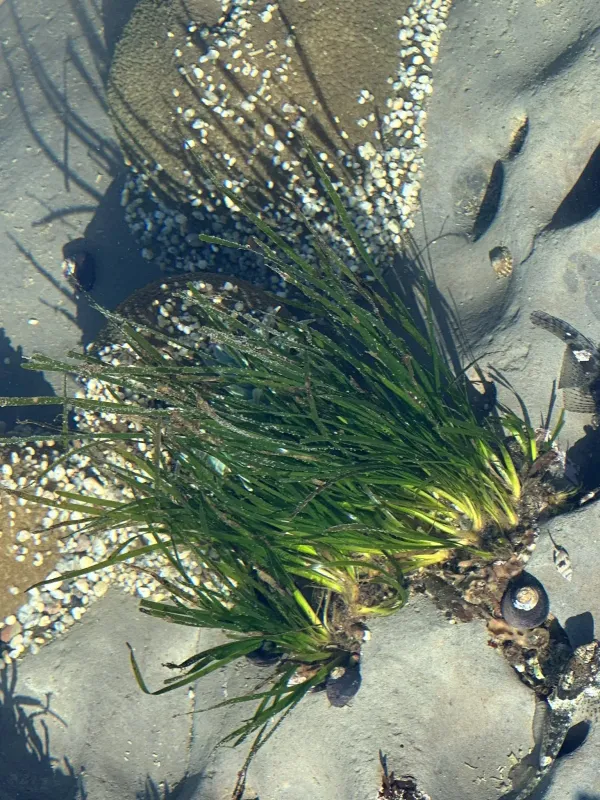
Description
Growing requirements
Phyllospadix scouleri, commonly known as Scouler's surfgrass, is a perennial marine plant belonging to the Zosteraceae family. Unlike typical sea grasses, this species has evolved to thrive in high-energy, rocky intertidal zones.
The plant is native to the Pacific coast of North America, stretching from Alaska to California. It is characterized by its ability to anchor firmly to rocky substrates using robust, thick rhizomes that withstand the intense mechanical force of crashing waves.
Success of this plant depends on high-salinity marine environments with constant water movement. It requires well-oxygenated, nutrient-rich water and is highly intolerant of brackish or stagnant conditions, making cultivation highly specific.
Botanically, the species features long, narrow, bright green leaves that are remarkably tough and flexible. This adaptation allows the plant to fold and sway with strong currents without snapping, ensuring survival in the most turbulent zones of the shore.
Cultivation attempts require complex sub-sea or tank systems that replicate the specific turbulent hydrology of its natural range. Due to its sensitivity to water quality, industrial-scale farming remains in the experimental phase of development.
Yield
While not harvested as a traditional agricultural crop, Phyllospadix scouleri serves as a major primary producer in intertidal ecosystems. Its biomass production is essential for maintaining the health of coastal food webs.
In traditional practices, stranded surfgrass collected from beaches has been used as a high-quality soil conditioner. Farmers near coastal areas utilize the dried biomass as a natural fertilizer to enhance soil structure and mineral content.
Modern research is exploring the use of its fibrous tissues for eco-friendly packaging materials. The strength and elasticity of the dried leaves make them a viable sustainable alternative to plastic-based padding for produce transportation.
Biochemical studies suggest the presence of unique compounds that could have applications in the pharmaceutical and biotech industries. Sustainable extraction methods are currently being evaluated to harness these secondary metabolites.
Its role as a carbon sink is significant. The dense mats formed by the rhizomes sequester organic carbon at high rates, contributing to the mitigation of local climate change impacts within coastal ecosystems.
Main diseases and pests
Coastal development and infrastructure projects pose the greatest threat to Phyllospadix scouleri. Altered water flow and sedimentation from human activities often smother the plants, preventing them from accessing the sunlight needed for photosynthesis.
Water pollution, particularly the accumulation of heavy metals and petroleum-based pollutants, is highly detrimental. These substances are absorbed by the rhizomes, leading to long-term physiological stress and growth inhibition.
Epiphytic infestations and algal blooms triggered by nutrient runoff can overwhelm the plants. When leaves are covered in dense layers of algae, the plant cannot perform vital gas exchange, leading to leaf decay and mortality.
Rising sea temperatures associated with climate change are shifting the biological boundaries of the species. Thermal stress limits the metabolic efficiency of the plant, making it more susceptible to opportunistic pathogens and parasites.
Invasive species that compete for space on the rocky substrate also threaten population stability. Monitoring these biological stressors is critical for the conservation and potential future management of this unique marine resource.