
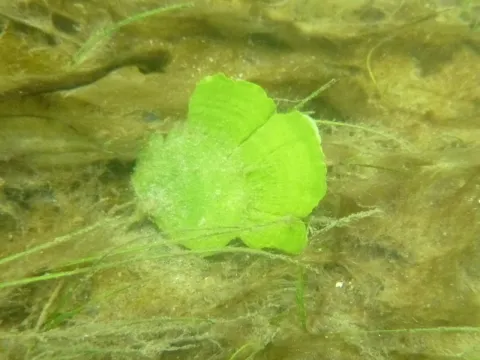
Udotea
Udotea
Udotea is a genus of green macroalgae belonging to the family Udoteaceae. Unlike terrestrial crops, this is a marine organism that thrives in warm tropical and subtropical aquatic environments across the globe.
What the section contains

Udotea
The plant requires high levels of light penetration for optimal photosynthesis, which is why it is predominantly found in shallow coastal waters. It relies on a steady supply of dissolved nutrients within the water column to sustain its complex physiological functions.
Soil requirements for Udotea are replaced by substrate preferences; it anchors best in sandy or silty marine sediments using a specialized rhizoid system that allows it to remain stable on the seabed.
Water quality is of paramount importance. The algae need specific chemical conditions, including stable salinity and a consistent supply of calcium ions, which are essential for the calcification of its thallus structures.
Climate conditions are limited to tropical and subtropical latitudes where water temperature remains warm throughout the year. The species is highly sensitive to rapid fluctuations in environmental parameters and performs best in sheltered, calm lagoons.
In an agricultural sense, yield is not measured for Udotea, as it is not a commercially farmed crop. However, in ecological research, the biomass density of Udotea per unit area is a standard metric for assessing local ecosystem health.
The growth rate of the algae is influenced by seasonal light availability and nutrient concentrations in the marine environment. During peak growing seasons, the density of these algae can increase significantly in undisturbed areas.
Research into the biomass production of Udotea is primarily focused on its capacity to sequester carbon and its role in producing calcium carbonate, contributing to the structural complexity of coral reef habitats.
Attempts to cultivate Udotea in closed-system mariculture indicate that biomass yield can be optimized by precisely controlling light cycles, water temperature, and dissolved mineral availability.
Natural productivity is frequently limited by the grazing activities of various marine herbivores, which serve as a natural check on the total standing crop of the algae in the field.
The primary threats to Udotea populations include the loss of habitat due to coastal development and the degradation of water quality caused by agricultural runoff and industrial pollution.
Grazing pressure from herbivorous fish and sea urchins significantly impacts the survival rates of the algae, especially in areas where predator populations are high and algal recovery is slow.
Ocean acidification poses a critical threat to the calcification process, potentially rendering the thallus structures fragile and susceptible to physical breakage under normal water currents.
The introduction of invasive species often leads to competition for space and nutrients, which can displace Udotea from its traditional niche in the reef environment.
Extreme weather events, such as hurricanes or severe tropical storms, can cause mechanical damage and uproot the algae from its substrate, leading to localized population decline.