
Udotea petiolata
Udotea petiolata
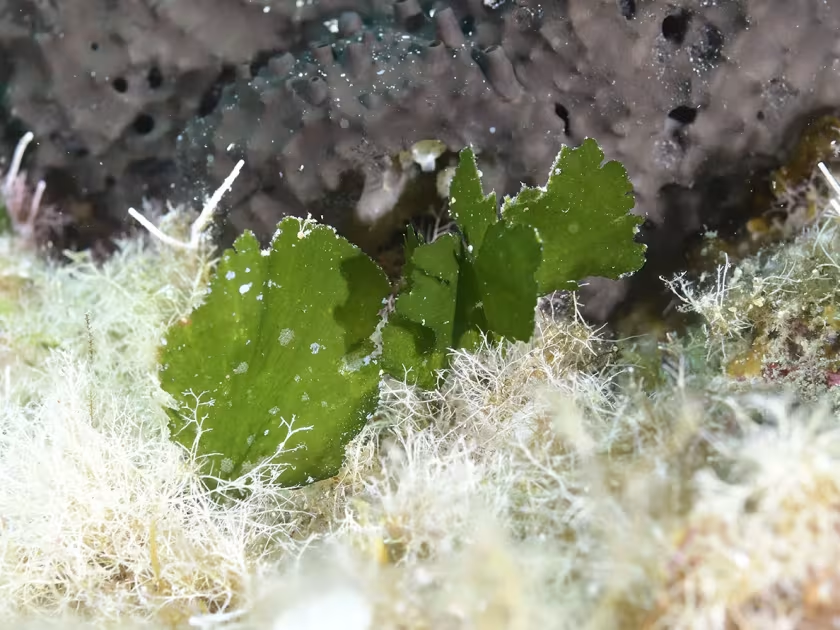
Description
Growing requirements
Udotea petiolata is a prominent species of green marine algae belonging to the family Udoteaceae. It is primarily distributed throughout the Mediterranean basin, where it thrives in relatively sheltered rocky or sandy environments within the photic zone.
The morphology of the plant is characterized by a distinct stalk (petiole) supporting a fan-shaped thallus. A defining feature of this species is the heavy calcification of the thallus tissues, which provides structural rigidity and serves as a defense mechanism against herbivorous marine animals.
Optimal growth conditions for Udotea petiolata involve consistent salinity levels and sufficient light penetration, essential for photosynthesis. Being a calcifying organism, it also requires adequate availability of calcium carbonate in the seawater to maintain its physical integrity.
The plant anchors itself to the substrate using a system of root-like rhizoids. It is highly sensitive to water quality, particularly to high turbidity or chemical pollutants, which can drastically impede its growth rate and reproduction cycle in the wild.
In terms of cultivation requirements, replicating the precise conditions of the marine benthic zone is the primary challenge for researchers. Unlike terrestrial crops, its development is strictly tied to the chemical composition and water movement patterns of its native habitat.
Harvesting
The utilization of Udotea petiolata is currently focused on scientific and pharmaceutical applications. Its potential to produce specialized bioactive secondary metabolites makes it a subject of high interest for medical researchers and chemical engineers.
Harvesting strategies are limited due to the slow growth rate and environmental sensitivity of the algae. Any industrial extraction must be carried out in a way that prevents the depletion of wild populations and protects the surrounding marine habitat.
Post-harvest processing involves removing mineral impurities and stabilizing the biological material to prevent the degradation of its sensitive organic compounds. Careful handling is necessary to preserve the unique chemical structure of the calcified tissues.
Experimental aquaculture methods are currently being explored to determine if Udotea petiolata can be cultivated in controlled marine farm environments. Such initiatives are aimed at ensuring a sustainable and consistent supply of raw material for future industrial needs.
Effective resource management is crucial, as the slow replenishment rate of this species necessitates strict oversight. Sustainable harvesting practices are the foundation for any long-term interest in this marine resource as a modern agricultural or biotechnological commodity.