
Penicillus
Penicillus
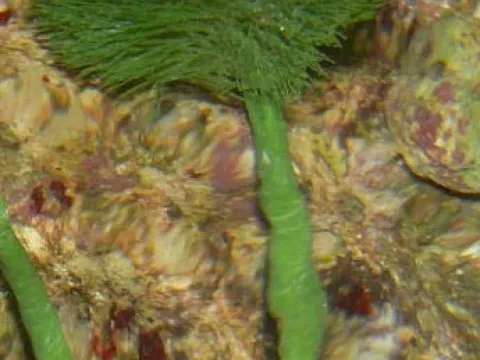
Penicillus is a genus of green macroalgae belonging to the family Udoteaceae, naturally distributed in tropical marine environments.
What the section contains

Penicillus
In its native habitat, it propagates through the release of zoospores, which travel via water currents to settle on suitable substrates.
The colonization process involves the attachment of these spores to sandy or silty bottoms where they develop specialized rhizoids.
In aquaculture research, reproduction is achieved by vegetative fragmentation, where pieces of the thallus are encouraged to regrow.
Successful establishment requires a calm environment to prevent the uprooting of young algae before they anchor firmly into the sediment.
This alga thrives in warm tropical waters, typically requiring temperatures between 22 and 30 degrees Celsius for optimal growth.
High light intensity is essential, as the alga depends on photosynthesis to fuel the calcification process within its tissues.
The substrate must consist of fine sand or sediment that allows the rhizoidal system to anchor and extract necessary mineral components.
Salinity levels must remain stable and consistent with oceanic conditions, as significant fluctuations negatively impact cell membrane integrity.
Clear, nutrient-balanced water is critical to ensure that the pores of the thallus do not become clogged by organic debris or pollutants.
Penicillus plays a vital role in marine ecology by contributing to the formation of biogenic carbonate sands in coral reef areas.
Productivity is measured by the biomass accumulation and the rate of calcium carbonate deposition over specific periods of time.
Due to its relatively slow growth rate, commercial harvesting is limited and focuses on high-value applications in science and cosmetics.
Experimental farming aims to increase biomass yield through optimized light exposure and controlled water chemistry in closed systems.
The total harvested output is valued for its unique mineral composition, offering a sustainable source of bio-available calcium.
The primary threats include herbivorous marine life, such as sea urchins and certain fish species that feed on the soft algal tissue.
Rising ocean acidity poses a significant threat to the calcification process, potentially weakening the physical structure of the plant.
Water pollution, particularly heavy metals and plastic waste, can accumulate in the algae, reducing its environmental and commercial quality.
Competition from fast-growing epiphytic algae can starve Penicillus of sunlight and essential nutrients needed for survival.
Destruction of coastal habitats due to infrastructure development is a leading cause of the decline in natural Penicillus populations.
Harvesting is performed with extreme care, often manually, to minimize environmental disruption to the delicate seafloor ecosystems.
Collected specimens are immediately washed in filtered seawater to remove sand, silt, and epiphytic organisms from the surface.
Drying is typically conducted in well-ventilated areas or controlled dryers to preserve the structural integrity of the calcium-rich thallus.
During transportation, maintaining cool temperatures and adequate moisture is necessary to prevent premature degradation of the organic matter.
Final storage involves placing the processed algae in humidity-controlled environments to prevent moisture absorption and subsequent spoilage.