
Penicillus capitatus
Penicillus capitatus
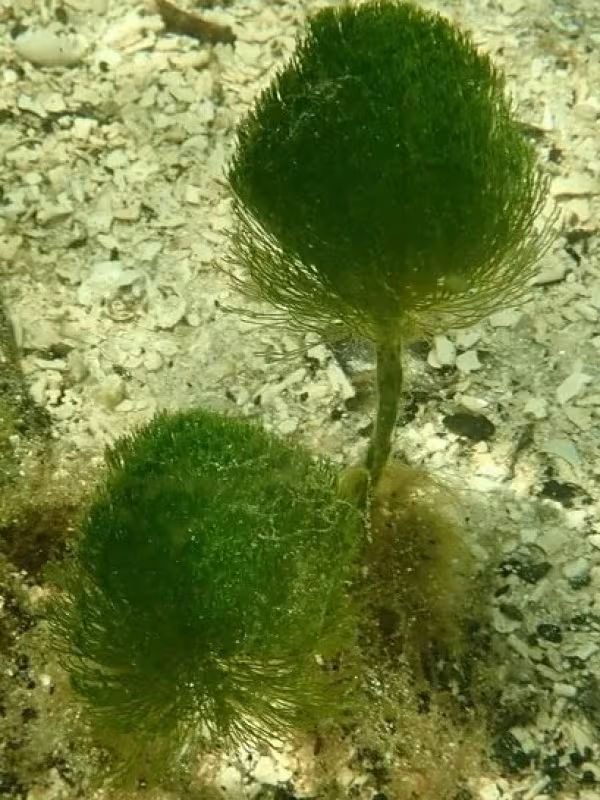
Description
Growing requirements
Penicillus capitatus is a species of green marine algae belonging to the Udoteaceae family. Unlike land-based agricultural crops, this organism is a marine benthic species found primarily in the tropical waters of the Atlantic Ocean, including the Caribbean Sea and the Gulf of Mexico.
The plant prefers shallow areas with sandy or muddy substrates where sunlight intensity is sufficient for photosynthesis. It is frequently encountered in soft-bottom environments, into which its branched rhizoid system is deeply embedded.
For optimal growth, the species requires stable tropical water temperatures and a specific chemical composition of the marine environment, particularly with high levels of dissolved calcium. Biologically, the culture is adapted to efficiently absorb mineral nutrients from bottom sediments.
A significant botanical feature is the organism's capacity for biocalcification. The cell walls of the thallus actively deposit calcium carbonate, which provides the plant structure with rigidity and resilience against mechanical forces in the aquatic environment.
In natural conditions, the alga is not subjected to conventional agronomic practices; however, its populations are highly sensitive to changes in water turbidity and pollution from coastal runoff or industrial discharge.
Main diseases and pests
While the algae do not suffer from traditional agricultural diseases, they are susceptible to phytopathogenic microorganisms that proliferate under conditions of water overheating or excessive organic buildup in the substrate.
Primary threats to the population include various marine herbivorous fish and invertebrates, such as sea urchins, which can rapidly deplete colonies of these algae when alternative food sources are scarce.
Anthropogenic factors remain the greatest threat to the species. Increased concentration of suspended particles in the water column impedes photosynthesis, leading to the weakening and eventual collapse of the thalli.
Ocean acidification poses a significant risk to the calcification process. As pH levels decline, the plant loses its ability to maintain the integrity and strength of its structural skeleton.
Competition with fast-growing filamentous algae in eutrophic zones also presents a major threat, as Penicillus often struggles to compete for space and resources under nutrient-rich conditions.
Harvesting
Economic use of the species is primarily scientific and focused on marine aquarium hobbyists. It is not cultivated as an agricultural crop in open-field settings, as it remains a wild-harvested marine organism.
Aquarists often use this species to decorate reef-style aquariums. Specimens are typically collected by hand by divers in their natural habitats, provided that ecological harvesting quotas are respected.
When cultured in artificial systems, these algae require strict management of calcium, magnesium, and alkalinity levels. Failure to maintain these parameters leads to the degradation of the thallus skeletal structure and premature death.
Transporting harvested algae requires specific conditions that simulate the natural habitat to prevent damage to fragile tissues and avoid extreme osmotic pressure shocks.
A key area of current research is the species' ability to accumulate heavy metals, which serves as a valuable tool for the bioindication of coastal marine ecosystem health.