
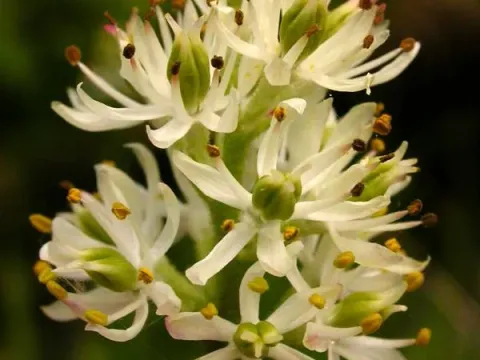
Triantha
Triantha
Triantha is a genus of perennial herbaceous plants belonging to the Tofieldiaceae family. These plants are scientifically recognized for their unique ability to capture insects on their sticky stalks, a trait that supplements their nutrition in nitrogen-poor environments.
What the section contains


Triantha
The native habitat of Triantha is primarily located in North America, where these plants thrive in wet, acidic, and nutrient-poor habitats. They are most commonly found in wetlands, fens, and boggy areas where competition with larger plants is often minimized.
For successful cultivation, Triantha requires an environment that mimics its natural boggy conditions. This includes a substrate rich in peat or sphagnum moss, ensuring high moisture levels and high acidity, while maintaining stable, well-draining conditions to prevent root suffocation.
Climate requirements for this genus are characterized by a need for temperate conditions and high light intensity. They are particularly sensitive to moisture fluctuations and will not thrive in environments where the substrate dries out during the growing season.
From an agricultural standpoint, Triantha is not a commodity crop but rather a specialty plant of interest to botanical research and horticultural collectors. Its growth is remarkably slow, and it requires specialized knowledge to maintain its long-term health in an artificial setting.
Pathogenic fungi are the primary threat to Triantha, especially in conditions where drainage is inadequate. Root rot, caused by stagnant water, can rapidly destroy the plant's delicate root system, leading to total failure of the specimen.
Insect pests, particularly slugs and certain species of caterpillars, can cause significant damage to the foliage. Because the plant grows slowly, any loss of photosynthetic tissue is detrimental to its overall energy reserves and survival.
Competition from more vigorous marsh vegetation is a constant threat. In the wild, Triantha is often outcompeted by sedges and rushes when the soil nutrient levels increase slightly or when the hydrological conditions of the site shift.
Chemical fertilizers are lethal to this species. Given their natural adaptation to extreme nutrient poverty, the presence of standard nitrogen-based fertilizers in the substrate leads to nutrient toxicity, which causes rapid necrosis of the plant tissues.
Anthropogenic impacts, including habitat destruction and wetland drainage, pose the greatest existential threat to Triantha populations. As a highly specialized plant, it lacks the resilience to adapt to the degradation of its sensitive environmental niche.