
Triantha glutinosa
Triantha glutinosa
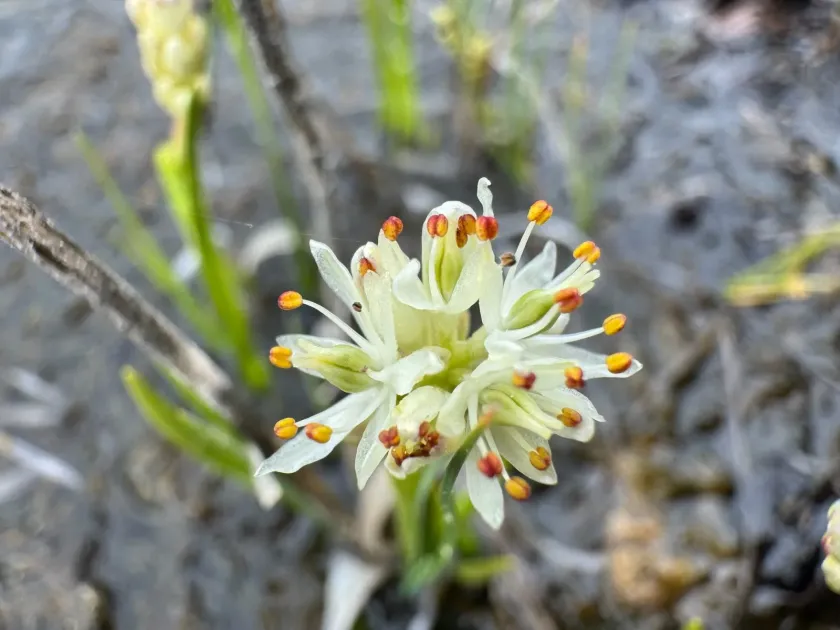
Description
Growing requirements
Triantha glutinosa, commonly known as the sticky false asphodel, is a unique perennial flowering plant belonging to the Tofieldiaceae family. It has gained significant attention in the botanical world as a recently identified carnivorous plant that traps and digests small insects.
The native habitat of this plant includes wetlands, bogs, and nutrient-poor fens across North America. It thrives in environments where standard vegetation struggles to obtain essential minerals like nitrogen and phosphorus from the acidic, waterlogged soil.
Botanically, the plant is characterized by its glandular, sticky hairs located on its flowering stems. These hairs trap small flies and other insects, which are then processed by the plant to supplement its nutrient intake, an adaptation known as protocarnivory.
In terms of cultural requirements, Triantha glutinosa is strictly limited to specialized environments. It requires consistently moist, acidic, and peat-rich substrates. It is a heliophilic species, meaning it demands ample, direct sunlight and cannot survive in shaded areas or high-competition meadows.
While it is not an agricultural crop, the study of Triantha glutinosa provides valuable insights into plant adaptation and the evolution of carnivorous strategies. It remains a focal point for ecological conservation efforts aimed at protecting pristine wetland ecosystems.
Main diseases and pests
The primary threat to Triantha glutinosa populations is the degradation and drainage of wetland habitats. Lowering the water table effectively destroys the specific hydrological conditions required for the plant's metabolic survival and reproduction.
Nutrient runoff from nearby industrial agriculture can lead to the eutrophication of wetlands. This increased nutrient load allows fast-growing, aggressive plant species to overtake the habitat, effectively shading out the slower-growing sticky false asphodel.
Pathogenic fungi are a significant threat in greenhouse environments if the air circulation is inadequate. High humidity without sufficient ventilation often leads to fungal development on the leaves, which can be lethal to the plant.
Insects such as aphids can occasionally infest the plant, potentially damaging the delicate sticky hairs that are vital for its predatory function. Managing these pests is challenging due to the plant's sensitivity to synthetic pesticides.
Climate change poses a long-term risk to the species by altering precipitation patterns and increasing the frequency of summer droughts. Such changes often lead to the drying out of bog surfaces, which are essential for the survival of the seeds and young seedlings of this species.