
Anastrabe integerrima
Anastrabe integerrima
Description
Growing requirements
Anastrabe integerrima, commonly known as the Pambati tree, is an evergreen shrub belonging to the Stilbaceae family, valued for its ornamental beauty.
The species originates from South Africa, specifically found in forest margins and mountainous areas, where it enjoys high humidity and sheltered environments.
Cultivation requires well-draining, humus-rich soil, and a location that provides protection from harsh, direct sunlight while ensuring adequate light for flowering.
Watering should be consistent to maintain soil moisture, but gardeners must ensure that excess water drains away to prevent waterlogging, which the plant dislikes.
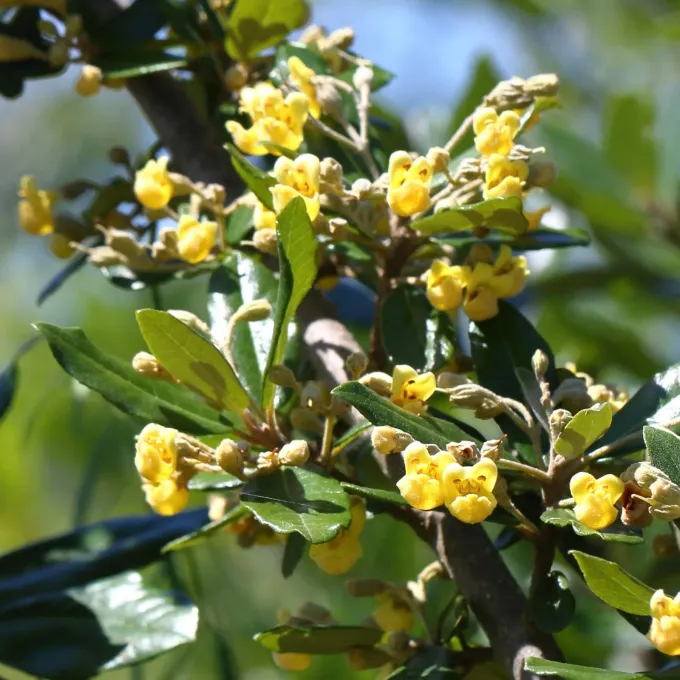
This shrub is highly regarded for its glossy, dark green foliage and spikes of yellow, bell-shaped flowers that bloom in clusters during the spring and summer months.
Main diseases and pests
The primary threats to this species include root rot pathogens, which thrive when the growing medium remains overly saturated for extended periods.
Common pests include mites and scale insects, which can colonize the leaves and stems, leading to stunted growth if left untreated.
Integrated pest management strategies, including the use of horticultural oils and neem-based solutions, are effective in controlling common insect infestations.
Winter hardiness is a major concern; in cooler climates, the plant should be kept in a greenhouse or moved indoors to prevent irreversible cold damage.
Sanitation practices such as removing dead foliage and thinning out dense branches help improve air circulation and reduce the incidence of fungal diseases.