
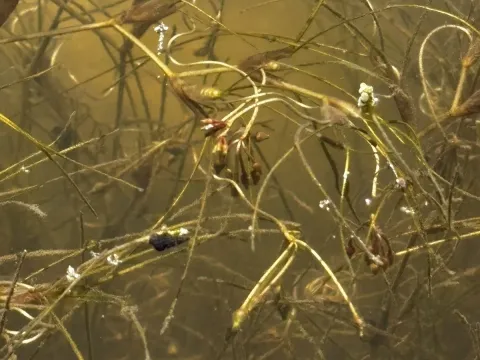
Ruppia
Ruppia
The cultivation of Ruppia typically involves vegetative propagation through stem fragments, which possess a high capacity for rooting in suitable substrates. Sowing is usually planned during the spring season to coincide with rising water temperatures.
What the section contains


Ruppia
When establishing a new colony, planting density is a critical factor for success. Fragments are placed into the sediment at a shallow depth of approximately 2 to 5 centimeters, ensuring firm contact with the substrate to facilitate nutrient uptake.
Successful colonization requires stable water levels during the initial growth phase. Fluctuations in water depth can expose the newly planted material to desiccation, significantly reducing the chances of successful establishment.
Optimal timing for planting is when water temperatures consistently stay between 15 and 20 degrees Celsius. This range supports rapid root development and reduces the risk of thermal shock to the plant tissues.
Monitoring the growth of newly established beds is essential. Agronomists recommend assessing plant health within the first few weeks to ensure that the material has effectively anchored and started producing new lateral shoots.
Ruppia is a halophytic plant, making it an excellent candidate for cultivation in brackish and saline water bodies. It exhibits remarkable tolerance to fluctuating salinity levels, which is a major advantage in dynamic estuarine environments.
The preferred soil composition consists of fine, nutrient-rich silt or sandy-silt sediments. These substrates provide the necessary anchorage and organic matter required for the healthy development of the root system.
Light penetration is paramount for the photosynthetic activity of this species. In aquatic environments, high water clarity is essential, as excessive turbidity can severely limit the growth rate and overall biomass production of the Ruppia beds.
The plant thrives in moderate temperature ranges, typically between 10 and 28 degrees Celsius. While it is adaptable, prolonged exposure to temperatures above 30 degrees Celsius can hinder its metabolic efficiency.
Adequate water circulation ensures a steady supply of essential minerals and prevents the accumulation of toxic metabolic byproducts. Consistent water flow contributes to maintaining an aerobic environment at the sediment-water interface.
The biomass yield of Ruppia is a vital indicator of ecosystem health and agricultural productivity. Its dense growth provides an important structural habitat and a primary food source for various aquatic organisms, including waterfowl and fish.
In structured cultivation, yield is measured by the total amount of green matter produced per unit area. Regular harvesting of parts of the bed can stimulate secondary growth, keeping the plant in a vigorous state throughout the season.
The nutritional content of the harvested material is high, featuring a balanced profile of proteins and carbohydrates. This makes it a valuable commodity for agricultural applications, such as nutrient recycling or specialized aquatic feed.
Productivity is significantly enhanced by proper site selection and management of the chemical environment of the water body. Controlled fertilisation levels can boost yield, provided that water quality parameters are kept within optimal ranges.
To evaluate the success of a crop, researchers utilize biomass sampling on representative plots. These measurements allow for accurate projections of the overall seasonal yield and help inform management decisions regarding future planting efforts.
Epiphytic algae represent a primary threat to Ruppia, as they form layers on the leaves that block sunlight and compete for nutrients. This process often leads to a decline in plant vitality and biomass reduction.
Herbivory by invertebrates, including certain mollusks and crustaceans, can damage young shoots and limit the spread of the plants. In cases of massive infestation, the integrity of the entire bed may be compromised.
Pathogenic outbreaks, often fungal or bacterial in nature, occur under stagnant conditions with low oxygen levels. These diseases cause rotting of the root system and can wipe out entire sections of the cultivation area if left unchecked.
Pollution from agricultural runoff, particularly pesticides and heavy metals, is extremely toxic to Ruppia. These contaminants disrupt vital biological processes, leading to chlorosis and potential collapse of the aquatic community.
Mitigation strategies involve maintaining optimal planting densities and ensuring proper water circulation to prevent the buildup of pathogens. Periodic monitoring and integrated biological control methods are standard practices for sustaining healthy crops.