
Bencomia caudata
Bencomia caudata
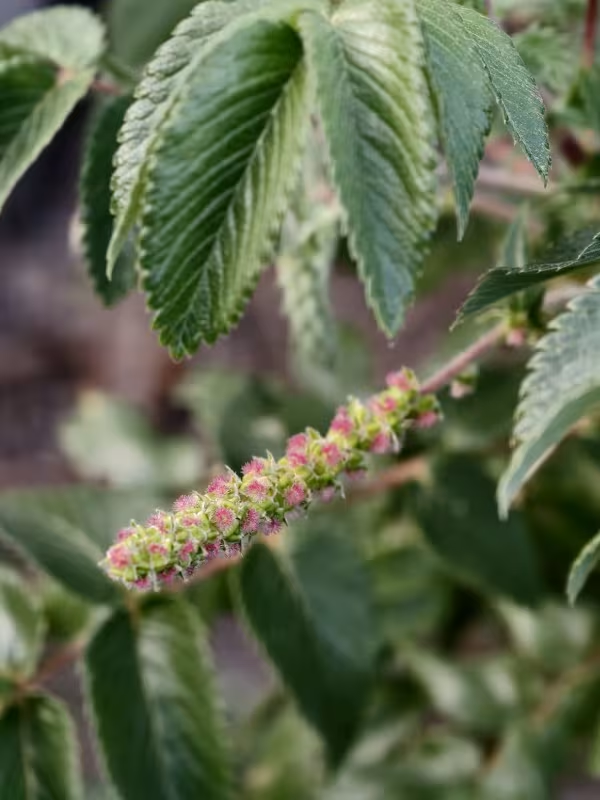
Description
Growing requirements
Bencomia caudata is an evergreen shrub belonging to the Rosaceae family. The plant is endemic to the Canary Islands, where it thrives in very specific microclimatic niches typical of high-altitude volcanic landscapes.
Successful cultivation requires a mild subtropical climate with minimal temperature fluctuations. The plant prefers well-drained, sandy, or rocky soil conditions with a neutral to slightly acidic pH level.
In its natural habitat, Bencomia prefers sunny, open slopes and rocky outcrops where it can receive direct sunlight. The crop is extremely sensitive to waterlogging, making proper soil drainage a critical factor for healthy root development.
The ideal temperature range for growth is between 15°C and 25°C. The plant does not tolerate frost and requires protection during sudden cold snaps, especially when grown in containers or greenhouse environments.
Maintenance involves regular but moderate irrigation, allowing the soil to dry out between watering sessions. Excessive soil moisture is the primary cause of root rot and other physiological stressors in this species.
Main diseases and pests
The primary threats to Bencomia caudata are fungal infections of the root system caused by overwatering or poorly aerated soil. Monitoring the drainage integrity is essential for plant survival in greenhouse conditions.
Pests such as spider mites and scale insects can infest the foliage, particularly in low-humidity greenhouse environments. Preventive application of systemic insecticides is often necessary to maintain plant vigor.
The plant is also susceptible to powdery mildew when placed in areas with stagnant air and high humidity. Pruning and spacing are effective methods to ensure adequate airflow and prevent fungal colonization.
Micronutrient deficiencies, particularly iron or magnesium, may cause leaf chlorosis. It is advisable to use balanced liquid fertilizers specifically formulated for ornamental Rosaceae species to support metabolic processes.
In the wild, this species is protected due to its limited distribution range. Habitat degradation and competition from invasive species are significant external factors impacting the survival of the natural population.