
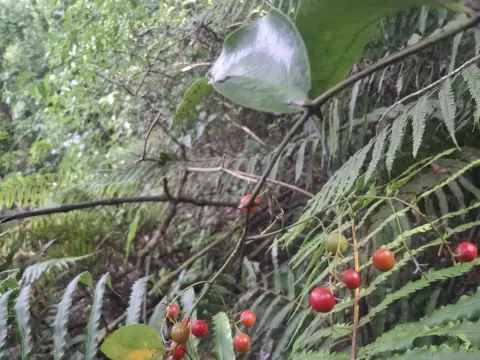
Ripogonum
Ripogonum
Ripogonum is a genus of woody vines that constitutes the family Ripogonaceae. Native to the diverse forest ecosystems of eastern Australia, New Guinea, and New Zealand, these plants are known for their ability to climb towards the forest canopy using specialized, often thorny stems.
What the section contains


Ripogonum
The botanical structure of Ripogonum is distinctive, featuring tough, leathery leaves and a robust vascular system that supports the plant's structural integrity. Unlike typical herbaceous vines, these plants develop significant woodiness as they mature, allowing them to survive in competitive forest environments.
Cultivation requirements for Ripogonum focus on mimicking its natural understory habitat. This includes a preference for filtered sunlight, high ambient humidity, and well-draining, nutrient-rich soil that mimics leaf litter decomposition found on the forest floor.
Agricultural techniques for this genus are primarily limited to nursery production or botanical conservation. Propagation is typically achieved through seed germination or stem cuttings, requiring controlled temperatures and consistent moisture levels to prevent the plants from drying out.
In terms of хозяйственное (utility) usage, the stems of Ripogonum have been historically valued by indigenous populations for their extreme durability and flexibility. They were commonly used in weaving baskets, construction, and as natural cordage for various agricultural and domestic tasks.
The primary threats to Ripogonum are soil-borne pathogens, particularly root rot triggered by waterlogged conditions. Ensuring a porous soil structure is critical to maintaining plant health and preventing fungal infection of the root zone.
Pests such as spider mites and scale insects can be problematic in greenhouse settings, especially when air circulation is poor or humidity levels drop too low. Integrated pest management using biological controls is recommended for maintaining collection health.
Nutritional deficiencies often manifest as leaf chlorosis, usually resulting from improper soil pH levels. Ripogonum thrives best in slightly acidic soils, and monitoring the substrate balance is essential for preventing yellowing of the foliage.
Environmental stress, including sudden temperature fluctuations or exposure to harsh, direct sunlight, can stunt growth and cause leaf drop. Maintaining a stable microclimate is vital for the successful development of these delicate, slow-growing vines.
While the genus is generally hardy within its native range, introducing Ripogonum to foreign agricultural environments requires strict quarantine practices to protect it from local fungal strains to which it may have no inherent resistance.