
Supplejack
Ripogonum scandens
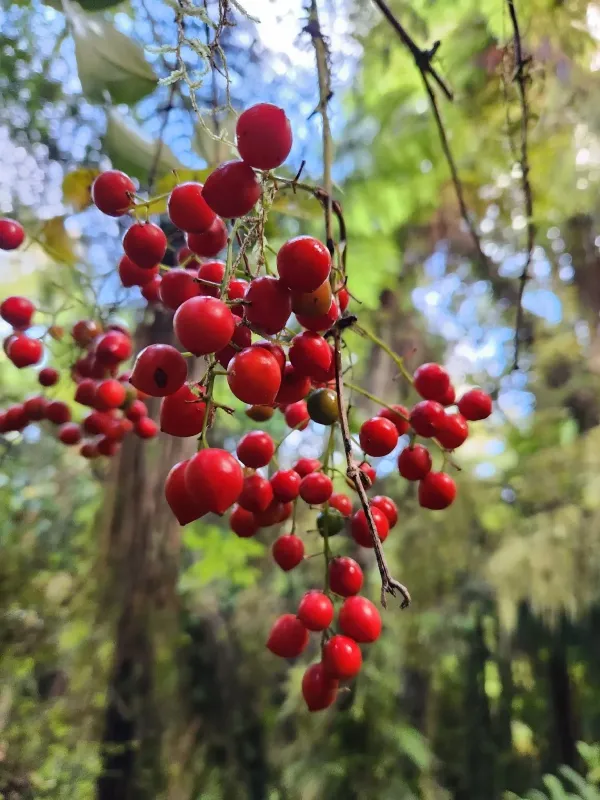
Description
Growing requirements
Supplejack (Ripogonum scandens) is a robust, woody vine belonging to the family Ripogonaceae. It is a distinctive native climber of New Zealand's forests, known for its long, flexible, and resilient stems that can reach significant heights.
The cultivation of this plant requires a subtropical or temperate climate with high humidity levels. In agricultural settings, it thrives in protected environments where the temperature remains consistent, avoiding exposure to frost which can be lethal to young plants.
Soil requirements involve a deep, organic-rich substrate that provides excellent drainage while maintaining moisture. The root system is sensitive to waterlogging, so incorporating organic matter such as peat or pine bark into the soil mix is highly recommended.
Light intensity should be managed to mimic the plant's natural habitat under the canopy. Diffused sunlight is optimal, as it prevents physiological stress caused by excessive radiation, allowing the plant to develop its characteristic glossy leaves.
Agrotechnical management requires the installation of sturdy trellises or vertical supports. Since the vine grows aggressively, regular pruning is necessary to maintain the plant's form and to facilitate the harvest of the stems without damaging the main structure.
Harvesting
The primary economic use of Ripogonum scandens stems from its historical role as a source of medicinal extracts. The roots and young shoots have been traditionally harvested for their therapeutic properties, often utilized in tonics and health supplements.
Harvesting should be performed carefully to ensure sustainable yield. Selective cutting of older stems encourages the development of new shoots, which promotes the vitality of the plant and prevents the depletion of its long-term nutrient reserves.
Post-harvest handling involves removing the prickles from the stems and processing the material through controlled drying. This step is critical to prevent mold growth and to lock in the chemical integrity of the woody tissue.
Beyond medicinal use, the vine's flexibility makes it a valuable material for traditional basket weaving and artistic crafts. Its durability and texture are highly sought after by artisans specializing in natural fibers.
Quality control during storage includes maintaining low humidity levels to prevent degradation. Properly stored material preserves the unique phytonutrients that define the commercial value of this species in the health and wellness sector.