
Coptis japonica
Coptis japonica Mak.
Description
Sowing dates
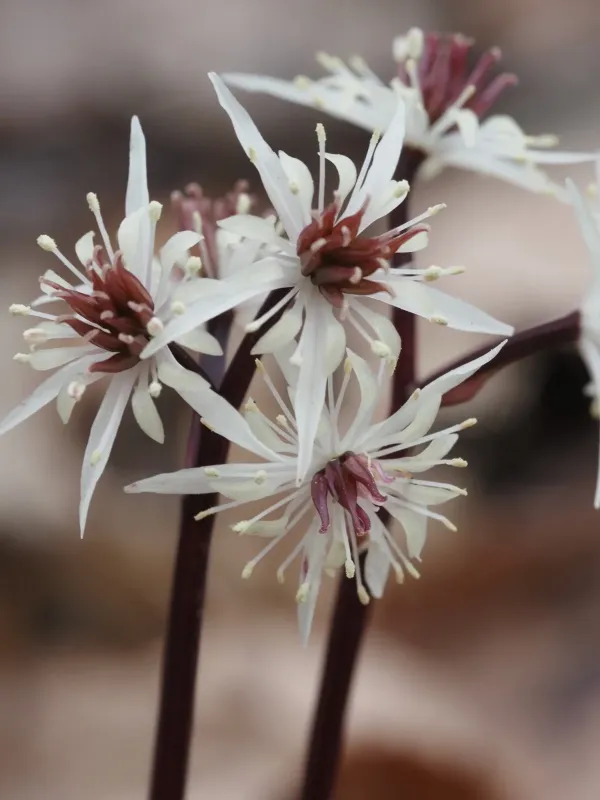
Coptis japonica is a perennial evergreen herbaceous plant belonging to the Ranunculaceae family. In industrial cultivation, propagation is most often performed vegetatively by dividing the rhizomes, as seeds have a low germination rate and require prolonged cold stratification.
The optimal time for planting is early spring or autumn, when the soil is sufficiently moist and temperatures do not exceed 15-18 degrees Celsius. When using seeds, sowing is typically done in late autumn in open soil or containers to ensure natural cold stratification for 2-3 months.
The planting depth for seeds or rhizome cuttings should be about 2-3 centimeters. It is crucial to maintain adequate planting density to suppress weed growth, as the plant exhibits relatively slow growth rates during the first years of development.
To ensure successful rooting, the substrate must be kept consistently moist while avoiding waterlogging. When dividing rhizomes, segments should be spaced 15-20 centimeters apart to provide enough room for the root system to expand effectively.
The crop is shade-tolerant, making it suitable for areas that mimic natural forest floor conditions. Planting sites should be selected in shaded locations where direct sunlight is minimal or filtered by a canopy.
Growing requirements
Coptis japonica prefers soils rich in organic matter with a slightly acidic pH level. Ideal growing conditions are provided by forest loam soils that are high in humus, offering excellent moisture retention while maintaining proper aeration.
The plant is highly sensitive to direct sunlight, which can cause leaf burn and rapid dehydration of the root system. Optimal development requires 60-80% shade, which is typically managed through the use of shade cloths or by planting under the canopy of established trees.
Temperature requirements are moderate; the plant is hardy and survives cold winters well, provided the soil is mulched with leaf litter or peat to protect against extreme temperature fluctuations and frost heave.
Regular irrigation is a critical factor during the active growing season. The soil must never be allowed to dry out completely, as the shallow root system reacts quickly to water deficiency by exhibiting stunted growth and stress.
Soil preparation involves deep tilling and the incorporation of compost or well-rotted manure. Good drainage is essential to prevent rot, as the rhizomes are particularly susceptible to fungal issues if the substrate becomes overly waterlogged or acidic.
Yield
The yield of Coptis japonica is measured by the dry weight of the rhizomes, which are the primary harvestable part. In commercial farming, the production cycle typically spans 5 to 7 years to allow the plant to accumulate sufficient concentrations of active compounds.
Average yields per hectare under intensive cultivation practices can reach 1.5-2 tons of dry raw material. Performance metrics are highly dependent on planting density, the quality of organic fertilization, and the maintenance of consistent moisture levels throughout the growth period.
The maximum content of alkaloids, particularly berberine, is reached in rhizomes that are at least 6 years old. Premature harvesting leads to lower-quality produce that may fail to meet pharmacopeial standards for pharmaceutical manufacturing.
To maximize marketable yield, regular weeding and the removal of competing vegetation are necessary. Since Coptis grows slowly, eliminating competition for nutrients during the early stages is vital for long-term productivity.
Harvest quality depends on both volume and purity, ensuring the product is free from soil particles and extraneous plant matter. After digging, the rhizomes must be meticulously washed, cleaned of fine root hairs, and dried under controlled conditions not exceeding 45 degrees Celsius.
Main diseases and pests
The primary threats to Coptis japonica are fungal root diseases caused by excessive moisture and poor air circulation in the root zone. Infections like Phytophthora or various root rots can destroy an entire plantation within a short period if not managed quickly.
Pests such as slugs and snails pose a significant danger during the spring season, when young shoots are highly vulnerable. Regular plantation inspections and the installation of physical barriers or biological pest control methods are recommended for protection.
Leaf damage caused by certain moth caterpillars can reduce the plant's photosynthetic capacity, slowing the growth of the rhizomes. Environmentally friendly pest control measures are preferred over the use of harsh synthetic pesticides to maintain product purity.
Grey mold (Botrytis) often affects plants when air humidity is high and ventilation is poor. Prevention relies on maintaining optimal plant spacing to promote airflow and removing any infected plant debris immediately upon detection.
Soil-borne nematodes can parasitize the roots, causing the formation of galls and overall plant weakening. Following strict crop rotation protocols and using certified disease-free planting material are the fundamental strategies to mitigate this risk in commercial operations.
Harvesting
Harvesting Coptis japonica is performed strictly by hand due to the fragility of the rhizomes and their shallow position in the soil. Harvesting is generally scheduled for autumn, when the aerial parts of the plant naturally begin to senesce.
Once dug up, the rhizomes are cleaned of soil, with great care taken to preserve the structural integrity of the roots, as the finer sections often contain high concentrations of bioactive substances. The use of garden forks helps lift the root systems from compacted soil gently.
Initial processing involves careful washing in cool running water. It is of utmost importance to remove all traces of organic matter and soil to prevent microbiological contamination of the raw material during the drying stage.
The drying process requires precise temperature regulation. Exposure to excessive heat degrades valuable alkaloids; therefore, drying should occur in well-ventilated rooms or specialized industrial dryers at temperatures not exceeding 40-45 degrees Celsius.
Final produce should be stored in a dark, dry location using cloth sacks or paper packaging. Properly dried rhizomes have a shelf life of up to 2 years, provided they are kept airtight and shielded from direct light, which accelerates the degradation of active chemical compounds.