
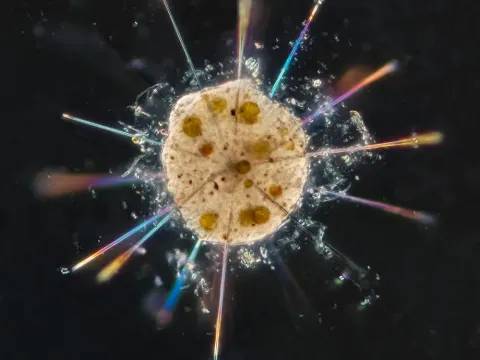
Halosphaera
Halosphaera
Halosphaera is a genus of single-celled green algae belonging to the class Prasinophyceae. These organisms are key components of marine phytoplankton, recognized for their distinctive spherical cells that facilitate buoyancy and nutrient uptake in oceanic environments.
What the section contains
Halosphaera
Unlike conventional agricultural crops, Halosphaera is strictly an aquatic organism. However, it holds significant potential for biotechnological exploration due to its ability to produce high-value fatty acids and complex pigments, which are increasingly sought after by the health and feed industries.
The environmental requirements for Halosphaera are primarily centered on water salinity, temperature stability, and light penetration. As a photosynthetic organism, it thrives in the photic zone where it can efficiently convert solar energy into chemical energy while utilizing dissolved inorganic nutrients.
In a controlled production setting, the agrotechnical approach involves the use of high-tech photobioreactors. These systems allow for precise regulation of carbon dioxide injection, nutrient concentration, and light intensity, which are critical for maximizing the biomass yield of this marine culture.
Proper management of this crop requires monitoring the physiological state of the cells. The culture must be maintained in a sterile environment to prevent contamination, ensuring that the biochemical profile of the algae remains consistent throughout the growth cycle.
The industrial output of Halosphaera is primarily measured by its total dry biomass and the density of intracellular lipids. High-yield production is achieved through optimized cultivation cycles, which ensure that the cells reach their peak nutrient-storing stage before harvesting.
The main threats to Halosphaera cultures include the introduction of viral pathogens and microbial predators such as ciliates, which can rapidly decimate a population in a closed system. Consistent monitoring is necessary to prevent total culture collapse due to these biological factors.
Chemical instability, particularly in nutrient levels or pH balance, poses a significant risk to crop health. Rapid changes in the growth medium can trigger stress responses in the algae, leading to inhibited growth rates or the production of unwanted metabolic byproducts that lower the final quality.