
Vittaria lineata
Vittaria lineata
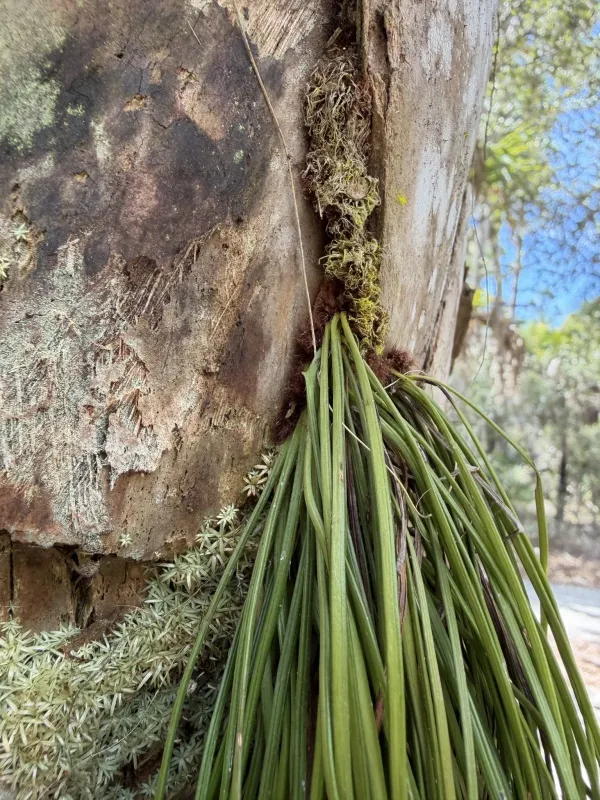
Description
Growing requirements
Vittaria lineata, commonly known as the shoestring fern, is an epiphytic species belonging to the family Pteridaceae. It originates from the tropical regions of the Americas, where it naturally grows on the branches of trees and rocky surfaces.
The plant requires high humidity levels, ideally above 70%, to thrive. It performs best in indirect, filtered light, as direct sunlight can easily scorch its thin, grass-like fronds.
Regarding climate, the shoestring fern prefers constant temperatures between 18°C and 25°C. It is a strictly tropical plant that cannot tolerate frost or cold drafts, which often result in tissue necrosis.
The growing medium should mimic the epiphytic environment, consisting primarily of orchid bark, peat, and long-fibered sphagnum moss. Excellent drainage is non-negotiable to prevent root suffocation.
In terms of agricultural and horticultural use, Vittaria lineata is primarily cultivated for its unique ornamental value. Its long, slender, ribbon-like leaves make it an excellent choice for vertical gardens and hanging baskets.
Main diseases and pests
Mealybugs are a major pest for this species, as they tend to hide in the tight clusters where the fronds emerge from the base, making them difficult to reach with insecticides.
Root rot is the most common physiological issue caused by overwatering. It develops quickly in compacted or stagnant soil, leading to the rapid decay of the rhizome system.
Spider mites frequently target the plant if ambient humidity drops below the required levels. Infestation results in a speckled appearance on the leaves followed by browning.
Scale insects can establish themselves on the undersides of the fronds, feeding on sap and excreting honeydew, which may further lead to sooty mold growth.
Effective management involves maintaining proper air circulation and strictly avoiding over-saturation of the substrate. Regular inspection of the foliage is essential to detect pest activity before it becomes a systemic problem.